
Yan-gant-y-tan: Yan-gant-y-tan is a demon from Brittany, France.
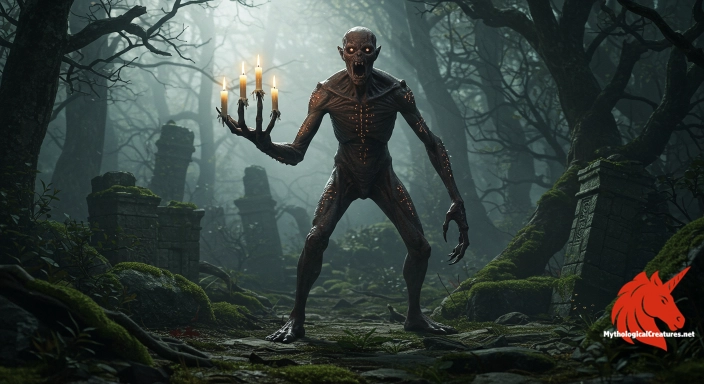
Yan-gant-y-tan
Yan-gant-y-tan - Represents the dark, infernal aspect of Breton folklore and the supernatural forces of evil.
the legend in five swipes.
the legend in five swipes.
The First Records of Yan-gant-y-tan
Yan-gant-y-tan emerges as a captivating and formidable demon figure in the storied tradition of Breton folklore. His legend is entwined with the mysticism that has characterised Brittany since the early medieval period. Many of the earliest references to Yan-gant-y-tan appear in the vibrant oral traditions of rural communities, where his name was invoked both in fear and in awe. He is often portrayed as a guardian of unexplained phenomena, whose fiery essence disrupts the natural order and challenges human understanding. His origins are cloaked in a blend of ancient pagan beliefs and the nascent influences of Christianity. The very sound of his name conjures images of blazing flames and shadowed figures emerging from the mists of memory. Observers recount that his presence signalled misfortune or a dramatic change in fate, marking him as a portent of extraordinary events. Over time, Yan-gant-y-tan has come to symbolise the tension between the known world and the mysterious realms beyond human perception. His enduring legacy continues to intrigue scholars and enthusiasts of myth, reflecting a tradition that interweaves cultural identity with the supernatural.
Which books and scrolls describe Yan-gant-y-tan?
While textual evidence for Yan-gant-y-tan is relatively scarce, the stories that have survived are rich in variety and nuance. Ancient manuscripts and folklore collections, though fragmentary, offer glimpses into a world where this demon straddled the boundary between legend and lived experience. Over centuries, local chroniclers and storytellers captured different aspects of his character, imbuing him with roles that ranged from malevolent trickster to an ominous foreboding presence. In some Renaissance-era accounts, his fiery attributes were recounted with vivid detail, suggesting a close connection to natural phenomena like wildfires and even volcanic bursts. Later folklorists in the nineteenth century revived these stories, documenting variants that emphasised the eerie interplay of light and shadow in Breton nights. Several regional ballads and oral recitations, gathered by enthusiasts of Celtic lore, preserve diverse narratives of his nocturnal journeys and tests of moral fortitude. These multiple versions consistently portray him as an unpredictable supernatural force, underscoring the flexibility of his myth. Despite the lack of a singular definitive source, the amalgamation of these texts emphasises a vibrant oral heritage. In this way, the fragmented sources ensure that Yan-gant-y-tan remains an enigmatic figure whose full story is as shifting as the flames he is reputed to command.
What does Yan-gant-y-tan look like?
Descriptions of Yan-gant-y-tan typically evoke a being of both dread and fascinating fluidity, with an appearance that is as dynamic as the myths themselves. Accounts frequently depict him as a towering figure, his stature amplified by an aura of flame and shadow that distorts the air around him. His eyes are often imagined as burning coals, radiating an otherworldly light that hints at both passion and malice. Horns of varying lengths and curves often crown his head, each one lending to his fearsome silhouette and demonic lineage. His form is said to be draped in garments that appear woven from swirling mists and dancing embers, blurring the line between fabric and flame. Some tales describe a visage that blends human and bestial features, marked by sharp contours and a perpetual, enigmatic grimace. The texture of his skin is reputed to resemble charred earth battered by relentless heat, as if forged in eternal fire. In various narrations, his physique shifts from a sinewy, almost skeletal frame to a more robust, imposing figure, mirroring the mutable nature of oral tradition. These vivid details combine to create an image of a creature that embodies both the raw fury of nature and a mysterious supernatural omen.
Yan-gant-y-tan: The Same Figure in Different Places
Cultural adaptations of Yan-gant-y-tan are as diverse as the regions within Brittany itself, with each local tradition offering unique nuances to his mythic persona. In coastal communities, he is occasionally portrayed as a spectral herald whose appearance during tempestuous weather is linked to the violent clash of wind and sea. Inland, his presence is more closely tied to the isolation of ancient woodlands, where his enigmatic silhouette haunts moonlit clearings and forgotten paths. Variants of his legend have even seeped into neighbouring regions, where additional folkloric motifs blend his core attributes with local supernatural elements. Some local accounts emphasise his role as a malevolent force of destruction, while others hint at an ambiguous nature that occasionally serves a protective purpose against darker entities. Storytellers often embed his myth within the seasonal rhythms of nature, aligning his fiery essence with cycles of harvest, decay, and renewal. These regional adaptations have given rise to a tapestry of interpretations, each rendering his visage mutable and context-dependent. The enriched narratives allow Yan-gant-y-tan to serve not only as a local spectre but also as a broader emblem of ancient supernatural power. His ongoing presence at local festivals and in nocturnal tales underlines the enduring impact of his legend on Brittany's cultural landscape.
Legends Comparable to That of Yan-gant-y-tan
Yan-gant-y-tan stands as a fascinating counterpart to many other European demonic figures, drawing intriguing parallels with entities from both Celtic and Slavic mythologies. His fiery aspect resonates with depictions of infernal sprites and hellish incubi found throughout European folklore, evoking similarities to the Slavic Chort and other fire-associated demons. The duality of his role—serving as both a catalyst for chaos and a symbol of transformative power—is reflective of the complex nature attributed to many supernatural beings. In literary traditions from neighbouring Celtic regions, certain spectres share his ethereal qualities, indicating that his legend is part of a broader tapestry of demonic lore. Comparisons have been drawn with figures like the French lutin and the spectral Ankou, each interpreting the balance between mortality and misfortune in their own way. These cross-cultural links reveal a common theme in how societies symbolise the unpredictable forces beyond the mundane world. Yet, Yan-gant-y-tan retains a distinct identity through his deep association with the element of fire, setting him apart from parallel figures. The synthesis of his diverse attributes highlights both the universality and the locality of demonic legends across Europe. In examining these resonances, one can appreciate how each culture fashions its own emblem of mystique and terror, with Yan-gant-y-tan standing as a potent example of this enduring tradition.
What does Yan-gant-y-tan mean to people today?
The evolution of Yan-gant-y-tan’s image over the centuries mirrors the shifting currents of cultural storytelling in Brittany and beyond. In early traditions, his menacing presence was invoked to explain sudden fires and unexplained calamities in a world where natural phenomena were shrouded in mystery. With the rise of literary and artistic movements that celebrated the macabre and the enigmatic, his character evolved from that of a simple demon to a multifaceted symbol of creative inspiration and latent power. The Romantic era, in particular, witnessed a resurgence in the reinterpretation of his mythic traits, inspiring poets and painters to explore his dual nature as both a harbinger of doom and a muse of transformation. In modern times, Yan-gant-y-tan has been reimagined across various mediums, from novels and films to digital artworks, where he often embodies modern existential themes while retaining his ancient mystique. Local festivals and cultural exhibitions in Brittany have revived his storied image, reinforcing his status as a cherished yet fearsome piece of regional heritage. His legacy now speaks to a broader trend of recontextualising demonic figures as complex symbols of societal anxieties and the eternal interplay between darkness and light. Serving as a bridge from the past to the present, Yan-gant-y-tan continues to captivate contemporary audiences, challenging them to find beauty and meaning within the shadows of folklore. His enduring presence in modern cultural discourse underscores the timeless allure of myth and the profound power of ancestral narratives.
Interesting Fact
The unique phonetic structure of Yan-gant-y-tan's name has intrigued researchers, hinting at deep linguistic roots in Breton mythology.
Mythological Treasures
Chinese Beasts: A field guide to the dragons and demon kings of Chinese myth
From river dragons to demon kings, with the legends that shaped five thousand years of storytelling.
Japanese Yokai: A field guide to the spirits and demons of Japanese folklore
Fifteen spirits, with the signs to watch for and what the old tales say to do if you meet one.
Greek Myths: A field guide to the monsters of ancient Greece
Every monster here earned its place in legend, and each gets a full page of artwork and the story behind it.
the legend in five swipes.
Sponsor this space
Tasteful, fixed-fee placements for myth projects
No bidding wars or flashing banners. We offer simple placements for a small set of creators and brands aligned with our readers.
Request further detailsQuick Creature Info
Our Mythic Legendary Rating:

Habitat:
Supernatural Powers:
Abilities:
Behavior:
Weaknesses:
Lore:
References
Discover Another Mythical Legend You May Not Have Heard Of?
Uncover the mysteries of ancient folklore and expand your knowledge of legendary beings from cultures around the world.
Dare to Meet the Amanozako....
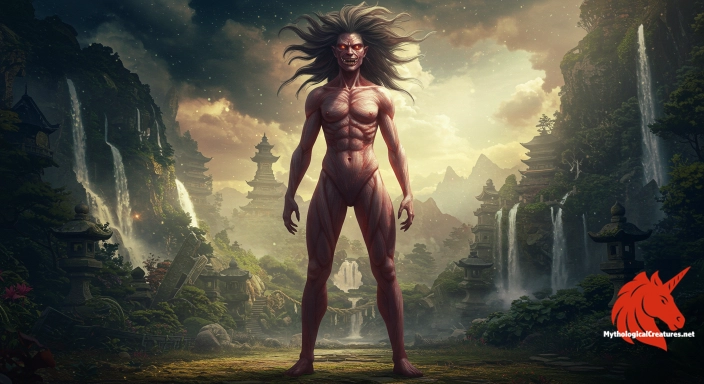
The Mythological Creatures Book Series
Yokai, Greek, Norse, Egyptian & Chinese. Five illustrated field guides to the creatures the old stories either warned or told you about.
Curated by the Mythological Creatures Team
Series editor: Mythological Creatures Directory
Primary desk: Northern & European Folklore Desk
(rev. November 2025)