
Achlis: The Achlis is an unusual, elk-like creature from Roman mythology noted for its oversized upper lip and jointless hind legs.

Achlis
Achlis - The Achlis illustrates the blend of real animal traits with fantastical anomalies in ancient Roman bestiaries, highlighting both natural observation and mythological embellishment.
the legend in five swipes.
the legend in five swipes.
Achlis Origins: The Earliest Accounts
The Achlis emerges from the enigmatic tapestry of ancient Roman myth as a creature whose very existence defies conventional natural order and invites both wonder and scepticism. Its origins are traced back to the vivid accounts of Pliny the Elder in the 1st century BC, a period when scholars wove natural history and myth into a single narrative. This creature, bearing a resemblance to an elk, is distinguished by unusual traits that set it apart from the ordinary. A particularly striking feature is its disproportionately large upper lip, an element that compelled it to adopt a backwards grazing style, thereby imbuing its legend with an air of both absurdity and tragedy. The Achlis not only serves as a testament to the curiosity of the ancients but also exemplifies the tension between nature’s inherent design and the anomalies that occasionally punctuate it. Its depiction, rich in contradictory details, provides insight into the early Roman endeavour to catalogue and rationalise the natural world. The creature’s dual character—part noble beast, part aberration—continues to stimulate the imagination of modern enthusiasts of classical lore. Over time, the Achlis has evolved into a symbol of nature’s unpredictable quirks, a reminder that even the most majestic forms are not immune to imperfection. Its enduring presence in myth underscores the timeless human fascination with the bizarre and the beautiful.
The Documented Accounts of the Achlis
The principal source detailing the Achlis is found in Pliny the Elder’s extensive writings, notably his monumental work that sought to compile the breadth of natural phenomena known to the Romans. Pliny’s account, dating from the 1st century BC, offers a vivid but curious description of the creature’s unusual anatomy and behaviour. Other ancient references, though sparse, intermittently allude to similar beings, suggesting that early natural historians took note of anomalies in the animal kingdom. Variants of its story later emerged through the fragmented records of Roman anecdotal literature, each adding subtle nuances to its portrayal. Some medieval bestiaries, influenced by earlier classical texts, incorporated imaginative embellishments that re-enlivened the lore of the Achlis. In several retellings, the creature’s unique habit of grazing backwards and its awkward sleeping posture due to jointless hind legs were highlighted as emblematic of nature’s capricious artistry. While no source offers a complete narrative, the collective tradition has ensured that the Achlis remains an evocative figure in myth. The interplay between these varied accounts not only enriches its story but also reflects the broader tendency of ancient writers to blend observation with myth, leaving a legacy open to interpretation and debate.
Achlis: Form, Powers and Weaknesses
The Achlis is envisioned as bearing a noble resemblance to an elk, yet its form is dramatically altered by a series of peculiar anatomical traits. Its most distinguishing characteristic is an enormous upper lip that appears almost out of proportion to the rest of its face, compelling the creature to graze in an unconventional, backwards manner. This exaggerated feature disrupts the otherwise graceful lines of its visage, creating an image that is both striking and subtly comical. The creature’s body is robust, with a coat that seems to merge earthy, mottled tones, providing a natural camouflage in woodland surroundings. While its forelimbs display the typical jointed structure seen in familiar ungulates, a marked departure is noted in its hind legs, which lack the conventional joints that would allow smooth movement. This deficiency forces the Achlis to adopt unusual postures, particularly when resting, often leaning against trees or remaining awkwardly upright. Observers have noted that the combination of regal antler-like structures and these aberrant features lends the creature an enigmatic quality that blurs the line between majesty and misfortune. In different depictions, size variations are hinted at, with some accounts suggesting that mature specimens possessed a more imposing presence, whilst others paint a picture of a creature defined by its fragility and vulnerability.
How did location shape the story of the Achlis?
Although the Achlis finds its earliest roots in Roman literary tradition, its legend has been subtly refracted through the cultural lenses of various regions within and beyond the Mediterranean. In certain locales of the ancient Empire, local storytellers imbued the creature’s uncanny features with additional spiritual significance, sometimes casting it as a mysterious woodland guardian. Variations of its description emerged, with some regional accounts emphasising its almost supernatural vulnerability alongside its striking physical oddities. In parts of the Eastern Mediterranean, the Achlis was occasionally conflated with local tales of enchanted beasts, leading to narratives that enriched its myth with regional folklore elements. Northern traditions, too, reinterpreted its physical deformities as signs of a creature marked by fate and nature’s whimsical humour. In these adaptations, the creature’s backwards grazing and jointless hind legs became symbolic of a broader cultural contemplation on natural imperfection. Local adaptations often saw it portrayed with slight modifications—such as alterations in coat colour or size—to better align with regional aesthetics and moral allegories. The evolution of its legend across diverse cultural contexts illustrates how myth can serve as a mirror for regional values and interpretative traditions, enabling the Achlis to persist as a multifaceted icon of nature’s enigma.
Achlis: Cross-Cultural Comparisons
The Achlis stands alongside a host of other mythological beings that capture the tension between natural perfection and anomaly across global cultures. Its bizarre physical traits evoke comparisons with legendary creatures from different traditions whose forms blur the boundaries of natural order, much like the peculiar hybrids found in early bestiaries. In many ways, its exaggerated upper lip and awkward locomotion parallel narratives in other mythologies where physical irregularities are imbued with symbolic significance. Such attributes resonate with the tales of creatures that embody both majestic beauty and inherent flaw, a duality that appears repeatedly across diverse cultural mythologies. In some Northern European legends, for example, anomalies in animal form have been interpreted as omens or moral lessons, a thematic thread that runs through the Achlis’s story as well. The creature’s depiction shares affinities with other enigmatic beasts that serve as allegories for nature’s unpredictability and the inherent tension between form and function. This cross-cultural comparison highlights a universal human impulse to find meaning in all facets of the natural world, even those that defy easy explanation. By examining these parallels, one can appreciate the Achlis not merely as an isolated oddity, but as part of a wider tapestry of myth that explores the beauty and complexity of imperfection.
Achlis: The Modern Legacy
The legacy of the Achlis has evolved considerably since its first recorded appearance in ancient texts, undergoing a transformation from a curious natural anomaly to a symbol rich with allegorical potential. Initially depicted as an oddity in Pliny the Elder’s natural compendium, it gradually accrued layers of meaning as medieval scribes and later renaissance artists revisited its quirky attributes. Over the centuries, its depiction has been reshaped to reflect changing cultural attitudes towards nature and the unexpected. In medieval bestiaries, the creature sometimes took on moral dimensions, becoming emblematic of the inherent risks of deviating from nature’s intended design. Renaissance interest in the natural world revived its image, with artists and natural philosophers incorporating its enigmatic traits into broader discussions of beauty, imperfection, and the limits of human understanding. In modern times, the Achlis has occasionally re-emerged in literature and art, where its peculiar form is celebrated as a metaphor for vulnerability and the paradox of natural splendour. Contemporary interpretations often cast the creature as a tragic figure, whose anatomical quirks encapsulate both the wonder and the misfortune inherent in the natural world. Today, the Achlis stands as a testament to the enduring human fascination with the strange and the sublime, its myth serving as an inspirational canvas for artistic and philosophical exploration.
Interesting Fact
Hunters ingeniously exploited the creature's reliance on trees for support while sleeping, a strategy that underscores the Achlis's unique vulnerability stemming from its jointless hind legs.
Mythological Treasures
Japanese Yokai: A field guide to the spirits and demons of Japanese folklore
Fifteen spirits, with the signs to watch for and what the old tales say to do if you meet one.
Greek Myths: A field guide to the monsters of ancient Greece
Every monster here earned its place in legend, and each gets a full page of artwork and the story behind it.
Norse Sagas: A field guide to the beasts of the Viking world
Drawn from the saga accounts themselves, with the powers, weaknesses and doom of each being set out.
the legend in five swipes.
Partner with us
Sponsor this space
Reach thousands of mythology enthusiasts with a curated placement on our creature pages.
Learn about sponsorshipQuick Creature Info
Origin:
Associations:
Our Mythic Legendary Rating:

Habitat:
Physical Attributes:
Abilities:
Behavior:
Weaknesses:
Lore:
Related Creatures, Tales or Lore
- EEikþyrnir
- QQuesting Beast
- UUnicorn
References
Discover Another Mythical Legend You May Not Have Heard Of?
Uncover the mysteries of ancient folklore and expand your knowledge of legendary beings from cultures around the world.
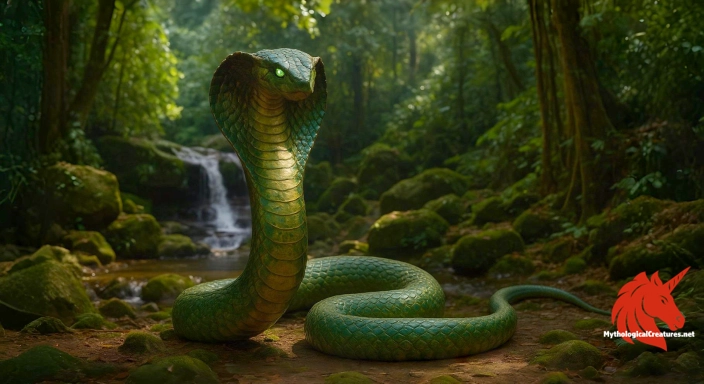
Dare to Meet the Takshaka....
The Mythological Creatures Book Series
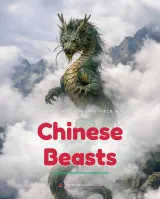
Yokai, Greek, Norse, Egyptian & Chinese. Five illustrated field guides to the creatures the old stories either warned or told you about.

Curated by the Mythological Creatures Team
Series editor: Mythological Creatures Directory
Primary desk: Hellenic & Ancient Mediterranean Desk
(rev. November 2025)