
Alukah: Alukah is a demonic, blood-feeding creature from Hebrew folklore.
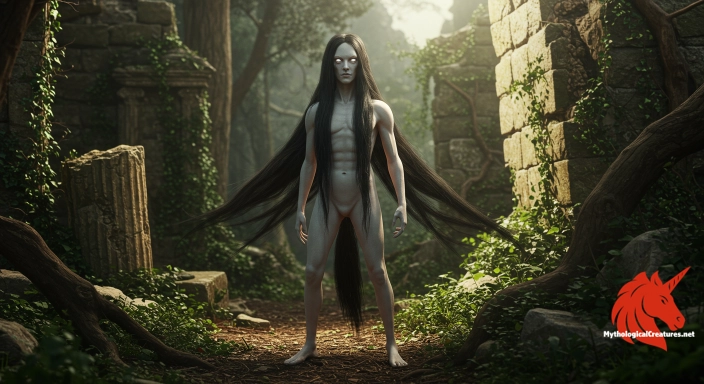
Alukah
Alukah - Represents forbidden female energy, bloodlust, and supernatural curses in Hebrew folklore.
Origins & First Encounters
The myth of Alukah finds its origins in ancient Hebrew demonology, where her name literally means 'horse-leech', evoking a creature with a voracious appetite for blood. Her initial appearance in Proverbs 30:15 set the stage for centuries of debate and reinterpretation, blending biblical symbolism with folklore. She is portrayed as a predatory female entity, whose very essence challenges the boundaries between human frailty and supernatural menace. Emerging from a context rich in allegorical narratives, Alukah quickly became a symbol of both danger and seduction. Her lore is deeply interwoven with themes of transformation and the subversion of natural order, making her a potent figure in cultural storytelling. The figure of Alukah is not merely a static creature but a dynamic representation of ancient anxieties about life, death, and the unknown. Her role in myth reflects a multifaceted nature, where beauty and horror coalesce into a cautionary allure. Ultimately, Alukah serves as a striking embodiment of the eternal interplay between civilization's taboos and the terrifying forces that lurk in the shadows.
Source Texts & Tale Variants
Textual evidence for Alukah’s existence is primarily found in the Hebrew Bible, particularly in Proverbs 30:15, where her mention stokes the imagination of later generations. Medieval manuscripts such as the Sefer Hasidim provide a more detailed and intriguing narrative, expanding her mythos beyond the terse biblical reference. In these sources, Alukah is sometimes depicted as a living human being endowed with the uncanny ability to transform into a wolf, thereby reinforcing themes of metamorphosis and unpredictability. Other renditions of her story introduce supernatural elements such as the ability to fly by liberating her long hair, adding a layer of ethereal mystery to her character. Variations of the narrative address her need for blood, with some texts asserting that a prolonged absence of feeding results in her eventual demise. Burial customs, such as stuffing her mouth with earth, are recounted as measures to prevent her post-mortem transformation into a demonic entity. There is also an enigmatic riddle, attributed to Solomon, which hints at her capacity to curse fertility itself, further enriching her mythological depth. These multiple strands of tradition illustrate how regional and temporal narratives have reworked her character in diverse and compelling ways. The layered descriptions found in ancient texts allow modern audiences a glimpse into a world where folklore and theology are intricately intertwined.
Form & Powers
The physical depiction of Alukah is as enigmatic as the legends that envelop her, merging both human and beastly characteristics in a singular, unsettling form. She is often likened to a leech with countless tiny, razor-sharp teeth, an image that starkly illustrates her bloodthirsty nature. In some descriptions, her face combines alluring beauty with a predatory snarl, presenting a duality that is both seductive and horrifying. Medieval accounts emphasise her long, flowing hair, which she is said to shed into the air to achieve flight, adding a supernatural flair to her physicality. A striking feature of her description is her ability to transform into a wolf, a metamorphosis that underscores her connection to the wild and uncontrollable forces of nature. Her eyes have been portrayed as glowing with an eerie light, a detail that intensifies the aura of danger surrounding her. Variations in her size and form suggest that she could be seen as either an imposing demonic figure or as a deceptively fragile human, reflecting the mutable nature of myth. The amalgamation of soft, human contours with the brutal efficiency of a predatory creature makes her a living paradox. Each element of her anatomy, from her fangs to her shifting form, serves to remind us of the thin line between beauty and monstrosity.
Regional Faces
Across different cultures and regions, the legend of Alukah exhibits a remarkable adaptability that mirrors local beliefs and practices. In the ancient Near Eastern milieu, her narrative is interwoven with both Hebrew and Babylonian demonological traditions, resulting in a version of Alukah that embodies both seductive charm and lethal savagery. In some regions, she is remembered not just as a blood-sucking monster, but as a succubus whose dark allure challenges the moral fabric of society. Local adaptations across the Levant and beyond have incorporated unique rituals, such as specific burial rites intended to thwart her malevolent influence. While the core story of her bloodlust remains constant, the emphasis on her ability to curse or manipulate aspects of fertility has varied significantly from one locale to another. Oral traditions and regional folklore sometimes reframe her shapeshifting ability, highlighting the transformative nature of her curse in ways that resonate with local superstitions. In urban legends, she occasionally appears as a spectral presence lurking at the edges of civilization, a modern echo of her ancient roots. Despite these regional nuances, the underlying terror of her presence persists across cultural boundaries, adapting to the societal fears of each community. Ultimately, the regional variations of Alukah’s myth illustrate how a singular mythical figure can be continuously reshaped to reflect differing cultural contexts and anxieties.
Cultural Parallels
Alukah’s myth presents several intriguing parallels with blood-sucking creatures found in diverse mythological traditions around the world. Much like the vampires of Eastern European lore, she is depicted as having an insatiable thirst for blood that symbolizes an eternal curse on her existence. Her dual nature, blending human seduction with beastly ferocity, finds echoes in the succubi of medieval European myth, where allure and danger are intermingled. The recurring association with Lilith further deepens her comparative profile, as both figures challenge traditional roles of femininity and divine order. Her capacity for metamorphosis, especially the transformation into a wolf, draws similarities with the werewolf legends prevalent in various cultures, highlighting the universal fear of the animalistic side of humanity. Rituals aimed at neutralising her influence, such as specific burial customs, are mirrored in numerous societies’ responses to the undead, indicating a shared cultural effort to contain supernatural evils. The myth of Alukah also resonates with modern horror narratives that fuse classical fears with contemporary anxieties over the loss of control. By juxtaposing her traits with those of similar entities in other myth systems, one can discern a common narrative thread that spans across continents and centuries. This comparative outlook reinforces the idea that Alukah is not an isolated figure but rather a reflection of a widespread human preoccupation with the boundaries between life and death.
Legacy & Modern Evolution
The evolution of Alukah’s image over time illustrates a fascinating journey from an obscure biblical reference to a complex symbol in modern myth and popular culture. Her initial portrayal as a mere blood-lusting entity has been expanded through centuries of reinterpretation, each era adding layers of psychological and cultural meaning. Medieval texts like the Sefer Hasidim solidified her reputation by imbuing her with shapeshifting abilities and a spectral nature, which resonated deeply with the mystical fabric of the time. In the modern era, her myth has been revitalised by horror literature and cinema, where she is sometimes cast as an archetype of forbidden desire and dark female power. Contemporary reinterpretations have also seen her linked with feminist narratives, reimagining her as a symbol of resistance against patriarchal constraints. Artistic representations continue to explore her enigmatic qualities, merging ancient folklore with modern aesthetic and thematic concerns. The varied depictions of Alukah serve as a reminder of the enduring power of myth to evolve and adapt to the cultural moment. Today, she stands as a bridge between the ancient and the modern—a haunting reminder of humanity’s perpetual struggle with the forces that lie just beyond the veil of the known. Ultimately, Alukah’s legacy endures as both a cautionary tale and a perpetual muse for creative expression in the realm of the supernatural.
Interesting Fact
Her method of flight via the release of her long hair is a uniquely inventive trait among vampiric and demonic figures.
For publishers and studios
Your next readers are already here
Many of our visitors are looking for books, campaigns, and resources that deepen their journey into myth. Position your title or setting here.
Discuss a placementQuick Creature Info
Origin:
Features:
Our Mythic Legendary Rating:

Also Sometimes Known As:
Habitat:
Supernatural Powers:
Physical Attributes:
Abilities:
Behavior:
Weaknesses:
Lore:
References
Discover Another Mythical Legend You May Not Have Heard Of?
Uncover the mysteries of ancient folklore and expand your knowledge of legendary beings from cultures around the world.
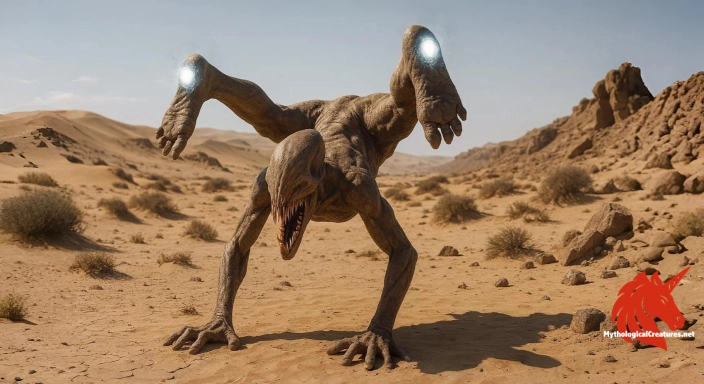
Dare to Meet the Aigamuxa....
Curated by the Mythological Creatures Team
Series editor: Mythological Creatures Directory
Primary desk: Hellenic & Ancient Mediterranean Desk
(rev. November 2025)