
Anat: Anat is a prominent Bronze Age goddess from the ancient Near East, primarily known from Ugaritic texts.
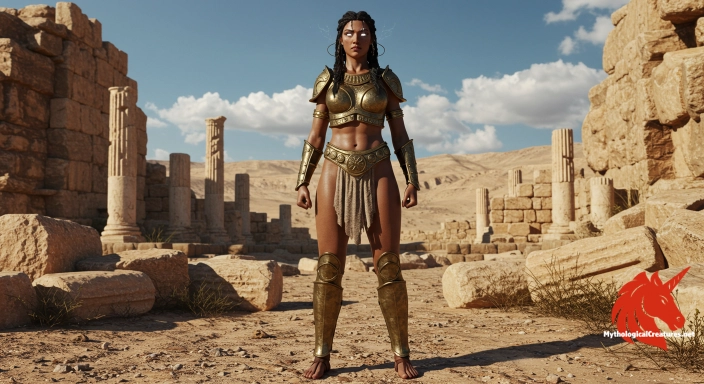
Anat
Anat - Anat is a central figure in Ugaritic mythology, revered for her martial prowess and her critical role in supporting Baal.
Origins & First Encounters
Anat emerges as a vivid figure whose dynamic character fuses martial vigour with elements of protection and vitality. Her early origins are rooted in the ancient Amorite culture and the Bronze Age traditions of upper Mesopotamia, providing a rich backdrop for her evolution. She is attested in Ugaritic texts where her actions span both the battlefield and the natural world, underscoring her multifaceted nature. Ancient records portray her as a divine warrior who not only wields power in combat but also offers comfort through her nurturing aspects. Her mythic presence in the Baal Cycle and other narratives highlights her role as both an ally and an avenger, deepening the complexity of her character. Over time, Anat’s popularity and symbolic significance radiated outward to encompass varied communities of the ancient Near East. The divine energy she embodies resonated strongly in ritual offerings and public worship, creating a lasting impression on her devotees. Her integration into different cultural milieus, including those of Ugarit and Egypt, underscores a symbolic adaptability that has intrigued historians and mythologists alike. The goddess Anat remains a compelling example of how ancient divinities could encapsulate both the harsh realities and the enduring strengths of life.
Source Texts & Tale Variants
The primary attestations of Anat are preserved in a wealth of ancient texts that illustrate the layered dimensions of her persona. Ugaritic inscriptions, prominently featured on clay tablets, offer some of the earliest and most vivid depictions of her as a force of warfare and protection. The mythic narratives found in the Baal Cycle serve to highlight her fierce loyalty and the consequential impact of her interventions in divine struggles. In parallel, the Epic of Aqhat contributes alternative perspectives, enriching her story with elements that underscore her multifarious nature. Hurrian ritual documents further expand her character, placing her alongside other formidable deities such as Šimige, Aštabi, and Nupatik. In the writings of diverse communities, Anat is shown to be a versatile figure, adapting her role to fit the narrative needs of each tradition. Inscriptions from Phoenician territories, notably on Cyprus, reveal that her image was at times merged with those of local goddesses, setting the stage for cross-cultural interpretations. Egyptian texts, particularly from the Ramesside period, corroborate her extensive reach beyond the Levant. These varied sources, spanning different regions and epochs, collectively weave the intricate tapestry of Anat’s myth and illustrate her enduring appeal in the ancient world.
Form & Powers
Although explicit physical descriptions of Anat are relatively scarce, the surviving iconographic evidence paints a picture of a goddess of striking presence. In artistic depictions, she is often portrayed as a fearless warrior, with attributes that evoke both beauty and imminent martial power. Ancient reliefs and seals suggest that she might be adorned in battle dress, complete with symbolic accoutrements such as a spear or a bow that reinforce her vigorous nature. Some representations hint at a robust physique and an air of majesty, reflecting the essential duality of her role as both a sustainer and a combative entity. In certain artistic traditions, her countenance is portrayed with stern, penetrating eyes that seem to capture a blend of compassion and ruthless determination. Variations in her depiction across different regions indicate that local artists adapted her image to highlight aspects most relevant to their own cultural narratives. This fluidity in physical representation is testament to the diverse symbolic meanings attributed to her over time. Often, subtle artistic motifs—ranging from animalistic features to regalia that suggest divine authority—reinforce her association with both natural and supernatural forces. Overall, the composite imagery of Anat, though fragmentary in detail, underscores her status as a formidable deity whose form symbolically encapsulated the spirit of battle and the essence of fertility.
Regional Faces
Regional interpretations have played a substantial role in shaping the diverse identities attributed to Anat over the centuries. In the heartland of Ugarit, she is celebrated as a prominent divine warrior whose role in epic narratives underscores her central importance. Moving into inland Syria and adjacent areas of the Levant, her status appears to have been more marginal, reflecting local preferences for other deities while still acknowledging her martial qualities. In Egypt, her character was adapted significantly, with pharaohs such as Ramesses II invoking her power as part of a broader militaristic and divine strategy. Localised practices in regions like Emar and Hazor attest to a distinctive yet respectful veneration, where her attributes were selectively integrated into existing pantheons. In the Phoenician world, especially on Cyprus, a fascinating synthesis unfolded when her identity was interwoven with that of the Greek goddess Athena, thereby linking Near Eastern and Mediterranean mythologies. These adaptations are also evident in the stylistic variations seen in artistic depictions and ritual practices, underscoring the flexibility of her mythic persona. Each region contributed unique nuances to her character, ensuring that her worship resonated with the local cultural and religious milieus. The regional variations of Anat thus illustrate how a single divine figure could be continually reinterpreted to meet the evolving spiritual needs of disparate communities.
Cultural Parallels
The character of Anat invites a rich comparative analysis alongside other prominent deities from adjacent mythological traditions. Her martial aspect draws significant parallels with the Greek goddess Athena, who, like Anat, embodies the spirit of strategic warfare combined with protective benevolence. Both deities share a reputation for skilful combat, yet each retains culturally distinctive attributes that reflect their respective societal values. In certain respects, her fierce temperament and dynamic role also resonate with elements found in the depictions of Artemis, although her primary focus on the confrontation and resolution of divine conflict sets her apart. These similarities extend beyond mere iconography and into the realms of ritual practice, as both Anat and her cultural counterparts have come to symbolise the dual forces of creative and destructive energy. While Athena is often associated with wisdom and measured defencive prowess, Anat’s narrative emphasises raw emotional intensity and a propensity for direct action. The comparative insights gleaned from examining these deities reveal that ancient mythologies frequently explored overlapping themes of war, protection, and femininity. Such interconnections among mythic figures serve to enhance the understanding of how diverse cultures interpreted the divine. This cross-cultural dialogue between Anat and similar figures has continued to influence modern interpretations of ancient myth, enriching the broader tapestry of classical heritage.
Legacy & Modern Evolution
The historical trajectory of Anat’s image is a compelling narrative of evolution, adaptation, and continual reinvention. Initially emerging in Bronze Age mythologies, her portrayal combined formidable combativeness with nurturing aspects, reflecting the multifaceted roles attributed to deities in early societies. As her worship spread, Anat’s character was reinterpreted through the cultural lenses of Egypt, Phoenicia, and beyond, each community highlighting different facets of her strength and vitality. Egyptian adoption of her persona during the reign of Ramesses II brought a distinctly militaristic emphasis that underscored her compatibility with state power. Over time, her integration with local deities and mythic figures, including her amalgamation with attributes of the Greek Athena in Cyprus, further diversified her legacy. Modern scholarship has reappraised her character, moving beyond earlier oversimplifications that reduced her to a fertility figure. Contemporary research and artistic reinterpretations celebrate Anat as a symbol of dynamic feminine power, reflecting both the brutality and beauty inherent in the ancient world. Today, her enduring myth continues to capture the imagination of those exploring ancient religious traditions and gender dynamics in mythology. The evolving legacy of Anat remains a testament to the enduring power of myth to adapt and resonate across borders and eras.
Interesting Fact
Anat is notable for her cultural versatility, having been successfully integrated into the pantheons of disparate cultures from Mesopotamia to Egypt and even influencing Greek mythology through her association with Athena.
Partner with us
Sponsor this space
Reach thousands of mythology enthusiasts with a curated placement on our creature pages.
Learn about sponsorshipQuick Creature Info
Our Mythic Legendary Rating:

Also Sometimes Known As:
Habitat:
Supernatural Powers:
Abilities:
Behavior:
Lore:
References
Discover Another Mythical Legend You May Not Have Heard Of?
Uncover the mysteries of ancient folklore and expand your knowledge of legendary beings from cultures around the world.
Dare to Meet the Jinn....
Curated by the Mythological Creatures Team
Series editor: Mythological Creatures Directory
Primary desk: Hellenic & Ancient Mediterranean Desk
(rev. November 2025)