
Anzû: Anzû is a colossal, mythological bird from Mesopotamian lore known for its dual ability to breathe fire and water.

Anzû
Anzû - Represents the challenge to divine authority and the chaotic forces in ancient Mesopotamian religion
the legend in five swipes.
the legend in five swipes.
Who first told stories about Anzû?
Anzû emerges as a striking and enigmatic figure from the heart of ancient Mesopotamian myth, celebrated for his imposing presence and the dramatic interplay of elemental forces that define his character. He is known by several names, including dZû and the Sumerian title Imdugud, each echoing facets of his multifarious nature. His origin story is steeped in the symbolism of creation, conceived by the pure, life-giving waters of the Abzu and the expansive Earth, or in some versions, as the son of Siris. This blend of water and earth elements presents him as a being forged of the natural world’s primal power. His earliest attestations can be traced back to the early second millennium BC, embedding him deeply in the cultural and religious narratives of Mesopotamia. Over time, his myth has woven through layers of tradition, appearing in texts, art, and temple reliefs that underscore his dual role as both a harbinger of chaos and a catalyst for divine order. The narratives surrounding Anzû reflect an era when the cosmos itself was personified through mythical beings endowed with extraordinary abilities. His legend encapsulates the tension between creation and destruction, leaving a legacy that has transcended millennia. In every retelling, Anzû remains a symbol of the awe-inspiring power and mystery inherent in the natural world.
Which versions of the Anzû story survive?
The primary sources detailing Anzû’s myth are a collection of ancient texts and epic narratives that have survived on clay tablets and in cuneiform inscriptions. His tale is significantly present within the Epic of Anzu, which exists in at least two distinct versions, thereby enriching the textual tradition with varied heroic associations. One version, stemming from the Old Babylonian period of the early second millennium BC, casts Ningirsu as the hero who confronts him, while another, from the Standard Babylonian phase of the first millennium BC, positions Ninurta in that pivotal role. Each textual variant not only highlights differing local pantheons but also reflects shifts in theological and cultural priorities over time. Scribes and ritual specialists played a crucial role in preserving these accounts, ensuring that Anzû’s exploits were recounted in both liturgical recitations and scholarly compilations. The surviving narratives, though fragmentary in some instances, offer a window into a past where myth and ritual intertwined. Alongside literary texts, artistic depictions in temple reliefs and cylinder seals serve as complementary sources that capture his dynamic form and formidable aura. The recurring theme of a divine adversary testing the resolve of other deities further underscores his prominence in the Mesopotamian mythic canon. Together, these sources illustrate a layered tradition of storytelling that has allowed Anzû’s myth to endure and fascinate across different eras.
The Described Form of Anzû
Anzû is vividly depicted as a colossal bird whose formidable appearance commands both reverence and fear. His immense wings, often illustrated with an almost supernatural breadth, suggest the power to envelop the heavens and stir the elemental forces of nature. In many depictions, he is credited with the ability to breathe both fire and water, a duality that encapsulates the volatile balance of creation and destruction. This elemental dualism is further emphasised by his piercing eyes and sharp, curved beak, which convey a sense of relentless intensity. His form is not confined to one consistent image, as some artistic traditions merge his avian features with those of a terrestrial carnivore. In several portrayals, Anzû is rendered as an eagle with the head of a lion, a hybrid that fuses the majesty of the sky with the formidable strength of land. The textures of his plumage and the muscle definition along his wings evoke the realism of a creature born of both nature’s beauty and its fierce unpredictability. In some illustrations, his colossal size is accentuated to such an extent that he appears to dwarf surrounding figures, thereby reinforcing his otherworldly status. Each depiction is a testament to the artistic endeavour to capture a being whose physical form is as dynamic and multifaceted as the myths that celebrate him.
Anzû: Local Variations in the Story
The myth of Anzû exhibits a fascinating range of regional variations that reflect the diverse cultural landscapes of ancient Mesopotamia. In Sumerian traditions, where he is known as Imdugud, his story is deeply intertwined with the elemental forces of water and earth, mirroring the naturalistic focus of early civilization. As the myth travelled through Akkadian, Babylonian, and Assyrian realms, his characteristics were adapted to local religious and cultural ideologies. In some regions, his fierce image as a lion-headed eagle was accentuated to evoke martial prowess and protectiveness, aligning with the region’s valorisation of strength and dominance. Other local traditions cast him in a more ambiguous role, where his involvement in divine conflicts underscored the perpetual tension between chaos and order. Artistic depictions across various city-states also reveal subtle differences, with variations in wing design, facial structure, and elemental representations such as fire or water. These regional adaptations allowed for a flexible narrative where Anzû could serve as both a destructive force and a necessary counterbalance to divine order. His story, therefore, became a malleable symbol, capable of expressing the unique concerns and cosmological views of distinct communities. This adaptability has ensured that his myth remained vibrant and relevant across the culturally diverse tapestry of Mesopotamia.
The Global Cousins of Anzû
Comparative mythology reveals that the figure of Anzû resonates with a universal archetype found in many cultures: the hybrid creature that bridges disparate realms. His composite form, blending avian majesty with leonine ferocity, invites comparisons with the griffin of Greco-Roman lore, a creature similarly revered and feared for its dual attributes. Like the griffin, Anzû embodies the convergence of sky and land, a motif that symbolises the formidable interface between the natural and the divine. The capacity to breathe both fire and water sets him apart even among hybrid creatures, highlighting an unusual mastery over conflicting elemental forces. In Eastern mythologies, beings such as the Garuda evoke similar symbolic roles, serving as guardians or challengers within the celestial order. This cross-cultural presence of powerful, winged beings speaks to a shared human fascination with creatures that transcend ordinary boundaries. The synthesis of physical elements in Anzû’s design, with its seamless blend of avian and terrestrial features, is echoed in myths that explore dualism and transformation. Such parallels underscore the idea that many cultures use complex, hybrid entities to articulate existential conflicts between order and chaos. Ultimately, Anzû stands as a vivid example of how mythic imagery can traverse geographical and cultural borders while retaining an enduring allure.
Anzû: Modern Retellings and Reinventions
The legacy of Anzû extends far beyond the confines of ancient Mesopotamian texts, influencing a broad spectrum of artistic and literary traditions over the centuries. In antiquity, his formidable image was immortalised on temple walls and clay tablets, where he served as a potent symbol of the struggle between order and chaos. Over time, his myth underwent a process of evolution, with each generation adapting his story to mirror contemporary cultural and philosophical concerns. In modern times, Anzû has found new expression within the realms of fantasy literature, film, and digital gaming, where his dual nature serves as a metaphor for the complexity of power and transformation. The shift from ancient ritualistic symbolism to modern pop-cultural interpretation underlines the timelessness of his myth. Scholars and artists alike continue to explore his narrative, drawing parallels between his elemental attributes and modern ideas about nature’s unpredictability. His evolving depiction reflects not only changes in artistic style but also a broader re-examination of myth as a living, adaptive tradition. The enduring fascination with Anzû is a reflection of humanity’s continual search for meaning in the forces that shape our world. Today, his story remains a dynamic touchstone, a mythological bridge between ancient wisdom and contemporary creativity.
Interesting Fact
A notable aspect of Anzû is its dual elemental breath, as it is one of the few mythological creatures depicted as capable of both fiery and aqueous emissions, symbolising the balance of creation and destruction.
Mythological Treasures
Greek Myths: A field guide to the monsters of ancient Greece
Every monster here earned its place in legend, and each gets a full page of artwork and the story behind it.
Norse Sagas: A field guide to the beasts of the Viking world
Drawn from the saga accounts themselves, with the powers, weaknesses and doom of each being set out.
Egyptian Legends: A field guide to the gods and monsters of ancient Egypt
Guardians of the living and devourers of the dead, with the role each played in judgement.
the legend in five swipes.
For publishers and studios
Your next readers are already here
Many of our visitors are looking for books, campaigns, and resources that deepen their journey into myth. Position your title or setting here.
Discuss a placementQuick Creature Info
Origin:
Features:
Associations:
Our Mythic Legendary Rating:

Also Sometimes Known As:
Habitat:
Supernatural Powers:
Physical Attributes:
Abilities:
Behavior:
Lore:
References
Discover Another Mythical Legend You May Not Have Heard Of?
Uncover the mysteries of ancient folklore and expand your knowledge of legendary beings from cultures around the world.
Dare to Meet the Mögþrasir....
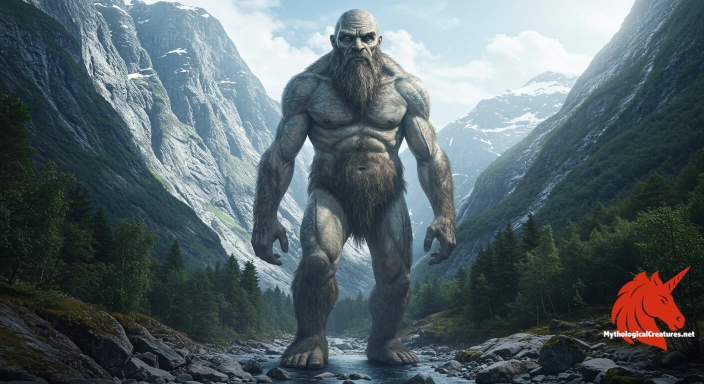
The Mythological Creatures Book Series
Yokai, Greek, Norse, Egyptian & Chinese. Five illustrated field guides to the creatures the old stories either warned or told you about.
Curated by the Mythological Creatures Team
Series editor: Mythological Creatures Directory
Primary desk: Hellenic & Ancient Mediterranean Desk
(rev. November 2025)