
Ao: Ao is a colossal marine turtle from Chinese mythology renowned for his role in world creation.

Ao
Ao - Ao is a pivotal figure in Chinese cosmogony, symbolising endurance and the structural support of the cosmos by either propping up the sky or carrying sacred islands.
the legend in five swipes.
the legend in five swipes.
When did people first speak of Ao?
Ao emerges as a colossal marine turtle whose mythic presence has echoed through the ages of Chinese lore. His origins are embedded in ancient narratives that recount the formation of the world and the birth of cosmic order. Early legends situate him in the tumultuous South China Sea, where primordial elements and mythic forces intertwined. His story is dramatically interlaced with that of the celestial goddess Nüwa, whose desperate repair of a shattered sky brought both necessity and transformation. The intervention where his four mighty legs were repurposed for cosmic restoration marks a pivotal moment in myth, symbolising sacrifice and renewal. His depiction reflects a synthesis of nature and divinity, embodying the elemental power of the sea and the spirit of creation. Ao’s narrative, though sparse in early written records, has flourished in oral traditions and artistic representations over millennia. The enduring resonance of his legend has contributed richly to Chinese cultural identity and the broader tapestry of natural mythology. His myth has long been a symbol of the interplay between the physical world and the celestial realm.
How was the story of Ao recorded?
The lore of Ao finds its roots in a variety of ancient texts and oral traditions that have been preserved for centuries. Early inscriptions and poetic narratives record his role during the primordial age, interweaving him with the acts of celestial beings. Some ancient scripts recount the dramatic event when Nüwa, in her celestial repair, sacrificed Ao’s four limbs for the purpose of sustaining the heavens. Another stream of narrative from coastal regions holds that Ao still endures beneath the Bohai Sea, bearing the sacred islands of immortality upon his expansive back. Variants of his tale illustrate a dynamic mythological character whose symbolism has been reshaped across time. In some retellings, Ao is remembered primarily for his interaction with divine intervention, while in others, his eternal presence is emphasised as a metaphoric pillar of the natural world. The multiplicity of these sources not only enriches his character but also reflects a tradition of layered storytelling in ancient Chinese culture. Folkloric accounts, passed down through generations, further embellish his myth with regional nuances and symbolic embellishments. Cumulatively, these diverse sources have contributed to a comprehensive myth that continues to evolve in narrative and form.
What did Ao look like?
Ao is traditionally depicted as a gigantic marine turtle of awe-inspiring proportions, whose physical form symbolizes the timeless endurance of nature. His shell, often represented as robust and intricately ornamented with celestial patterns, underscores the connection between the terrestrial and the divine. The creature’s massive body is endowed with a textured appearance that suggests the ancient patina of weathered stone blended with the vitality of living water. Notably, his four powerful legs, which once held the capacity to support the heavens, are illustrated as emblematic of both strength and sacrifice. His eyes, deep and reflective, offer a window into the mysterious wisdom acquired over millennia of existence. Variations in artistic depictions sometimes lend him a serpentine quality, hinting at his later transformation into the half-dragon figures of imperial iconography. This combination of aquatic grace and rugged endurance is a testament to his mythic vitality. His overall construction, from the granularity of his skin to the majestic curvature of his shell, is often rendered with a reverence that pays homage to his cosmic significance. Such detailed portrayals serve to deepen the narrative of Ao as both a physical and metaphysical colossus.
Ao Across Different Regions
The legends of Ao have inspired a range of regional interpretations that vary significantly across different parts of China and neighbouring cultures. In southern coastal communities, he is often revered as a guardian of the sea, symbolising protection and stability for those who depend on the ocean. Northern traditions, particularly near the Bohai Sea, underscore myths that declare his continuous existence and his role in sustaining sacred islands. Local beliefs sometimes merge the figure of Ao with other natural deities, resulting in a composite image that highlights the enduring force of nature. In regions with strong Daoist influences, his narrative is embraced as an allegory for the harmony between human existence and the elemental world. Community festivals and maritime rituals occasionally invoke his name as a talisman against the perils of the ocean. Artistic depictions in these areas have adapted his image to reflect local aesthetics, sometimes softening his formidable appearance to one of benevolent strength. These regional adaptations demonstrate the flexibility of his myth, wherein his attributes serve diverse symbolic functions. The variations across locales offer a vibrant mosaic of belief, each contributing unique local colour to the enduring myth of Ao.
Ao: Shared Themes in World Myth
The myth of Ao finds intriguing parallels in the traditions of other cultures, highlighting a universal theme of colossal reptiles as symbols of endurance and cosmic stability. In Japanese folklore, the revered image of the kame, or giant turtle, mirrors Ao’s qualities of longevity and deep wisdom. Similar mythic motifs appear in various Southeast Asian cultures where turtles are imbued with sacred significance and sometimes even attributed the duty of upholding the world. European legends too offer characters burdened with great responsibilities, drawing analogies with guardian creatures whose size and strength are emblematic of natural order. The image of a turtle carrying weighty burdens also resonates with Native American traditions that often connect earthly elements with celestial support. These cross-cultural comparisons accentuate a shared human tendency to attribute elemental forces as protectors and sustainers of the cosmos. Ao’s narrative, in its emphasis on sacrifice for a higher cosmic purpose, finds echoes in multiple mythic cycles around the world. Such parallels reinforce the idea that nature and its creatures carry symbolic power that transcends cultural boundaries. Ultimately, the widespread reverence for such figures speaks to a collective metaphor for balance, endurance, and sanctified interaction between humanity and the natural order.
Where do you see Ao today?
Throughout history, the portrayal of Ao has evolved considerably, reflecting shifts in cultural values and artistic technique. In early mythological accounts, his image was largely emblematic of raw natural power and the essential forces of creation. As dynasties rose and fell, Ao’s legend was absorbed into imperial art, where the narrative of his sacrificed limbs became a recurring motif in statuary and commemorative monuments. This transformation paved the way for his later depiction as the half-dragon, half-turtle figure known as Bixi, a cherished element of East Asian sculptural tradition. In modern times, his legacy has extended into popular culture and environmental discourse, symbolising both resilience and the weight of history. Contemporary exhibitions and media continue to reinterpret his myth, often highlighting his role as a bridge between ancient natural philosophy and modern ecological concerns. His thematic evolution mirrors changing attitudes toward nature, reflecting a growing appreciation for the mythic dimensions of the natural world. As scholars and artists alike revisit his story, Ao remains a potent emblem of cosmic durability and the interconnection of past and present. The enduring appeal of his myth, integral to the spiritual fabric of Chinese culture, ensures his continued relevance in both academic discussion and popular imagination.
Interesting Fact
Ao’s myth uniquely merges natural history with cosmological creation, illustrating how ancient Chinese culture interpreted the natural world through symbolic storytelling and revere turtles as icons of endurance and stability.
Mythological Treasures
Chinese Beasts: A field guide to the dragons and demon kings of Chinese myth
From river dragons to demon kings, with the legends that shaped five thousand years of storytelling.
Greek Myths: A field guide to the monsters of ancient Greece
Every monster here earned its place in legend, and each gets a full page of artwork and the story behind it.
Norse Sagas: A field guide to the beasts of the Viking world
Drawn from the saga accounts themselves, with the powers, weaknesses and doom of each being set out.
the legend in five swipes.
Curated sponsor space
One subtle banner. Thousands of myth lovers.
We offer a small number of curated sponsor spots for relevant books, courses, games, and art. No clutter, just well-matched partners.
Partner with usQuick Creature Info
Associations:
Our Mythic Legendary Rating:

Also Sometimes Known As:
Habitat:
Supernatural Powers:
Physical Attributes:
Abilities:
Behavior:
Weaknesses:
Lore:
Related Creatures, Tales or Lore
- BBixi
- WWorld Turtle
- CCosmic Tortoise
References
Discover Another Mythical Legend You May Not Have Heard Of?
Uncover the mysteries of ancient folklore and expand your knowledge of legendary beings from cultures around the world.
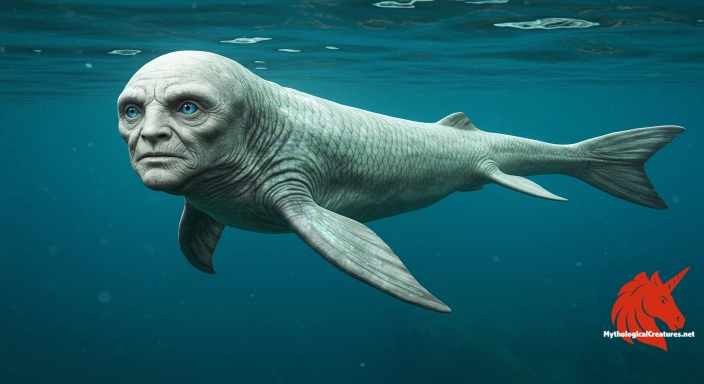
Dare to Meet the Sea monk....
The Mythological Creatures Book Series
Yōkai, Greek, Norse, Egyptian & Chinese. Five illustrated field guides to the creatures the old stories either warned or told you about.
Curated by the Mythological Creatures Team
Series editor: Mythological Creatures Directory
Primary desk: Asian & Pacific Myth Cycles Desk
(rev. November 2025)