
Apkallu: The Apkallu are a group of seven demigods known as the Seven Sages from Mesopotamian mythology.

Apkallu
Apkallu - Central to the transmission of divine wisdom in ancient Mesopotamian culture
Origins & First Encounters
The Apkallu emerge from the mists of ancient Mesopotamian lore as a revered band of seven demigods whose origins fuse myth with the dawn of civilisation. Their forms, a curious amalgam of man and creatures of water or sky, reflect a symbolic melding of human intellect and the natural world. These figures are celebrated for their profound wisdom, often intimating a divine insight bestowed upon early humanity. Deeply interwoven with the era of primeval kings, they are sometimes portrayed as the ultimate mentors or sages who ushered in the arts of civilisation. Their presence in myth imbues early historical narratives with a sense of the sacred, linking the human realm with the cosmic order. Over time, their stories came to embody the transitions between the mortal and divine, suggesting an ancient era when gods walked among men. In many narratives, the Apkallu are seen as custodians of esoteric knowledge, offering guidance to rulers and commoners alike. Their legacy encapsulates an age when the mysteries of life were revealed through the union of myth and nature. The enigmatic allure of the Apkallu continues to inspire wonder, making them timeless symbols of ancient wisdom and divine revelation.
Source Texts & Tale Variants
Ancient cuneiform tablets and monumental inscriptions serve as the primary reservoirs for the accounts of the Apkallu, capturing their essence in a spectrum of literary and artistic forms. The rich mosaic of texts, from royal annals to dedicated hymns, provides varying portrayals that emphasise their roles as harbingers of divine wisdom. Some texts recount them as pre-flood saviours whose guidance was critical to establishing early societal order, while other accounts integrate them as post-diluvian advisers. Diverse ancient narratives have interwoven these figures with the mythic history of kingship and the founding of humane arts. Through the poetic language of these inscriptions, the Apkallu are depicted not just as mythical beings but as literal benefactors of civilisation. Variations in their story across different texts have spawned multiple versions of their origin, each reflective of local spiritual imperatives. Ritual literature and mythological epics further amplify their prominence by attributing to them a repository of lost knowledge. The interplay of history and myth in these sources invites a deeper exploration of their fabled contributions. By bridging the gap between the earthly and the divine, the Apkallu's stories have provided endless fodder for mythmakers in the ancient world. Their multifaceted narrative, preserved over millennia, continues to challenge and enrich our understanding of early human thought.
Form & Powers
The Apkallu are depicted in art and sculpture with an arresting visual duality that fuses human and animal characteristics in a seamless blend. Often, their upper bodies retain a recognisable human form, complete with an expressive face that speaks of enigmatic sagacity. The lower portions, however, are frequently rendered with aquatic or avian traits, sometimes manifesting as the tail of a fish or the wings of a bird. Their depictions incorporate a variety of textures including scales and feathers, each element underscoring the magical origin of these beings. In many reliefs, the Apkallu are adorned with ornate headgear and ceremonial attire, suggesting their elevated status among divine emissaries. Their eyes are often illustrated as deep and luminous, hinting at an inner vision that transcends mortal perception. The integration of human form with the fluid lines of natural elements in their portrayals serves to reinforce their role as conduits between the tangible and the transcendent. Artistic variations across different periods showcase changes in their detail, ranging from intricate carvings to more abstract symbolic forms. This synthesis of human and natural iconography not only captivates the viewer but also encapsulates the Apkallu’s enduring role as embodiment of ancient wisdom. Their physical manifestation remains a powerful testament to the imaginative prowess of early civilizations.
Regional Faces
The image of the Apkallu, while rooted in Mesopotamian tradition, has been adapted and reinterpreted across a variety of regional contexts. In the heartland of ancient Sumer and Akkad, they were venerated as the primordial advisors who directly influenced the emergence of civilisation. Assyrian artefacts tend to accentuate their hybrid traits with symbols that echo local astronomical and ritual practices. In neighbouring territories, the Apkallu are sometimes merged with indigenous deities, thereby absorbing characteristics unique to local mythologies. The fluidity in their depiction has allowed regional artists and scribes to reinterpret their forms, nuances, and roles according to diverse cultural expectations. Some portrayals, for instance, emphasise benevolence and the nurturing aspects of natural forces, whereas others call attention to their stern, kingly demeanour. The adaptability of their iconography is further highlighted by variations in their attire, facial expressions, and even the chosen elements—be it water, air, or earth—that complement their hybrid nature. This patchwork of regional influences serves to remind us that the Apkallu were more than static figures; they were living symbols attuned to the spiritual and societal currents of their time. Their presence in different local traditions underscores a universal longing to merge divine guidance with human endeavour. Ultimately, the regional variations serve as a rich tapestry that illustrates the profound and far-reaching impact of these mythical sages.
Cultural Parallels
The Apkallu share intriguing thematic and visual parallels with myriad mythological figures across the ancient world. In many traditions, the role of imparting divine wisdom to humanity is a recurring motif, much like the mentorship of figures such as Chiron in Greek mythology. This archetypal guide, straddling the domains of human experience and otherworldly insight, finds a close echo in the multifaceted legacy of the Apkallu. Their hybrid appearance, blending human qualities with elements of nature, is not unique but resonates with similar figures in various indigenous narratives. Comparisons can also be drawn with the Watchers or Nephilim, whose ambiguous nature has sparked debates over the boundaries between celestial and mortal realms. Such cross-cultural echoes highlight a shared human fascination with beings that embody both the sacred and the earthly. The motif of a divine intermediary, bridging celestial knowledge and the mundane world, recurs in the stories of rishis in India and even in some aspects of Celtic tradition. The Apkallu thus offer a fascinating case study in the universal quest for transcendental wisdom, a quest that spans distant cultures and epochs. Their narrative, filled with dualities and contradictions, continues to inspire comparative analysis among scholars and enthusiasts of mythology. In essence, the Apkallu stand as a compelling testament to a global cultural phenomenon that celebrates the union of divine enlightenment and human endeavour.
Legacy & Modern Evolution
The evolution of the Apkallu from enigmatic deity figures in ancient stone reliefs to icons of enduring wisdom in contemporary discourse charts a remarkable cultural journey. Their initial depictions in monumental inscriptions and temple art underscored a close relationship between divine intervention and the foundation of early human civilisation. Over the centuries, as interpretations of myth shifted and expanded, these figures transformed into rich symbols of intellectual and spiritual legacy. Modern scholars and artists alike have embraced the Apkallu as emblematic of the perennial human quest for enlightenment and understanding. Their dual nature, bridging the tangible and the mystical, has resonated in modern literature, film, and visual arts, often representing a fusion of science and myth. Museums around the world continue to exhibit ancient artefacts that capture their timeless allure, ensuring that their stories remain vivid in the public imagination. Contemporary reinterpretations have also seen them reimagined in digital media and graphic novels, establishing a cross-generational conversation about the nature of wisdom. The Apkallu’s legacy is intricately linked to broader themes of transformation, renewal, and the eternal search for knowledge. Their mythic presence continues to inspire creative works that celebrate the mystique of ancient traditions while inviting new interpretations. In every form, the Apkallu persist as potent symbols of a forgotten age, their evolving story a bridge between the past and our present-day yearning for meaning.
Interesting Fact
Despite variations in their depictions, the Apkallu consistently represent the transformative power of wisdom and the enduring legacy of ancient Mesopotamian culture.
Partner with us
Sponsor this space
Reach thousands of mythology enthusiasts with a curated placement on our creature pages.
Learn about sponsorshipQuick Creature Info
Origin:
Associations:
Our Mythic Legendary Rating:

Also Sometimes Known As:
Habitat:
Supernatural Powers:
Physical Attributes:
Abilities:
Behavior:
Lore:
Related Creatures, Tales or Lore
- OOannes
- EEnmeduranki
- AAdapa
References
Discover Another Mythical Legend You May Not Have Heard Of?
Uncover the mysteries of ancient folklore and expand your knowledge of legendary beings from cultures around the world.
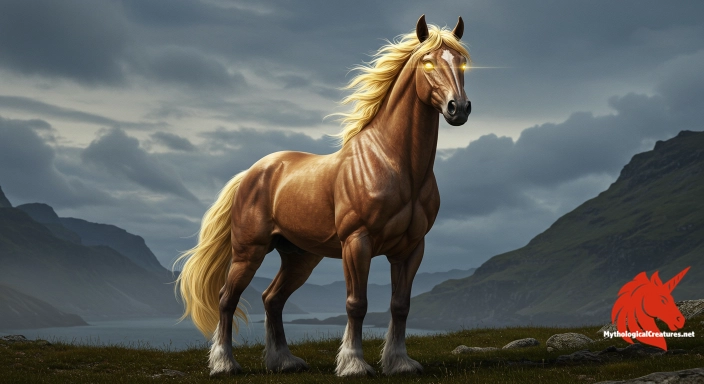
Dare to Meet the Gullfaxi....
Curated by the Mythological Creatures Team
Series editor: Mythological Creatures Directory
Primary desk: Hellenic & Ancient Mediterranean Desk
(rev. November 2025)