
Armaros: Armaros is a fallen angel and one of the 20 leaders among the 200 Watchers as described in the Book of Enoch.
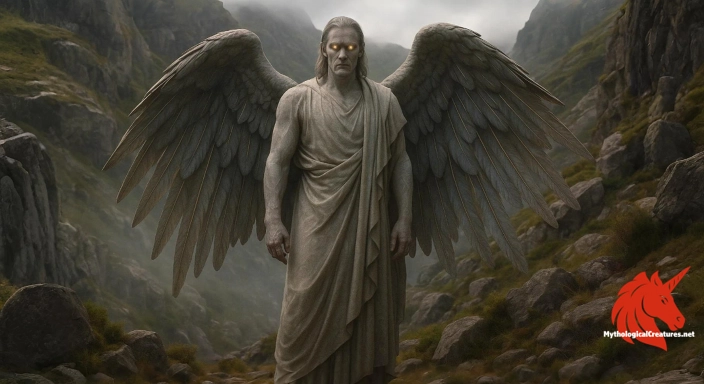
Armaros
Armaros - Armaros, as one of the 20 leaders of the fallen angels known as the Watchers, plays a crucial role in the narrative of divine transgression and the imparting of forbidden knowledge to humanity.
Origins & First Encounters
Armaros emerges as a compelling figure in ancient myth, renowned for his status as the 11th watcher among the 200 fallen angels mentioned in the Book of Enoch. His name, often understood as meaning "cursed one" or "accursed one," reflects both his celestial heritage and his tragic fall from grace. The tale of Armaros is rooted in an era when divine beings interacted with earth in mysterious and often perilous ways. He is entwined with the sacred geography of Mount Hermon, a place where watchers are said to have sworn binding oaths that sealed their fates. His identity is marked by linguistic layers, as his name appears in both Aramaic and a later Greek corruption, hinting at the fluidity of his myth over time. Early attestations place him squarely within the narrative of ancient celestial hierarchies, making him a mirror for the broader themes of divine rebellion and cosmic punishment. The cultural context of his story resonates with communities grappling with the interplay of divine order and human destiny. Over time, his narrative has evolved to symbolise the tragic consequences of transgressing heavenly boundaries, capturing the imagination of those who study apocalyptic and angelic lore.
Source Texts & Tale Variants
The primary source for Armaros’s legend is the Book of Enoch, where he is listed as one of the leaders among the fallen angels. This text, though apocryphal, offers a detailed account of the descent of the watchers during the days of Jared. Various manuscript traditions of the Book of Enoch provide slight variations, with some versions naming him Armoni or Armoniel, further complicating his mythological profile. Secondary ancient texts and later Jewish mystical writings also reference his role, though his character is often blurred with that of other fallen angels. Some narratives present him as a central figure in the breaking of divine laws, while others merely list him among those who transgressed heavenly order. The account in Enoch is interwoven with themes of celestial conspiracy and human corruption, helping to establish his reputation as both a bearer of forbidden knowledge and a symbol of divine retribution. Despite the fragmentary nature of some sources, the consistent portrayal of Armaros as a cursed and powerful being lends credibility to his enduring legacy. Variations of his story in later traditions further underscore the dynamic evolution of this ancient narrative.
Form & Powers
Descriptions of Armaros’s appearance are as enigmatic as his myth, blending elements of angelic splendour with marks of his fall from grace. Ancient texts often hint at a majestic form that once shone with divine light, now shadowed by an aura of melancholy and condemnation. He is frequently depicted in iconography as a being with imposing wings and an ethereal glow, attributes that once symbolised his high rank among the celestial host. Some traditions imagine him with a countenance that oscillates between beauty and terror, embodying the dual nature of his existence. His eyes, according to some later interpretations, are said to reflect both profound wisdom and the sorrow of an irreversible transgression. Visual depictions, when they occur, sometimes show him draped in flowing robes that hint at his noble origins, even as his fall is etched into every line of his visage. The contrast between his original radiant form and the darkened reinterpretations of his later state reinforces the narrative of divine downfall. In modern artistic renditions, Armaros is occasionally portrayed as both alluring and forbidding, encapsulating the timeless conflict between celestial grace and earthly despair.
Regional Faces
The figure of Armaros has undergone considerable transformation as his myth spread across different cultural and geographical landscapes. In the Near Eastern traditions where the Book of Enoch first circulated, he was understood primarily within the context of early Jewish apocalyptic literature. As the narrative journeyed into Greek texts, his name and attributes were subtly reshaped by linguistic and cultural reinterpretations, turning him into a symbol of celestial corruption. In medieval Christian thought, Armaros was absorbed into the wider demonological framework where his role as a fallen angel was emphasised, though he often remained in the shadow of more prominent figures. Eastern Orthodox traditions, while less focused on individual identities among the fallen angels, still recognised the complex interplay between divine order and rebellion that his story epitomised. Meanwhile, in modern esoteric and occult circles, Armaros’s identity is sometimes revisited with an emphasis on his enigmatic role as both a guide and a warning. Local adaptations have varied widely, with some cultures viewing him as an instructive archetype of cosmic rebellion and others as a cautionary figure who embodies the risks of overstepping divine limits. These regional variations highlight the fluidity of celestial myth and the capacity of such legends to adapt to the evolving concerns and imaginations of diverse societies.
Cultural Parallels
Armaros’s narrative finds parallels in a number of other mythological traditions, where figures of divine descent fall from favour and assume ambiguous roles between heaven and earth. Like Lucifer in later Christian tradition, his story embodies the eternal conflict between divine order and the allure of forbidden knowledge. In some respects, his tale echoes that of Prometheus from Greek mythology, who defied the gods in his quest to benefit humanity—a rebellion that came at a steep cost. Both figures serve as reminders of the perils inherent in challenging divine supremacy, though Armaros’s sin is framed within a celestial hierarchy rather than the more human-centred defiance seen in Prometheus. Comparative analysis shows that his depiction as a bringer of transgressive secrets is shared by other watchers such as Semyaza, each contributing to a broader narrative of untethered ambition and catastrophic consequence. Similar motifs appear in Mesopotamian lore, where gods or demigods cross boundaries with mortals, underscoring universal themes of transgression and punishment. The motif of a cursed being, irrevocably altered by their defiance, resonates across diverse cultures, reinforcing the idea that celestial beings bear responsibilities that transcend the physical realm. Such cross-cultural parallels enrich our understanding of Armaros, situating him within a global framework of mythic narratives about the downfall of divine power.
Legacy & Modern Evolution
Over the centuries, the story of Armaros has experienced a gradual evolution, reflecting shifts in religious, cultural, and artistic sensibilities. Originally embedded within the vivid tapestry of Jewish apocalyptic literature, his enigmatic image slowly seeped into broader Western occult traditions and medieval Christian demonology. Modern interpretations have reimagined him in a variety of ways, ranging from a tragic figure imbued with a sense of doomed nobility to a stern symbol of divine justice. Contemporary artistic representations and literary works occasionally resurrect his legacy, blending ancient motifs with modern psychological and existential dilemmas. His portrayal has been substantially influenced by the resurgence of interest in apocryphal texts during the Renaissance and later periods, a process that allowed his figure to be reinterpreted in diverse cultural contexts. In the realms of popular culture and speculative fiction, Armaros is sometimes depicted as a mentor with ambiguous motives, reflecting the enduring complexity of his narrative. His story, though less mainstream than that of some other fallen angels, continues to inspire dialogue around themes of rebellion, consequence, and the tension between light and darkness. Today, Armaros stands as a testament to the power of myth to evolve and adapt, resonating with modern audiences as a symbol of the cost of divine disobedience and the ever-present allure of hidden knowledge.
Interesting Fact
Armaros' multifaceted identity, from his Aramaic origins to his Greek variants, highlights the intricate interplay between language, culture, and myth in ancient apocryphal texts.
For serious mythcraft
Your project belongs among the legends
If your work deepens how people understand, play with, or teach mythology, a sponsor placement here keeps it in front of the right readers all year.
Submit a sponsorship enquiryQuick Creature Info
Our Mythic Legendary Rating:

Also Sometimes Known As:
Habitat:
Supernatural Powers:
Physical Attributes:
Abilities:
Behavior:
Lore:
Related Creatures, Tales or Lore
- SSemyaza
- AAzazel
- RRaguel
References
Discover Another Mythical Legend You May Not Have Heard Of?
Uncover the mysteries of ancient folklore and expand your knowledge of legendary beings from cultures around the world.
Dare to Meet the Germanic dragon....
Curated by the Mythological Creatures Team
Series editor: Mythological Creatures Directory
Primary desk: Hellenic & Ancient Mediterranean Desk
(rev. November 2025)