
Arsan Duolai: Arsan Duolai is a Yakut god of the underworld renowned for his dark and malevolent nature.
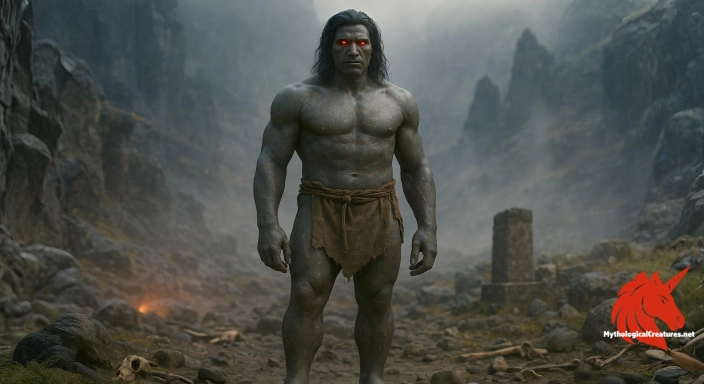
Arsan Duolai
Arsan Duolai - Represents the dark forces of greed and evil through control over the underworld and sacrificial practices.
Origins & First Encounters
Arsan Duolai emerges as a formidable deity within the rich spiritual tapestry of the Yakut people, symbolising the profound mystery of the underworld. His origins are deeply rooted in the austere landscapes of north-eastern Siberia, where ancient shamanistic practices intertwined with the elemental forces of nature. The god is portrayed as bridging the realms of life and death, reflecting a complex understanding of cosmic balance that has evolved over centuries. His early presence in oral tradition highlights a connection with the forces of fate and retribution, elements intrinsic to many northern mythologies. As the lore matured, Arsan Duolai was seen not only as a controller of the afterlife but also as an arbiter of moral conduct among his followers. In Turkish mythology, his identity transformed further into a symbol of greed and malicious influence, showcasing the fluid nature of myth in response to cultural contexts. This dual persona underscores how a single deity can encapsulate both protective and cautionary aspects in different societies. His enduring narrative offers insights into how rituals, sacrifice, and the inevitability of death were interwoven with the ethical life of the community. The god continues to intrigue, serving as a bridge between the ancient world and the enduring questions of existence.
Source Texts & Tale Variants
The stories surrounding Arsan Duolai have been nurtured and transmitted through generations by the Yakut people, forming a core part of their oral heritage. Early accounts, often embedded in shamanic chants and ritual recitations, illustrate his dominion over a shadowed realm that governs life's transitions. Ancient texts and folkloric narratives, though fragmentary, hint at his role in mediating the connection between the living and the spirit world through symbolic offerings. Diverse versions of his myth reveal a character who operates both as a guardian of cosmic order and as a figure embodying the consequences of human excess. Certain traditional accounts stress his ritual involvement, particularly the collection of cattle and horses for sacrificial purposes, underscoring the practical aspects of ancient rites. Later adaptations, notably in Turkish folklore, reframe his character by emphasising his association with greed and malevolent power. These evolving narratives underscore how his myth has absorbed and reflected the ethical values of different cultures over time. The multiplicity of story variants enriches our understanding of his significance, showing how oral traditions can preserve a dynamic and multifaceted deity. His mythic tapestry continues to inspire reinterpretation, serving as a vital thread in the broader loom of Eurasian mythologies.
Form & Powers
Traditional depictions of Arsan Duolai present him as a striking and enigmatic figure whose physical attributes embody the stark realities of the underworld. He is often envisioned as a tall, imposing presence with an aura that is both chilling and captivating. His visage is marked by deep-set, penetrating eyes that seem to reflect the cold light of the moon over frozen expanses. Many narratives describe him as cloaked in dark, flowing garments that merge seamlessly with the shadows of his domain, symbolising his intricate link to the realm of death. His features are sometimes rendered with sharp, angular contours, suggesting a remorseless character shaped by the harshness of his environment. Some artistic reinterpretations include subtle hints of animalistic motifs, such as delicate antler-like adornments or skeletal embellishments, which underscore his authority over sacrificial rites. The variability in his height and build across different renditions speaks to the flexible nature of myth-making and the influence of local artistic licence. Overall, his physical portrayal is as much a testament to the mystery of the underworld as it is an embodiment of the timeless themes of mortality and retribution.
Regional Faces
The myth of Arsan Duolai exhibits notable regional variations, reflecting the diverse cultural landscapes in which his story is told. Within the traditional Yakut context, he is revered primarily as an underworld deity whose dominion underscores the natural cycle of life and death, deeply rooted in shamanistic rituals. In contrast, Turkish mythology has reimagined him as an embodiment of greed and malevolence, thereby serving as a stark caution against avarice and moral corruption. In different regions, the local interpretation of his role adapts to mirror the prevailing socio-cultural concerns, be it through emphasising his protective functions or his punitive aspects. Artistic depictions and ritual practices also vary, with northern portrayals tending towards austere, nature-inspired imagery and southern renditions incorporating more elaborate, symbolic ornamentation. These regional adaptations enrich the myth by infusing it with elements unique to the local environment and historical experience. The fluidity with which his figure traverses cultural boundaries speaks to the universal appeal of his myth. Such variations not only enhance his enigmatic character but also invite communities to engage with timeless questions about the nature of justice and the afterlife.
Cultural Parallels
In many mythological traditions, Arsan Duolai shares intriguing similarities with other deities who govern the realms of death and the afterlife. His role as an underworld figure draws parallels with the ancient Greek concept of Plouton, as well as with other regional deities who oversee the transition between mortal life and the spiritual continuum. Like the Slavic god Veles, whose character also carries elements of both benevolence and trickery, Arsan Duolai functions as a mediator of cosmic order and moral consequence. His dual portrayal, ranging from a guardian of the afterlife to an emblem of greed and malevolence, resonates with the way many cultures use myth to convey messages about ethical integrity. Similar deities across diverse traditions often share the motif of collecting or guarding sacrificial offerings, a practice that underscores the universal importance of ritual sacrifice. The convergence of these themes in different cultural settings illustrates how societies harness myth to explore complex relationships between human behaviour and the natural world. His myth also finds echoes in the concept of the psychopomp, a guide through the liminal spaces of existence, seen in various cultural narratives. Delving into these comparative elements enriches our understanding of how myth transcends boundaries and reflects shared human experiences of life, death, and moral accountability.
Legacy & Modern Evolution
Over time, the legacy of Arsan Duolai has evolved to encapsulate shifting cultural values and contemporary reinterpretations of ancient myth. His early image as a remote and mysterious guardian of the underworld gradually gave way to more nuanced portrayals that highlight both his formidable power and his role as a moral arbiter. In modern art and literature, his character has been reimagined as an enigmatic antihero, reflecting society’s ongoing fascination with the darker aspects of human nature. Contemporary narratives often juxtapose his traditional association with death and sacrifice against modern themes of avarice and corruption. This evolution in his character mirrors broader cultural dialogues about the nature of power, ethical responsibility, and the consequences of excess. Festivals and ritual commemorations in some regions subtly weave elements of his ancient mythology with modern symbolic interpretations. His enduring image has also found expression in visual media, where artists reframe his spectral form to explore themes of isolation, mortality, and cosmic justice. The continuing discourse surrounding Arsan Duolai underscores the timeless nature of myth and its capacity to adapt, inspire, and provoke reflection in an ever-changing world.
Interesting Fact
An intriguing aspect of Arsan Duolai is his syncretic identity, merging elements of Yakut and Turkish mythologies to embody a unique archetype of underworld deities driven by greed and malevolence.
For indie creators
Give your myth project a permanent home
Indie authors, artists, small studios, and makers can secure an annual, non-intrusive sponsor slot that meets readers where they explore.
Obtain more informationQuick Creature Info
Origin:
Our Mythic Legendary Rating:

Also Sometimes Known As:
Habitat:
Supernatural Powers:
Abilities:
Behavior:
Lore:
References
Discover Another Mythical Legend You May Not Have Heard Of?
Uncover the mysteries of ancient folklore and expand your knowledge of legendary beings from cultures around the world.
Dare to Meet the Yesseus Mazareus Yessedekeus....

Curated by the Mythological Creatures Team
Series editor: Mythological Creatures Directory
Primary desk: Asian & Pacific Myth Cycles Desk
(rev. November 2025)