
Asag: Asag is a hideous Sumerian demon embodying the destructive forces of winter cold and illness.
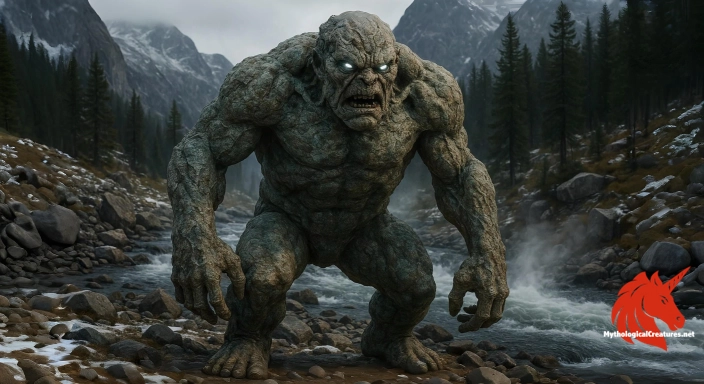
Asag
Asag - Asag represents the chaotic and destructive forces of winter and disease in Mesopotamian mythology, serving as a counterpoint to divine order.
Origins & First Encounters
Asag emerges from ancient Sumerian myth as a formidable demon whose very essence encapsulates the chaos of winter and the terror of untamed nature. Born from a cultural milieu that sought to explain the harsh caprices of the natural world, his origins are intricately linked to early Mesopotamian beliefs and the mythological poem Lugal-e. His name is synonymous with an otherworldly cruelty that transforms even the familiar flow of rivers into sites of boiling chaos. This demon’s narrative, interwoven with the seasons, reflects a people’s struggle with the relentless cold and the sudden onslaught of disease. His existence symbolises the ever-present threat of natural calamities, where the transition of seasons could bring about life-altering disruption. The myth of Asag not only provides insight into ancient conceptions of evil but also serves as an early allegory for the battle between order and the elemental forces of nature. His tale is a stark reminder of the unpredictability that gripped a civilisation living under the constant shadow of environmental hardship. Through his depictions, communities sought to understand and ultimately conquer the forces that endangered their survival. His presence in myth served as a catalyst for the heroic narrative of divine intervention, setting the stage for epic confrontations between chaos and civilisation. In this way, Asag remains a potent symbol of nature’s dual capacity to nurture and devastate.
Source Texts & Tale Variants
The primary narrative of Asag is principally drawn from the Sumerian mythological poem Lugal-e, which has been preserved on ancient clay tablets and through cuneiform inscriptions. These early texts provide a glimpse into a world where divine beings and chthonic forces constantly vied for supremacy over nature. Variants of his story appear in later Akkadian texts, where the emphasis on his horrifying power and his role as an embodiment of cold and disease is further augmented. Some texts recount the dramatic tale of his defeat at the hands of Ninurta, the heroic deity armed with the enchanted talking mace Sharur. Although fragments of these stories have survived, each variant reinforces his identity as a personification of nature’s most destructive elements. The narrative is enriched by multiple sources that, despite minor differences, converge on the theme of cosmic imbalance and its eventual restoration through divine triumph. Over time, scribal traditions have merged the myth of Asag with other similar demonic entities, adding layers of complexity to his character. These texts not only serve as a record of ancient beliefs but also highlight the nuanced understanding of natural forces among early civilizations. The enduring nature of his myth in ancient literature underscores its cultural significance across varied regions. Each source contributes to a mosaic of beliefs that have helped shape our understanding of early mythological conceptions of evil and chaos.
Form & Powers
Ancient descriptions of Asag focus on his grotesquely terrifying appearance, which defies conventional description and embodies the elemental cruelty of winter. His body is often imagined as a living amalgam of rock and frost, as if he were sculpted from the very mountains that bore his progeny. The texture of his skin, described as rough and jagged, mirrors the inhospitable terrain of his supposed dwelling places, whether the abyss or lofty peaks. It is said that his very presence causes the natural world to react violently, as even the fish in nearby rivers are driven to boil from the sheer intensity of his hideous aura. His eyes, often depicted as bloodshot and malevolent, seem to glow with an inner fire that betrays his demonic essence. Some accounts detail elongated, twisted limbs that contribute to an overall impression of disproportion and unearthliness. His face is marked by contorted features that evoke both suffering and the unyielding force of nature, capturing the imagination of those who dared to visualise his form. The variability in his size across different traditions adds to the enigma, with some portrayals casting him as an immense being capable of subjugating entire landscapes. Every aspect of his physical description serves as a metaphor for the brutal and uncontrollable aspects of winter and decay. Ultimately, his monstrous form is a deliberate embodiment of terror, designed to instil awe and dread in equal measure.
Regional Faces
The myth of Asag, although rooted in Sumerian tradition, exhibits notable regional adaptations that reflect the diverse interpretations of natural catastrophes across Mesopotamia. In some Akkadian traditions, his identity is further intertwined with the formidable landscapes of high mountains, where his presence is believed to curse the cold mountain passes and valleys. Local narratives often stress his connection to the winter season, portraying him as a harbinger of both frost and disease. Rural communities, in particular, adapted his myth to explain the sudden onset of harsh weather and the accompanying natural and social hardships. In certain areas, he is depicted not solely as a demonic force but as an elemental spirit bound to the rhythms of nature, whose influence waxes and wanes with the seasons. These regional variations underscore a collective attempt to reconcile cultural traditions with the unpredictable rhythms of environmental change. Some versions even elevate his role as the progenitor of other rock-based demons, thereby integrating local folklore and legend with broader mythological themes. The cultural integration of his myth highlights the interplay between geography and myth, where the physical landscape directly shapes the legendary character. His story, adapted differently across regions, serves as a bridge between local rituals and broader theological ideas. This interregional tapestry of myths illustrates the dynamic nature of ancient storytelling and its capacity to evolve with shifting societal needs.
Cultural Parallels
In comparing Asag to other mythological entities, one finds a shared motif of monstrous embodiment of natural disasters and the chaotic forces of winter. His character resonates with similar demons in Mesopotamian culture, such as the Asakku, who likewise symbolised the malevolent aspects of nature and disease. Across various traditions, figures like the Norse frost giants emerge as cultural counterparts, illustrating how disparate societies grapple with the personification of the destructive winter. This cross-cultural reflection reveals an underlying human preoccupation with the elemental forces that challenge human existence. Asag’s hybrid form, melding human and natural elements, is reminiscent of other liminal beings whose existence defies the boundaries between nature and civilisation. The hero-versus-monster narrative found in his myth echoes a broader mythic structure where divine figures overcome chaos to restore order. This thematic parallel is evident in many cultural traditions where the vanquishing of a seemingly insurmountable foe symbolises the triumph of civilisation over wild nature. Furthermore, his enduring emblematic value is reinforced by his role as both a literal and metaphorical representation of the cold and the threatening unknown. Comparative studies emphasise that while the specific details may vary, the underlying archetype of the monstrous adversary remains a universal symbol. Such cross-cultural analysis not only enhances our understanding of Asag but also illuminates the shared psychological and environmental challenges that these myths seek to address.
Legacy & Modern Evolution
The myth of Asag has evolved considerably from its ancient origins, transitioning from a terrifying personification of winter’s wrath to a multifaceted symbol rich in cultural meaning. In antiquity, he was revered and feared as an inevitable force that embodied the destructive qualities of nature and the harsh realities of seasonal change. As centuries passed, reinterpretations of his character allowed for a blending of local and international mythic themes, enabling his story to persist in diverse forms. Modern retellings often adapt his image to serve as a cautionary emblem of environmental extremities and the human struggle against overwhelming natural forces. Contemporary fantasy literature and digital media have resurrected his legacy, often portraying him as a fearsome adversary within narratives that explore themes of chaos and restoration. His name is invoked in modern role-playing games and occult literature, where his attributes continue to evoke both dread and fascination. The evolution of his myth reflects a broader trend in which ancient symbols are recontextualised to address present-day concerns, including climate change and ecological imbalance. Today, Asag’s enduring presence in cultural discourse underscores the timeless human need to interpret and symbolise the forces of nature, bridging the gap between ancient belief and modern existential anxieties. His legacy is a powerful reminder of the interplay between myth, nature, and societal resilience in the face of natural disasters.
Interesting Fact
It is intriguing that Asag's mere presence can cause such extreme natural phenomena, blurring the lines between myth and observable nature.
For publishers and studios
Your next readers are already here
Many of our visitors are looking for books, campaigns, and resources that deepen their journey into myth. Position your title or setting here.
Discuss a placementQuick Creature Info
Origin:
Features:
Associations:
Our Mythic Legendary Rating:

Also Sometimes Known As:
Habitat:
Supernatural Powers:
Physical Attributes:
Abilities:
Behavior:
Weaknesses:
Lore:
References
Discover Another Mythical Legend You May Not Have Heard Of?
Uncover the mysteries of ancient folklore and expand your knowledge of legendary beings from cultures around the world.
Dare to Meet the Pugot....
Curated by the Mythological Creatures Team
Series editor: Mythological Creatures Directory
Primary desk: Hellenic & Ancient Mediterranean Desk
(rev. November 2025)