
Asherah: Asherah is an ancient Semitic goddess known from a variety of texts including Ugaritic, Akkadian, and Hittite sources.

Asherah
Asherah - Asherah held a central role in ancient Semitic religious practices, symbolising fertility and nurturing. Her potential consort relationship with Yahweh reflects the syncretic and evolving nature of early Israelite spirituality.
Origins & First Encounters
Asherah stands at the heart of ancient Semitic spirituality, revered as a nurturing mother goddess and symbol of fertility. Her origins date back to the early Bronze Age, when diverse communities across the Levant embraced her as a vital force of creation. She emerges from a tapestry of religious traditions that span Canaan, Ugarit, and even into Hittite records, each contributing layers to her multifaceted character. Her worship was interwoven with nature, and sacred groves or trees often symbolised her divine presence. In many ancient communities, she was seen not only as a potent deity in her own right but also as a consort to the supreme god, a partnership that lent her an enduring influence over ritual and daily life. Changing social and religious dynamics gradually shifted her role, especially as monotheistic ideas took hold in Israel and Judah. The rich cultural context in which she thrived allowed for an elaborate mythology that celebrated life, fertility, and cosmic balance. Even as later reforms sought to diminish her importance, echoes of her divine persona continued to resonate in both folklore and ritual practice. Today, Asherah remains a symbol of ancient wisdom and the perennial power of the feminine divine.
Source Texts & Tale Variants
Ancient inscriptions and artefacts form the cornerstone of our understanding of Asherah, offering fragmented yet compelling glimpses into her worship. Texts from Ugarit, where she is named Athirat, highlight her deep roots in Canaanite tradition and underscore her widespread reverence. Akkadian and Qatabanian records further enrich her mythos by portraying her under variant appellations, each reflecting distinctive local insights. Hittite documents introduce variations such as Ašerdu(š) or Ašertu(š), hinting at an adaptation of her character within Anatolian mythologies. Numerous cultic objects and temple remains in Israel and Judah subtly point to her role as a consort figure within an evolving religious framework. Although mythic narratives detailing her deeds are largely elusive, ritualistic motifs and iconographic symbols provide valuable clues about her divine personality. Inconsistent and diverse textual references have spurred rich scholarly debates regarding the extent and nature of her influence. The interplay of different sources reveals a complex religious landscape where her identity was both fluid and resilient. This mosaic of texts and remnants continues to inspire rigorous modern scholarship and fuels ongoing discussions about early Semitic theology.
Form & Powers
Artistic depictions of Asherah do not adhere to a single canonical form, yet they consistently evoke the essence of a majestic and life-affirming divine female. Many surviving images show her adorned in flowing robes and intricate headpieces that signify both her nobility and her connection to nature. She is often associated with natural elements such as trees, with motifs of leaves and branches interwoven into her representations. In several depictions, sacred poles or stylised trees merge with her form, symbolising her role as a mediator between the natural and the divine. The gentle curvature of her figures suggests softness and nurturing qualities that underpinned her status as a mother goddess. Variations in her stature and adornment reveal regional artistic influences, with some portrayals presenting her as imposing and regal while others lean towards a more accessible, maternal image. Emblems of fertility, including fruits and grain, frequently accompany her iconography, reinforcing her association with the cycles of life. Despite the absence of a single definitive image, the composite visual tradition surrounding Asherah communicates a powerful image of continuity and renewal. These diverse artistic impressions ensure that her physical legacy remains as enigmatic as it is enduring.
Regional Faces
Regional interpretations of Asherah illustrate a diverse spectrum of cultural adaptation and local religious expression. In the Levant, particularly among the Canaanite and early Israelite communities, she was venerated as a nurturing protector whose influence extended to both agricultural and familial domains. Ugaritic texts present her as Athirat, embedding her within a rich tapestry of myths that celebrated fertility and cosmic order. Akkadian and Qatabanian sources, meanwhile, reflect her assimilation into broader Mesopotamian traditions through varied nomenclature and symbolic associations. In Anatolia, Hittite references such as Ašerdu(š) or Ašertu(š) underscore a localisation of her myth, where indigenous motifs and cultural nuances subtly reshaped her identity. Sacred groves, ritual poles, and stone altars in different regions evidence how her worship adapted to particular environmental and social contexts. The diversity of her cultic practices illustrates the fluidity with which ancient communities absorbed and transformed her character. Cross-cultural exchanges between neighbouring traditions further enriched these local variants, interweaving aspects of urban and rural religious life. Such regional variations not only highlight the adaptability of her myth but also invite ongoing exploration into how different cultures connected the human and divine.
Cultural Parallels
Comparative mythology reveals striking parallels between Asherah and other ancient goddesses, underscoring shared archetypes of fertility and maternal nurturing. Her embodiment of life-giving power resonates with deities such as Isis in Egypt and Demeter in Greece, whose own narratives celebrate the cycles of nature and rebirth. Like the Mesopotamian figures Inanna and Ishtar, Asherah offers a fusion of both passionate fertility and protective maternal care. She also shares certain attributes with Anatolian goddesses like Cybele, whose iconography emphasises the integral link between the earth and the divine. The role of a consort to a supreme deity, seen in her relationship with Yahweh in some ancient traditions, finds echoes in various pantheons where a primary god is paired with a nurturing partner. This interconnection promotes a broader understanding of how ancient cultures perceived cosmic balance through complementary divine forces. Despite regional differences in names and rituals, the recurrent themes of growth, protection, and regeneration unify these conceptualisations. The syncretism evident in her iconography reinforces the idea that shared human experiences across cultures often give rise to convergent mythological expressions. Such comparative insights enrich our contemporary interpretation of Asherah, affirming her place within an international dialogue of divine femininity and fertility.
Legacy & Modern Evolution
The evolution of Asherah’s mythological legacy is as complex and layered as the cultures that once revered her. In antiquity, she was an essential figure within polytheistic frameworks, celebrated for her contributions to fertility and cosmic harmony. However, as monotheistic paradigms took hold in ancient Israel and Judah, her worship was systematically suppressed, reinterpreted, or even expunged from official religious narratives. Despite these efforts, subtle traces of her cult survived through archaeological discoveries and the persistence of iconographic motifs in everyday life. In modern times, renewed academic interest has sparked vigorous debates surrounding her historical significance and cultural impact. Contemporary interpretations often cast her as a symbol of the lost heritage of ancient feminine divinity, resonating with themes of empowerment and resilience. Literary, artistic, and feminist discourses have revived her memory, portraying her as both a relic of the past and a source of inspiration for reimagined spiritual futures. Ongoing interdisciplinary research continues to peel back layers of her suppressed narrative, revealing new insights into ancient religious practices. The journey of Asherah from a widely honoured goddess to a contested myth and finally to an emblem of renewal highlights the enduring power of myth to influence modern cultural dialogue.
Interesting Fact
A notable aspect of Asherah's legacy is the ongoing scholarly debate regarding her role as either a nurturing mother goddess or a complex divine consort, illustrating the fluidity and dynamism of ancient religious traditions.
Mythology-aligned partners
Showcase your myth-friendly brand here
Run a store, studio, or platform that lives in the world of myth and folklore? A curated sponsor panel on these pages may fit.
Explore partnership optionsQuick Creature Info
Origin:
Associations:
Our Mythic Legendary Rating:

Also Sometimes Known As:
Habitat:
Supernatural Powers:
Physical Attributes:
Abilities:
Behavior:
Lore:
References
Discover Another Mythical Legend You May Not Have Heard Of?
Uncover the mysteries of ancient folklore and expand your knowledge of legendary beings from cultures around the world.
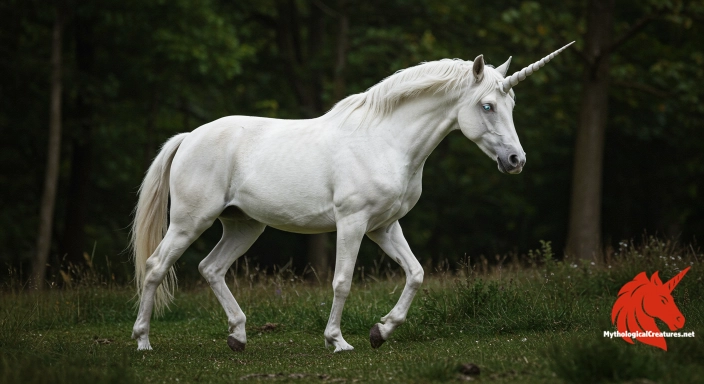
Dare to Meet the Unicorn....
Curated by the Mythological Creatures Team
Series editor: Mythological Creatures Directory
Primary desk: Hellenic & Ancient Mediterranean Desk
(rev. November 2025)