
Cassotis: Cassotis is a water nymph from Greek mythology renowned for her association with a sacred spring near Delphi.
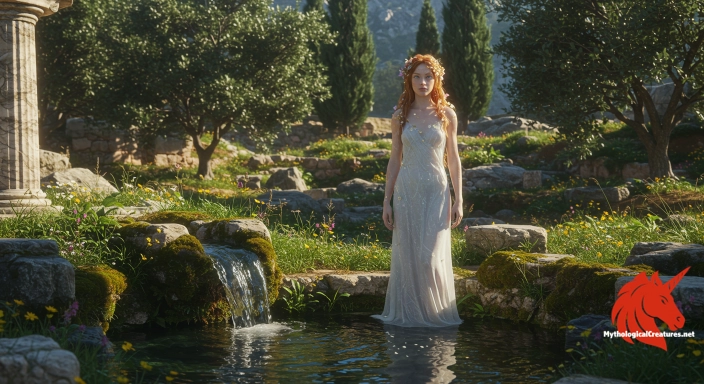
Cassotis
Cassotis - Her sacred spring, dedicated to Apollo, played a vital role in the oracular and ritual practices at Delphi, symbolising the life-giving and purifying aspects of water.
the legend in five swipes.
the legend in five swipes.
Where in the world does Cassotis come from?
Cassotis emerges from ancient myth as a striking figure whose essence is deeply intertwined with the sanctity of Delphi and the mysterious landscapes of Parnassus. Her origin story, preserved in the whispers of time, has been handed down through the ages, with early accounts noting her divine connection to a life-giving spring. In the revered environment of the Oracle, her name became synonymous with the sacred waters that were believed to carry prophetic energy. The spring dedicated to Apollo, bearing her name, was integral to rituals that celebrated both nature and the divine. Her presence embodies the ancient Greek fascination with the elemental forces of nature, expressing an intrinsic link between the corporeal and the spiritual. The elegance and purity associated with her character echo the timeless themes of rebirth and sanctity in natural springs. Cassotis is more than a mythic entity; she stands as a representative of the power of water to nurture, heal, and inspire those who seek the divine. The narrative of her connection to the Oracle reinforces how natural phenomena were celebrated in culture and art, offering devotees a tangible symbol of transcendent beauty. The enduring allure of Cassotis highlights the significance of water as an emblem of life, a tradition that continues to resonate in the echoes of classical heritage.
The Source Texts Behind Cassotis
The earliest accounts of Cassotis are largely derived from the writings of ancient travellers such as Pausanias, whose detailed observations bring her enigmatic presence into clearer focus. His texts capture the reverence of local communities who saw in the spring an embodiment of divine favour. Although the surviving material is succinct, it radiates an aura of mysticism that invites further reflection on how the ancient Greeks interconnected nature and the divine. Oral traditions and regional lore expanded her story, embellishing the essential narrative of a nymph whose very being was steeped in sacred waters. Over time, fragments of this lore intertwined with ritual practices, transforming her identity as both a guardian of a specific spring and as a broader symbol of natural fertility. Literary accounts, although not as abundant, lend a poetic quality to her myth and hint at a vibrant folklore that honoured water deities. The multifaceted sources surrounding Cassotis offer a tapestry of interpretations, each reinforcing her central role in transforming the ordinary into the divine. Subtle references in later classical and Hellenistic narratives further underline her association with renewal and the perpetual cycle of nature. The persistence of her legend throughout ancient texts is testament to the enduring significance that water nymphs held in the cultural imagination of Greece.
Did Cassotis have any weaknesses?
The visual depiction of Cassotis, though only briefly detailed in ancient texts, suggests an image of delicate beauty and timeless allure. In the artistic imagination, she is often rendered with flowing, lustrous hair that cascades like the gentle rush of the sacred spring linked to her name. This representation is imbued with a sense of fluidity and grace that mirrors the unfailing motion of water itself. Her countenance is thought to have been as luminous as the first light of dawn reflecting on clear water, with eyes that capture the depth and mystery of hidden streams. Those who have portrayed her in art sometimes place floral adornments around her head, symbolically merging her identity with the bounty of the natural world. The subtle variations in her depiction—ranging from a fragile, ethereal figure to a more robust and nurturing presence—reflect the dual essence of water as both fragile and formidable. Cassotis is imagined to possess a radiant complexion that suggests the purity and sanctity of natural springs, a beauty that is both enchanting and otherworldly. This blend of physical attributes serves as a visual metaphor for the life-giving force of water, linking her appearance with the themes of vitality and rejuvenation. The physical imagery created around Cassotis has allowed successive generations to explore the poetic interplay between human form and nature’s eternal elegance.
Which regions tell stories of Cassotis?
The narrative of Cassotis, while originally centred around the sacred precincts of Delphi, has undergone subtle regional reinterpretations as it spread across various locales in ancient Greece. In certain communities, her role evolved to embrace broader aspects of spring and water worship, blending her identity with that of local nymphs and water deities. Local adaptations sometimes saw her integrated into regional festivals that celebrated the bounty and mystery of natural water sources, thereby granting her additional layers of communal significance. In regions bordering the core of Delphi, her character frequently absorbed aspects of local tradition and ritual, creating a composite figure that resonated with the specific spiritual needs of each community. Variations in her lore reflect how different locales appreciated the life-giving and healing properties of water in ways unique to their cultural landscape. These regional adaptations highlight the flexible nature of myth, wherein core attributes are maintained whilst supplementary details shift to mirror local beliefs. The integration of Cassotis into regional narratives underscores the universal appeal of water as a symbol of purification and rebirth. Despite these diverse portrayals, the central motif of a nymph entwined with a sacred spring endures, illustrating the timeless impact of her myth on regional identity. Such regional threads weave together to form a richer tapestry that honours both the local and the universal dimensions of her legend.
How does Cassotis compare to figures in other traditions?
The essence of Cassotis can be seen as part of a broader tradition of water deities in mythology, where divine feminine forms are closely tied to life-sustaining natural elements. Much like the naiads and other water nymphs celebrated in various Greek myths, her presence symbolises both the creative and transformative power of water. In comparing her to figures such as the nymphs of the Alpheus or the more widely known Arethusa, one observes striking similarities in the way these entities are portrayed as embodiments of nature’s grace. Her narrative also resonates with motifs found in other cultures, where water spirits often emerge as icons of renewal and mysticism. This interconnected approach to deifying natural phenomena extends to varied mythic traditions across Europe, drawing subtle parallels with Celtic water sprites and even broader Indo-European mythological archetypes. The thematic overlap encourages a comparative analysis that celebrates the collective human reverence for water, regardless of geographical boundaries. Cassotis, in her own right, reinforces the idea that natural elements are imbued with the potential for divine interaction and artistic inspiration. Her myth serves as both a local emblem and a facet of the universal narrative which venerates the life-affirming qualities of water. Such comparative insights enrich our understanding of how different societies articulate their relationship with the natural world through myth.
Cassotis in Books, Film and Games
The myth of Cassotis has traversed millennia, beginning as a poignant symbol in the age-old traditions of Delphi and evolving into a multifaceted emblem in modern cultural narratives. Her enduring legacy is reflected in the rich tapestry of art and literature that continues to draw upon the imagery of a nymph intertwined with the sacred spring. Over the centuries, her story has been reimagined countless times, adapting gracefully to shifting cultural and spiritual paradigms. In contemporary contexts, Cassotis symbolises not only the historical reverence for water but also the modern quest for a meaningful connection with nature. As environmental consciousness has grown, early mythic figures such as hers have been reclaimed to underscore the timeless bond between the physical landscape and human vitality. Her image frequently appears in cultural events and exhibitions that celebrate the blend of ancient heritage with modern ecological awareness. The evolution of her representation—moving from a primarily religious figure to a broader icon of natural resilience—illustrates the dynamic nature of myth-making. Today, Cassotis continues to inspire discussions on sustainable living and environmental preservation, serving as a reminder of the intrinsic value of natural resources. The contemporary adoption of her myth in various creative and scholarly endeavours ensures that her story remains a vital, living part of our cultural legacy.
Interesting Fact
Cassotis exemplifies the ancient Greek practice of personifying natural landmarks as divine beings, thereby integrating the natural environment with spiritual and communal life.
Mythological Treasures
Greek Myths: A field guide to the monsters of ancient Greece
Every monster here earned its place in legend, and each gets a full page of artwork and the story behind it.
Japanese Yokai: A field guide to the spirits and demons of Japanese folklore
Fifteen spirits, with the signs to watch for and what the old tales say to do if you meet one.
Norse Sagas: A field guide to the beasts of the Viking world
Drawn from the saga accounts themselves, with the powers, weaknesses and doom of each being set out.
the legend in five swipes.
Mythology commerce, done carefully
Align your store with our global myth audience
If you sell myth-inspired jewellery, prints, decks, or collectibles, we can feature your brand without overwhelming the reading experience.
Partner with usQuick Creature Info
Origin:
Features:
Associations:
Our Mythic Legendary Rating:

Habitat:
Supernatural Powers:
Physical Attributes:
Abilities:
Behavior:
Lore:
Related Creatures, Tales or Lore
- CCastalia
- AArethusa
- NNerissa
References
Discover Another Mythical Legend You May Not Have Heard Of?
Uncover the mysteries of ancient folklore and expand your knowledge of legendary beings from cultures around the world.
Dare to Meet the Obayifo....

The Mythological Creatures Book Series
Yokai, Greek, Norse, Egyptian & Chinese. Five illustrated field guides to the creatures the old stories either warned or told you about.

Curated by the Mythological Creatures Team
Series editor: Mythological Creatures Directory
Primary desk: Hellenic & Ancient Mediterranean Desk
(rev. November 2025)