
Cleocharia: Cleocharia is a revered naiad from Laconia who became the queen‐consort of King Lelex.
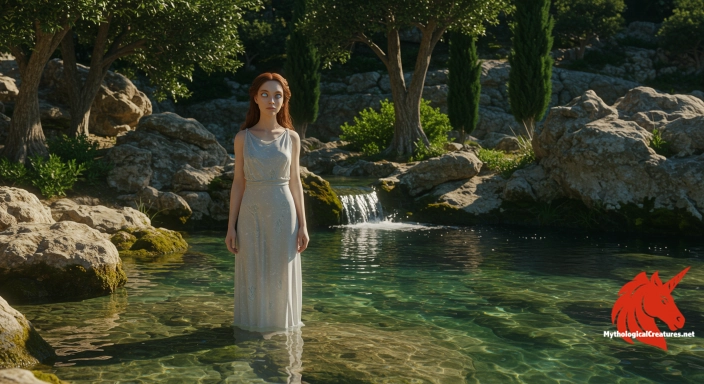
Cleocharia
Cleocharia - Her union with King Lelex established a dynastic line that is central to the mythic origins of Sparta.
the legend in five swipes.
the legend in five swipes.
What are the origins of Cleocharia?
Cleocharia emerges as a captivating figure within ancient Greek mythology, celebrated for her ethereal connection to the watery realms of Laconia. She is identified as a naiad whose presence was intricately woven into the early narratives of the Peloponnesian landscape. As the queen-consort of King Lelex of Lelegia, her legacy is firmly embedded in the noble bloodline that would eventually be honoured as the Spartan royal family. Her role as an ancestress lends a divine quality to the historical accounts of Spartan origins, where even the city’s name echoes the mythic past. The mingling of the divine with mortal rulership through her lineage underscores the belief in nature’s power to confer legitimacy to earthly authority. In local traditions, her story was not merely a genealogical footnote but a vital part of the cultural fabric that elevated natural forces to a revered status. Her narrative gracefully combines elements of fertility, royalty, and the mystique of water, making her an enduring symbol in myth. The interconnection of her divine presence and her influence on royal lineage highlights the multifaceted interplay between nature and civilisation in ancient Greece. Over time, her myth has served to reinforce the sacred bond between the natural world and human endeavour. Ultimately, Cleocharia embodies the timeless synthesis of beauty, power, and the enduring spirit of nature.
Where is Cleocharia written about?
The accounts of Cleocharia have been preserved in an amalgamation of ancient genealogical texts and regional lore that have passed through centuries of oral tradition. Various ancient sources reflect slight divergences in her story, with some texts attributing her union with King Lelex as producing Eurotas, while others suggest figures such as Myles or Polycaon as part of the lineage. This multiplicity of versions illustrates the fluid nature of myth in early Greek society where local traditions often reshaped canonical narratives. Over time, the story of Cleocharia has been interwoven with differing accounts that underline her role as a divine progenitress. Local inscriptions and fragmented mythic compilations indicate that her image was used to bolster the royal legitimacy of Sparta. As regional cults embraced her narrative, her tale acquired the nuanced quality of a living tradition subject to reinterpretation. Variations in the texts not only highlight the adaptability of myth but also reveal how societal values influenced the preservation of her story. The transformations in her account mirror the broader evolution of myth-making in ancient Greece, where divine figures were continuously reimagined in response to local cultural dynamics. Each iteration of her tale adds a layer of depth to her character, ensuring her enduring presence in the collective memory of the region. The complex heritage of Cleocharia thus serves as an emblem of the rich tapestry of ancient Greek storytelling.
What does Cleocharia look like?
Cleocharia, like many water deities, is imagined with an ethereal beauty that reflects the glistening nature of flowing water. She is often depicted as possessing delicate features and a luminous complexion that seems to capture the shimmering light of a clear stream. In ancient representations, her form is adorned by graceful, flowing garments that echo the fluid movement of water in gentle currents. Artistic renditions suggest a sense of both fragility and strength, with an aura that seamlessly connects the nurturing properties of water to her divine essence. Her hair is frequently envisioned as cascading in soft, wavy locks, reminiscent of undulating ripples on a tranquil surface. The subtle interplay of shadow and light in these portrayals is intended to evoke the natural beauty and mystery inherent in water deities. Although direct historical depictions are rare, descriptions evoke a figure both composed and vibrant, embodying the dual character of water as both life-giving and formidable. Certain regional artistic traditions even incorporate aquatic motifs, such as shells or water plants, to signify her elemental origin. The recurring imagery underscores a harmonious blend of natural elegance and regal dignity, making her appearance both mesmerizing and symbolic of her role in myth. Ultimately, her portrayal reflects a delicate balance between the ephemeral quality of water and the enduring strength of divine influence.
Cleocharia: The Same Figure in Different Places
The myth of Cleocharia is deeply rooted in the local traditions of Laconia and the surrounding Peloponnesian region, where her story weaves together the natural and the political. Locally, she is celebrated not only as a divine water nymph but also as a key figure in establishing the legitimacy of a nascent royal dynasty. Regional variations of her tale highlight her intimate connection with the life-giving springs and natural water sources that were vital to the community. In some local traditions, her identity merges with that of other water deities, creating a shared narrative that emphasises both fertility and the sanctity of nature. These regional adaptations often accentuate different aspects of her character, from nurturing gentleness to regal authority, based on local cultural needs. The depiction of Cleocharia in various parts of Greece reflects the adaptability and fluidity of myth, where environmental features strongly influence divine iconography. In certain locales, she is revered as the physical embodiment of natural abundance, while in others her story is more closely intertwined with the divine origins of pivotal historical figures. The integration of her myth with local cult practices underscores a symbiotic relationship between the deity and the environment. Such regional reinterpretations ensure that her legacy remains vibrant and contextually relevant within different parts of the ancient world. Through these diverse lenses, the figure of Cleocharia continues to serve as a bridge between nature and human civilisation.
Cleocharia: Similar Beings in World Folklore
In the broader panorama of myth, Cleocharia shares intriguing similarities with other water-associated deities across ancient cultures. Like her fellow Naiads, she embodies the life-sustaining and purifying qualities of water, serving as a vital link between the elemental and the divine. Her role as an ancestress has parallels with other mythological figures who confer divine legitimacy upon royal houses, a motif common in Mediterranean narratives. The story of a water nymph whose lineage intertwines with significant mortal rulers finds echoes in both Greek and Roman traditions. Similar figures, such as the river goddesses and nymphs celebrated in various localities, speak to a widespread cultural reverence for the powers of water. In several mythic traditions, the nurturing characteristics attributed to such figures are also associated with resurrection and renewal, further cementing their status as arbiter of life. The visual and thematic motifs commonly ascribed to Cleocharia, such as flowing garments and aquatic symbols, resonate with depictions found in other cultures. These cross-cultural comparisons underscore an enduring symbolic connection between water and the divine, as well as the role of natural forces in legitimising earthly rule. By positioning her within this wider context, Cleocharia is seen as both a unique and a representative figure in the universal narrative of creation and renewal. Her myth thus illuminates the profound human tendency to attribute sacred qualities to the life-giving essence of water.
What does Cleocharia mean to people today?
The legacy of Cleocharia has evolved in tandem with shifting cultural and scholarly perspectives on mythology. In early accounts, her role was primarily that of a matriarch whose divine lineage underpinned the legitimacy of the Spartan royal family. With the passage of time, her narrative expanded to embody a broader spectrum of qualities, including the nurturing and regenerative powers of water. The initial focus on royal ancestry gradually gave way to a recognition of her symbolic significance as a protector of nature and a facilitator of life. Modern interpretations have rekindled interest in her myth, positioning her as a figure of both historical importance and artistic allure. Contemporary artists and writers often depict her as an emblem of the enduring connection between natural forces and human culture. Exhibitions and literary works exploring ancient myth have highlighted Cleocharia’s role in the interplay of divinity and the natural world, reinterpreting her story for modern audiences. Her evolving portrayal reflects broader trends in the appreciation of minor mythological figures who, though once peripheral, now illuminate the complexities of ancient belief systems. Through academic inquiry and creative reinterpretation, Cleocharia continues to inspire explorations into the rich tapestry of Greek myth and its lasting impact on cultural identity.
Interesting Fact
An interesting aspect of Cleocharia's myth is the existence of variant genealogies regarding her offspring, which illustrates the rich and often ambiguous tapestry of Greek mythological tradition.
Mythological Treasures
Greek Myths: A field guide to the monsters of ancient Greece
Every monster here earned its place in legend, and each gets a full page of artwork and the story behind it.
Japanese Yōkai: A field guide to the spirits and demons of Japanese folklore
Fifteen spirits, with the signs to watch for and what the old tales say to do if you meet one.
Norse Sagas: A field guide to the beasts of the Viking world
Drawn from the saga accounts themselves, with the powers, weaknesses and doom of each being set out.
the legend in five swipes.
For serious mythcraft
Your project belongs among the legends
If your work deepens how people understand, play with, or teach mythology, a sponsor placement here keeps it in front of the right readers all year.
Submit a sponsorship enquiryQuick Creature Info
Origin:
Features:
Associations:
Our Mythic Legendary Rating:

Habitat:
Supernatural Powers:
Physical Attributes:
Abilities:
Behavior:
Lore:
References
Discover Another Mythical Legend You May Not Have Heard Of?
Uncover the mysteries of ancient folklore and expand your knowledge of legendary beings from cultures around the world.
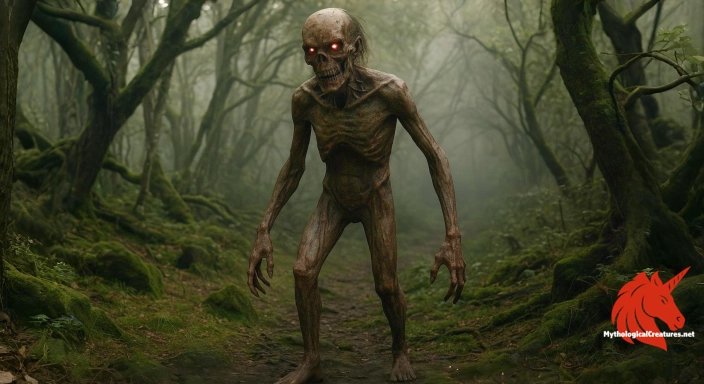
Dare to Meet the Bloody Bones....
The Mythological Creatures Book Series
Yōkai, Greek, Norse, Egyptian & Chinese. Five illustrated field guides to the creatures the old stories either warned or told you about.


Curated by the Mythological Creatures Team
Series editor: Mythological Creatures Directory
Primary desk: Hellenic & Ancient Mediterranean Desk
(rev. November 2025)