
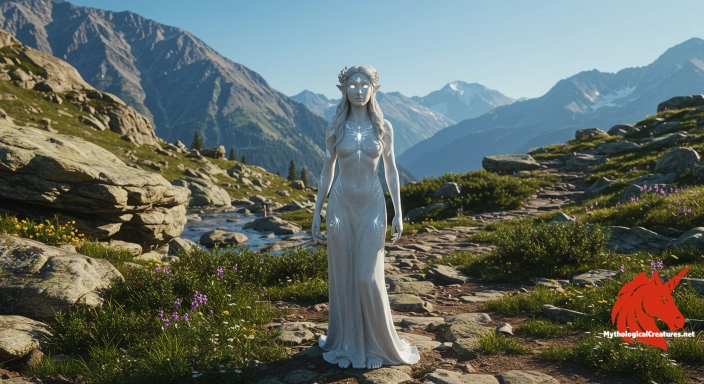
Cyllene: Cyllene is a Greek nymph who personifies Mount Cyllene in Arcadia and is associated with the early life of Hermes.
Cyllene
Cyllene - Cyllene embodies the spirit of Arcadia's natural landscapes and plays a nurturing role in the mythos surrounding Hermes.
the legend in five swipes.
the legend in five swipes.
The Beginnings of Cyllene
Cyllene is a captivating embodiment of the untamed natural spirit within ancient Greek mythology. Her presence is intricately linked to the majestic Mount Cyllene in Arcadia, where the beauty of nature meets the divine. Emerging as either a Naiad or Oread nymph, she gracefully personifies a landscape that is both rugged and nurturing. Her mythic essence is deeply entwined with the pastoral settings that characterised Arcadian life, celebrated for its pristine beauty and soulful simplicity. In various retellings, she is remembered not only as the motherly guardian of this revered mountain but also as a gentle caregiver who played a part in raising the young god Hermes. This association with Hermes amplifies her significance, linking her to the early life of a deity known for his wanderlust and cunning. Her origins, though shadowed in the mists of antiquity, speak of a time when nature was revered as a living canvas of sacred power. The enduring traditions surrounding her reveal a culture that found inspiration and refuge in the natural world, a scene where even the mountains breathe with divine energy.
Where can you read about Cyllene?
The ancient tapestry of texts that mention Cyllene is as delicate and varied as the nymph herself. Her legend finds its roots in oral traditions and regional lore, later woven into the fabric of literary myth. Some fragments allude to her nurturing role for the infant Hermes, a detail that underscores her place within the broader divine genealogy. Over time, different versions of her story emerged, each emphasising unique aspects of her character, from guardian of the mountain to a symbol of natural fertility. These variants, though few in number, illustrate the flexibility inherent in myth, where the divine traits could be rediscovered with every telling. Local poets and rhapsodes hinted at her existence through evocative metaphors that stirred the imagination. The subtle textual references set her apart from more prominently chronicled deities, making her a cherished yet understated figure. Each variant enriches our understanding of how the ancients perceived the sacred bond between nature and divinity. Such diverse narrations continue to invite modern reinterpretations of her gentle, nurturing presence.
The Described Form of Cyllene
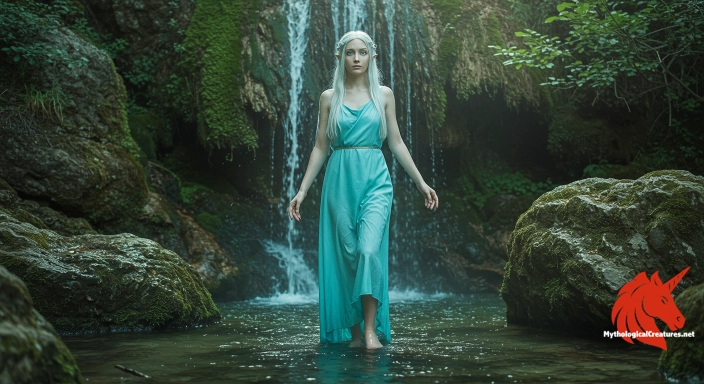
The envisioned form of Cyllene is as ethereal as the spring mists that hover over ancient mountains. Artists and storytellers alike have depicted her with flowing, lustrous hair that seems to mimic the cascading waters from nearby torrents. Her visage is often portrayed with a radiant glow that reflects the golden light of a pristine Arcadian dawn. Adorned with garlands fashioned from wild blossoms and leafy tendrils, she evokes the harmonious spirit of nature in full bloom. A blend of soft curves and enduring strength marks her form, embodying both the nurturing warmth of spring and the stoic solidity of ancient rock. Her eyes, bright and reflective, capture the myriad hues of the landscape, from the deep greens of forest groves to the clear blues of mountain streams. In some depictions, her skin takes on an earthy, almost luminous quality that mirrors the terrain with which she is so intimately connected. The varied artistic expressions of her figure suggest a being who is as mutable as the landscape, ever-changing yet constant in her natural beauty. This melding of art and myth emphasises Cyllene’s role as both a living symbol of the wilderness and a timeless goddess of nature.
Cyllene: Local Variations in the Story
Cyllene’s legend has flourished in different regional traditions, each accentuating particular facets of her divine character. In Arcadia, she is celebrated as the very soul of the mountain, a personification of the land’s enduring spirit and its bountiful natural energies. Local folklore often imbues her with attributes that align her with the cyclical rhythms of the seasons and the pastoral lifestyle of the region. In neighbouring areas, her myth sometimes merges with other native deities, reflecting an intermingling of local beliefs and the universal celebration of nature’s bounty. Village festivals and ritualistic ceremonies occasionally recall her nurturing presence as a protector of both the land and its inhabitants. These regional variations showcase a vibrant tapestry of interpretations, from a guardian of the earth to a nurturing nurse to the gods. The local narratives also highlight how different communities perceive the harmony between their physical surroundings and the divine forces that govern them. Such diverse accounts not only honour her as a singular entity but also integrate her seamlessly into the broader context of regional spirituality. In this way, Cyllene remains a multifaceted symbol whose resonance adapts fluidly to the cultural and ecological landscape of each locale.
Cyllene: Echoes in Other Mythologies
The myth of Cyllene invites compelling comparisons with other nature deities found across various ancient cultures. Much like the Dryads and Naiads of wider Greek myth, she exemplifies the intrinsic bond between the natural world and the divine. Echoes of her nurturing and protective attributes can be seen in the representations of Roman nature spirits, where local land and water deities enjoyed similar reverence. Her role as a caregiver to Hermes mirrors the recurring theme in world mythologies of nature playing an active part in the upbringing of gods and heroes. This thematic thread finds parallels in numerous traditions where mountains and forests are consecrated as living sanctuaries of divine energy. Additionally, her dual aspect as both a personification of a physical mountain and a maternal figure presents an intriguing blend of strength and tenderness that resonates with universal archetypes. Such cross-cultural parallels reinforce the idea that the personification of natural elements was a common way for emerging societies to connect with the forces of nature. In comparing her tale with those of other societies, one discerns a shared human impulse to see the earth as a nurturing mother and a source of transcendent power. Ultimately, these comparisons highlight that while the names and forms may change, the deep-seated respect for elemental forces remains a recurring motif throughout global mythologies.
Why is Cyllene still popular?
The evolution of Cyllene’s portrayal mirrors the broader shifts in cultural and artistic sentiment from antiquity to the modern age. In the earliest accounts, she was a quiet yet stirring presence in the natural landscape of Arcadia, her myth tied intimately to the nurturing care of the nascent god Hermes. As centuries passed, her image was adapted by successive generations of poets, artists, and scholars who saw in her a symbol of nature’s enduring majesty. The Renaissance, with its rediscovery of classical themes, found in her a muse for pastoral scenes that celebrated the harmony of nature and art. In contemporary times, Cyllene has been embraced by environmental narratives as a personification of the wild, ancient earth – a reminder of nature’s timeless ability to nurture and inspire. Modern reinterpretations present her as a delicate yet resilient emblem of ecological stewardship amid rapid urbanisation and environmental challenges. Her legacy endures not only in academic discourse but also in local traditions and cultural festivals that echo the ancient reverence for the natural world. This transformation from a relatively obscure mythic figure to a celebrated icon of natural beauty underscores the fluid and evolving nature of myth over time. Even now, the spirit of Mount Cyllene continues to resonate, inviting modern audiences to rediscover the deep connections between humanity and the landscapes we inhabit.
Interesting Fact
An intriguing aspect of Cyllene’s myth is her dual identity as both a water-bound naiad and a mountain-dwelling oread, exemplifying the versatile nature of Greek nymphs.
Mythological Treasures
Greek Myths: A field guide to the monsters of ancient Greece
Every monster here earned its place in legend, and each gets a full page of artwork and the story behind it.
Chinese Beasts: A field guide to the dragons and demon kings of Chinese myth
From river dragons to demon kings, with the legends that shaped five thousand years of storytelling.
Japanese Yōkai: A field guide to the spirits and demons of Japanese folklore
Fifteen spirits, with the signs to watch for and what the old tales say to do if you meet one.
the legend in five swipes.
Partner with us
Sponsor this space
Reach thousands of mythology enthusiasts with a curated placement on our creature pages.
Learn about sponsorshipQuick Creature Info
Origin:
Associations:
Our Mythic Legendary Rating:

Also Sometimes Known As:
Habitat:
Supernatural Powers:
Physical Attributes:
Abilities:
Behavior:
Lore:
References
Discover Another Mythical Legend You May Not Have Heard Of?
Uncover the mysteries of ancient folklore and expand your knowledge of legendary beings from cultures around the world.
Dare to Meet the Thyia....
The Mythological Creatures Book Series
Yōkai, Greek, Norse, Egyptian & Chinese. Five illustrated field guides to the creatures the old stories either warned or told you about.


Curated by the Mythological Creatures Team
Series editor: Mythological Creatures Directory
Primary desk: Hellenic & Ancient Mediterranean Desk
(rev. November 2025)