
Dames blanches: Dames Blanches are ghostly female spirits from French folklore that haunt natural narrow locales such as ravines, forests, and bridges in regions like Normandy and Lorraine.
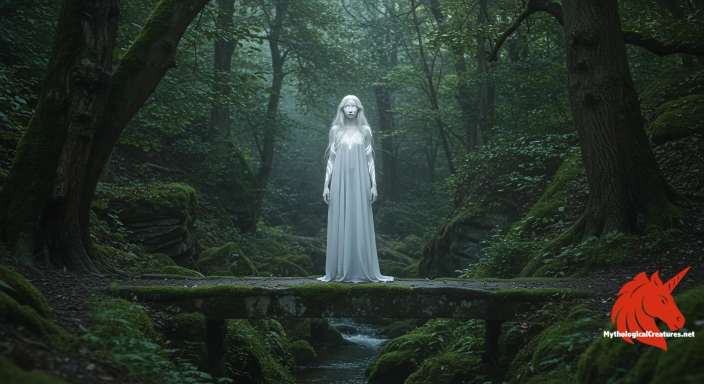
Dames blanches
Dames blanches - They serve as cautionary figures that test the resolve and respect of travellers, underscoring the fine balance between benevolence and retribution in French myth.
Origins & First Encounters
Dames Blanches are enigmatic spirits from French folklore, celebrated for their bewitching beauty and mysterious allure. Their legacy has woven itself into the cultural fabric of regions such as Lorraine, Normandy, and even the Pyrenees, where generations have passed down tales of their elusive presence. The very name, meaning 'white ladies,' evokes images of spectral figures draped in luminous garments, reflecting an ethereal purity that both captivates and warns. These apparitions have long been associated with the borderlands between the natural and the supernatural, challenging mortals to reckon with the unknown. Early attestations of these beings are found in oral traditions and local narratives that trace back to medieval times, though their exact origins remain shrouded in mystery. Their dual nature—both offering gentle guidance and posing subtle threats—reveals a complexity that has intrigued storytellers for centuries. The Dames Blanches have functioned as both guardians of sacred thresholds and as agents of retribution against hubris. Each encounter with one is said to test the respect and humility of those who dare to approach them. With every retelling, they have become a symbol of the delicate interplay between beauty, danger, and the ephemeral nature of existence. Their enduring presence in folklore attests to a fascination with that which lies beyond human understanding.
Source Texts & Tale Variants
The lore of the Dames Blanches is preserved through a rich tapestry of historical texts and vivid oral traditions. Early accounts from regions like Normandy recount the tale of La Dame d'Apringy, a spectral presence mentioned in local narratives near the ravines of Bayeux. Stories from the district of Falaise further introduce a white lady who presides over a narrow bridge, dictating that travellers only pass by demonstrating humility through a respectful act. An influential description from the 19th century, provided by Thomas Keightley, casts these ethereal beings as a variant of the fée, blurring the lines between benevolence and mischief. Multiple manuscript sources and folk recitations have reinforced the motif of these spirits challenging passersby with a cryptic dance or ritual. Variations in the legend emerge from different storytellers, some emphasising a test of character while others focus on the threat posed by associated supernatural aides. The narratives, though differing in details, converge on the idea that encountering a Dame Blanche is an invitation to both wonder and wariness. Local folklore has kept these accounts vibrant, ensuring that the soul of the legend is maintained even as its form shifts over time. Written records, combined with oral embellishments, continue to furnish modern interpretations with a sense of ancient mystery. These varied sources collectively underscore the dynamic evolution of the white lady motif within European myth.
Form & Powers
Depictions of the Dames Blanches are invariably marked by an ethereal luminosity that sets them apart from ordinary mortals. They are envisioned as spectral figures draped in flowing white robes that seem to shimmer like moonlight on a still lake. Their faces, often rendered as serene and ageless, exude a quiet grace tempered with an inscrutable melancholy. Many portrayals focus on their long, cascading hair—often silver or ivory—which adds a further element of otherworldliness to their presence. Descriptions frequently highlight eyes that glisten with an inner light, hinting at secret histories and unspoken sorrows. Their slender, almost delicate forms convey a sense of fragility, evoking the transient nature of life itself. In some accounts, their physical presence is so fluid and ungraspable that they seem to merge with the surrounding mist or shadow. Occasional embellishments, such as subtle adornments of natural elements like floral wreaths or dewdrop-like jewellery, further enhance their spectral elegance. This detailed iconography not only captures the visual imagination but also symbolises the liminal space between life and the beyond. Such descriptions ensure that the white ladies remain both a vision of haunting beauty and a reminder of nature’s mysterious forces.
Regional Faces
The myth of the Dames Blanches adapts compellingly to the distinct cultural landscapes across France and neighbouring regions. In Normandy, for example, these white ladies are intimately associated with narrow stone bridges and steep ravines where they impose unusual tests on those who dare to cross. In Lorraine, local traditions portray them as transient guardians of ancient forests and forgotten pathways, imbuing the landscape with a sense of magic and mystery. The Occitan regions of the Pyrenees offer yet another variant, where they are known as Damas blancas and are closely connected to the hidden entrances of caves and rugged mountain terrain. Regional narratives tweak the core elements of the legend, sometimes focusing on the necessity of joining in a bewitching dance and at other times insisting on a submissive gesture for safe passage. These local adaptations reflect not only geographical influences but also the varying moral and practical concerns of disparate communities. In some areas, the white lady assumes a role as a benign spirit willing to grant boons, while elsewhere she is a stern arbiter who metes out curses for insolence. Local place names, songs, and festivals have all contributed to a rich mosaic of interpretations. The diversity of these regional variations underscores how the central motif of the white lady is reinterpreted to resonate with local customs and environmental realities. Taken together, these accounts reveal a legend that is as flexible as it is enduring, shaped continually by the cultural landscapes it inhabits.
Cultural Parallels
The legend of the Dames Blanches finds many cultural parallels across Europe, reflecting a common fascination with spectral female figures. Similar entities, such as the Weiße Frauen in German and Dutch mythology, share an aura of mystique and are often depicted with comparable ethereal characteristics. British folklore offers its own version in the form of the 'Lady in White,' whose ghostly appearances in castle corridors and near ancient bridges stir both dread and wonder. Such recurrent motifs across cultures illuminate a shared symbolic lexicon where white-dressed women serve as harbingers of both beauty and warning. These figures frequently embody themes of purity intermingled with an undercurrent of sorrow or retribution. While some traditions invite interactions that may lead to boons, others are stark in their portrayal of these ladies as omens of misfortune for the unwary. The consistent visual imagery, from flowing garments to spectral glow, points to a nearly universal archetype that encapsulates the human response to the unknown. Comparative analysis reveals that despite slight variations in narrative details, the core symbolism of the white lady resonates deeply across diverse mythological landscapes. This cross-cultural affinity not only enriches our understanding of the myth but also highlights universal human concerns about mortality, purity, and the supernatural. In essence, the white lady legend serves as a mirror reflecting the collective imagination of many European cultures.
Legacy & Modern Evolution
Over the centuries, the figure of the Dame Blanche has undergone a profound transformation, evolving from a shadowy spirit of local myth to an enduring emblem of cultural intrigue. Initially rooted in cautionary tales meant to guide behaviour and mark dangerous thresholds, her image gradually acquired layers of artistic and literary interpretation. Traditional narratives offered her as both a blessing and a curse, a figure whose beauty veiled the peril of the unknown. In modern times, the allure of the white lady has found a new expression in films, novels, and art, where she is often reimagined as both tragic and complex. Contemporary depictions tend to humanise her enigmatic persona, exploring the inner turmoil and poignant history that may underlie her spectral existence. This evolution reflects broader societal changes, where supernatural tales are reinterpreted to explore themes of loss, resilience, and the interplay between past and present. Community festivals and local heritage projects continue to celebrate the legend, ensuring that the memory of these ethereal figures remains a dynamic part of cultural identity. The enduring fascination with the white lady is evidenced by her frequent appearance in ghost stories and paranormal investigations that seek to blend myth with modern mystery. In reinterpreting her legend through different artistic mediums, modern creators have both honoured and reinvented her archetype. In doing so, the myth of the Dames Blanches remains a poignant testament to the timeless allure of the supernatural.
Interesting Fact
One notable legend recounts the tale of La Dame d'Apringy, whose ritual dance in a Normandy ravine exemplifies the intricate interplay of grace and peril in French supernatural lore.
Support the directory
Promote your myth project and fund more research
Sponsor placements help keep this directory growing and free to use while giving your work a focused, relevant audience.
Learn how sponsorship worksQuick Creature Info
Our Mythic Legendary Rating:

Also Sometimes Known As:
Habitat:
Supernatural Powers:
Physical Attributes:
Abilities:
Behavior:
Weaknesses:
Lore:
Related Creatures, Tales or Lore
- WWeiße Frauen
- BBanshee
- WWhite Lady (British folklore)
References
Discover Another Mythical Legend You May Not Have Heard Of?
Uncover the mysteries of ancient folklore and expand your knowledge of legendary beings from cultures around the world.
Dare to Meet the Bayard....
-f35c1470-1229-4083-9e8f-17d04a64cc57_small.webp "Depiction of Bayard")
Curated by the Mythological Creatures Team
Series editor: Mythological Creatures Directory
Primary desk: Hellenic & Ancient Mediterranean Desk
(rev. November 2025)