
Dilang: Dilang, also known as the Earth Wolf, is a mythological canine from Chinese legend that dwells underground.
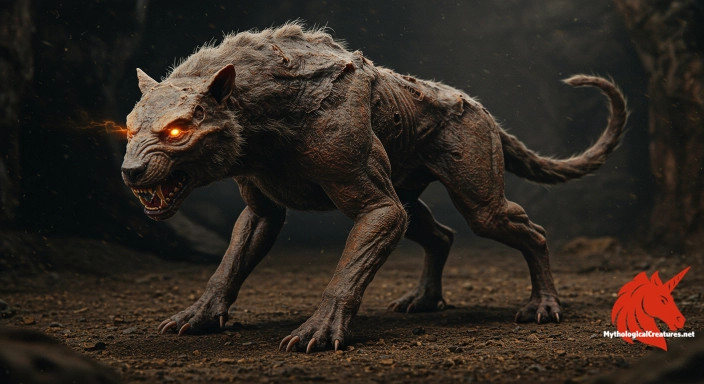
Dilang
Dilang - Dilang plays a role in ancient Chinese folklore as an enigmatic subterranean canine, symbolising the mysterious aspects of the earth.
the legend in five swipes.
the legend in five swipes.
Where does the story of Dilang begin?
Dilang, known as the 'Earth Wolf', is a striking figure from ancient Chinese lore that has captivated the imagination for centuries.
Its earliest attestation appears in the 4th-century BC text Shizi, where it is mentioned as a subterranean canine with a mysterious existence beneath the earth.
Also referred to as Xiquan or 'Hole Dog', this creature embodies the eerie intersection of the natural and the supernatural.
The legend of Dilang originates from a cultural context where the hidden forces of nature were often revered and feared in equal measure.
The creature's subterranean habitat symbolised not only physical darkness but also the enigmatic depths of the human spirit.
Ancient Chinese mythology embraced dualities, and Dilang’s existence as both an animal and a spirit reflects this profound interplay.
Its depiction as a mysterious guardian of hidden realms further reinforces its role as a metaphor for the forces that lie beneath the surface of everyday life.
Over time, Dilang has come to represent themes of transformation, the uncharted, and the latent energies of the earth.
The enduring quality of its myth leaves a legacy that continues to intrigue scholars, artists, and enthusiasts of myth.
How did the story of Dilang change over time?
The primary source for the myth of Dilang is the ancient text Shizi, written in the 4th century BC, where the creature is noted as a dog residing below the surface of the earth.
This text provides the earliest literary reference to Dilang, setting the foundation for its mythic attributes.
In addition to the Shizi, scattered references within Chinese folklore and traditional manuscripts have enriched its narrative over the centuries.
The creature is also known as Jia in some texts, highlighting the varied lexical and symbolic interpretations attributed to it.
These early sources do not simply document an animal, but rather encapsulate the broader spiritual and natural forces of ancient Chinese cosmology.
Subsequent folklore expanded these definitions with local retellings that often introduced new dimensions of its character.
Various story variants depict Dilang as a spectral presence whose underground domain is as much metaphorical as it is literal.
The layered textual record demonstrates a dynamic evolution of the myth, with contributions from both scholarly texts and oral traditions.
This intricate web of sources has allowed the legend to adapt and persist through many eras of Chinese history.
Thus, the myth of Dilang is not confined to a singular narrative but is a composite of many voices over time.
Dilang: Physical Form and Supernatural Powers
Dilang is depicted as a canine of unusual form and presence, merging the physical traits of an earthly wolf with attributes that defy a conventional appearance.
Its build is slim yet muscular, suggesting a creature perfectly adapted for underground life, complete with limbs that inspire both speed and stealth.
The creature’s coat is often envisioned as dark and lustrous, able to merge with the shadowed environments of subterranean passages.
Glowing eyes, imbued with an almost spectral light, cast an eerie illumination in the dark depths that the creature inhabits.
Traditional descriptions speak of an elongated snout and a set of sharply defined canines, features that enhance its formidable visage.
Its ears and tail, proportioned for acute sensory perception, further add to its mystique, enabling it to navigate hidden tunnels effortlessly.
Intricate markings on its fur are sometimes highlighted, evoking the natural patterns found in the earth and symbolising the creature’s deep connection to its underground realm.
The overall anatomy of Dilang is a blend of natural prowess and supernatural allure, capturing the duality of life both above and below ground.
Every detail—from the fluid motion of its stride to the piercing intensity of its gaze—reinforces its role as a being that straddles the boundary between the mundane and the mystical.
This vivid physical portrayal not only serves to instil awe but also cements its place in the broader canon of mythological creatures.
What regional forms of Dilang exist?
Regional variations of the Dilang myth reveal a tapestry of diverse interpretations across different parts of China.
In some northern traditions, the creature is portrayed as a guardian of hidden treasures, its presence an omen of both prosperity and caution.
Conversely, certain southern communities imbue Dilang with a more enigmatic character, portraying it as a mischievous spirit whose underground realm is shrouded in mystery.
These local adaptations have influenced both the creature’s physical depiction and its symbolic associations, leading to subtle yet significant differences in its portrayal.
In some dialects and writing traditions, the names Dilang, Xiquan, and Jia are used interchangeably, each carrying its own cultural nuance.
Local festivals and oral traditions often reference the creature in metaphors related to the cycles of nature and the hidden forces within the earth.
This regional diversity underscores the adaptability of the myth, with each community contributing its own local flavour to the narrative.
Customs and folklore interwoven with the story of Dilang serve as reminders of how local geography and cultural experiences shape mythological interpretations.
Despite these variations, a common thread persists in the depiction of Dilang as a mysterious, subterranean force.
Such regional adaptations enrich the myth’s meaning, making it a dynamic symbol reflective of the diverse cultural landscape of ancient China.
Which myths echo the story of Dilang?
The enigmatic Dilang invites comparison with a host of mythological canines from various cultural traditions around the world.
Much like the spectral Black Dogs of British folklore, Dilang is shrouded in an aura of mystery and foreboding that suggests connections with the realms beyond life.
Its role as a guardian of the underworld bears echoes of the Greek Cerberus, though Dilang’s domain is hidden beneath the earth rather than at its gates.
The creature’s dual nature, straddling both the tangible and the metaphysical, also finds parallels in Norse mythology’s portrayals of wolves that symbolise chaos and change.
In other East Asian traditions, similar spirit animals embody the liminal space between physical presence and ethereal power, a trait that firmly aligns Dilang with regional mythic archetypes.
This cross-cultural resonance emphasises how different societies utilise canine figures to explore themes of protection, omen, and transformation.
The recurrent depiction of spectral dogs or wolves in diverse mythologies suggests a universal human intrigue with the unseen energies of the world.
Comparative analysis reveals that these creatures, despite varying in detail, all serve as potent symbols of a boundary between the known and the unknown.
In drawing these parallels, one sees how Dilang not only fits within the global context of mythic canines but also uniquely reflects the philosophical and natural perceptions of ancient Chinese culture.
Thus, comparative studies highlight both shared cultural impulses and distinctive regional characteristics in the portrayal of subterranean, mystical canids.
The Lasting Influence of Dilang
The myth of Dilang has undergone a significant evolution from its earliest recorded mentions to its modern-day reinterpretations.
Initially depicted in ancient texts as a literal subterranean canine, the creature gradually accrued layers of metaphorical significance that reflect a deeper understanding of the natural world.
As time progressed, the image of Dilang began to be used symbolically to represent hidden truths, the dual nature of existence, and the mysterious forces that shape life.
Modern artists and writers, inspired by classical lore, have reinvented the Earth Wolf as a guardian of ancient wisdom and a harbinger of transformative change.
This reimagining is evident in contemporary literature, film, and digital media, where Dilang is often portrayed as an enigmatic force bridging the gap between nature and the supernatural.
The creature's modern legacy serves as a vibrant example of how ancient myth can be adapted to reflect current cultural and ecological concerns.
Innovative reinterpretations have transformed Dilang from a mere folkloric figure into a dynamic symbol of resilience and mystery in an ever-changing world.
Cultural exhibits and reinterpretations in urban art spaces have further solidified its status as a mythological icon with enduring appeal.
This legacy illustrates the fluid nature of myth-making, where stories evolve in tandem with the society that continues to tell them.
Today, Dilang stands as a testament to the power of ancient narratives to adapt and resonate with modern sensibilities, ensuring that its mysterious allure endures for future generations.
Interesting Fact
An intriguing aspect of Dilang is its dual identity as both a literal canine dwelling underground and a symbolic embodiment of the mysterious forces of the earth.
Mythological Treasures
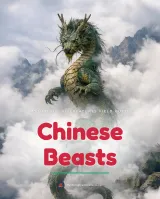
Chinese Beasts: A field guide to the dragons and demon kings of Chinese myth
From river dragons to demon kings, with the legends that shaped five thousand years of storytelling.
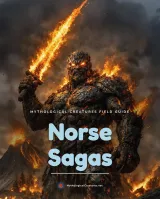
Norse Sagas: A field guide to the beasts of the Viking world
Drawn from the saga accounts themselves, with the powers, weaknesses and doom of each being set out.
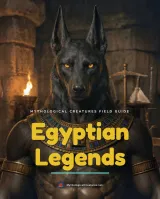
Egyptian Legends: A field guide to the gods and monsters of ancient Egypt
Guardians of the living and devourers of the dead, with the role each played in judgement.
the legend in five swipes.
Mythology commerce, done carefully
Align your store with our global myth audience
If you sell myth-inspired jewellery, prints, decks, or collectibles, we can feature your brand without overwhelming the reading experience.
Partner with usQuick Creature Info
Associations:
Our Mythic Legendary Rating:

Also Sometimes Known As:
Habitat:
Supernatural Powers:
Physical Attributes:
Abilities:
Behavior:
Lore:
Related Creatures, Tales or Lore
References
Discover Another Mythical Legend You May Not Have Heard Of?
Uncover the mysteries of ancient folklore and expand your knowledge of legendary beings from cultures around the world.
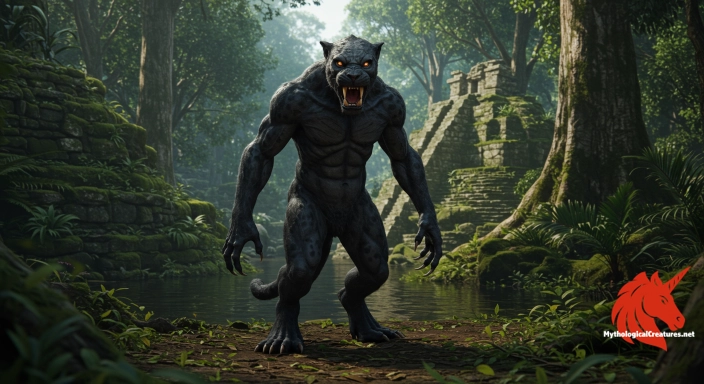
Dare to Meet the Werejaguar....
The Mythological Creatures Book Series
Yōkai, Greek, Norse, Egyptian & Chinese. Five illustrated field guides to the creatures the old stories either warned or told you about.
Curated by the Mythological Creatures Team
Series editor: Mythological Creatures Directory
Primary desk: Asian & Pacific Myth Cycles Desk
(rev. November 2025)