
Div-e Sepid: Div-e Sepid, also known as the White Div, is a formidable demon and chieftain of the Divs in the Persian epic Shahnameh.

Div-e Sepid
Div-e Sepid - Represents chaos and malevolence, and his defeat by Rostam symbolises the triumph of good over evil in Persian mythology
Origins & First Encounters
Div-e Sepid emerges as a legendary figure within Persian myth, celebrated for his imposing stature and dark sorcery.
He is known as the White Div, a fearsome chieftain of the demons in the region of Mazandaran, whose very name resonates with both dread and power.
His story is chiefly chronicled in the Shahnameh, a seminal epic that has defined Persian cultural identity for centuries.
Drawing upon ancient Iranian beliefs, his origins are entwined with motifs of chaos and primordial disorder, reflecting the eternal struggle between good and evil.
The epic narrative portrays him as an adversary whose supernatural abilities challenge the natural order, prompting heroic feats of courage.
His depiction provides a rich tapestry of conflicting forces, where divine intervention and human valor come together.
The vivid imagery of his magical conquests, violent storms, and brutal strength underlines his role as an archetypal villain in the mythic tradition.
Every retelling of his exploits adds layers to his character, making him a symbolic figure in the discourse on cosmic balance and moral order.
The enduring appeal of Div-e Sepid lies in the way his dark legacy continues to encapsulate the perennial battle against overwhelming chaos.
Source Texts & Tale Variants
The primary narrative of Div-e Sepid is rooted in the pages of the Shahnameh, where his dark deeds are set against the backdrop of heroic quests and epic confrontations.
This ancient text provides the foundation of his character, outlining his incredible strength as well as his mastery of sorcery and necromancy.
Multiple story variants have enriched his lore over the centuries, with folkloric traditions often adding new dimensions to his formidable persona.
Regional storytellers have crafted subtle variations, blending local legends with the epic tale, thereby deepening his association with natural calamities and mystical powers.
Some narratives focus on his role in the downfall of esteemed figures, highlighting his efforts in blinding and imprisoning formidable heroes.
These diverse accounts illustrate the multifaceted nature of his character, inviting interpretations that extend beyond a simple embodiment of evil.
Additional versions in later manuscripts often emphasise the transformative impact his defeat has on the cosmic order.
The enduring tradition of oral storytelling has also ensured that his exploits continue to evolve, reflecting both cultural memory and contemporary insights.
Thus, the lore of Div-e Sepid is both a historic record and a living myth, enriched by layers of narrative from varied sources.
Form & Powers
Div-e Sepid is depicted as a colossal entity whose physical presence is as overwhelming as his supernatural abilities.
His enormous frame and intimidating build evoke the image of a living mountain, imbued with both raw strength and eerie magic.
The characterization of his white appearance not only lends him an otherworldly aura but also symbolises the paradoxical light within darkness.
His imposing visage is accentuated by fierce eyes that seem to burn with an inner fire, projecting both malice and cunning intelligence.
Iconography often presents him with exaggerated, muscular features and hands that betray his capacity for both brute force and intricate spells.
A notable aspect of his physicality is the enduring legacy of his head, which is later repurposed by the hero Rostam as a helmet, adding a layer of haunting symbolism.
The physical descriptions vary between portrayals, with some emphasising a near-spectral pallor and others focusing on his rampant, fiery demeanour.
Every detail, from his towering height to the chilling cunning in his stare, underscores his role as a creature born of chaos.
This amalgam of monstrous size and mystical detail makes him a singular figure in the pantheon of mythological adversaries.
Regional Faces
Across various regions of Iran, the legend of Div-e Sepid adapts and transforms to reflect local traditions and cultural nuances.
In Mazandaran, his legacy is interwoven with the natural landscape, where the wilderness and tempestuous weather mirror his tumultuous nature.
Regional retellings often emphasise his connection with natural forces, portraying him as an embodiment of both earthly and celestial chaos.
Local folklore tends to incorporate elements of ancient Zoroastrian demonology, thus framing him as a relic of pre-Islamic beliefs.
Some traditions view him not merely as an agent of destruction, but as a symbol of the inevitable conflict between order and entropy.
Variations in his depiction also highlight subtle differences in his attributes, whether in the intensity of his magical abilities or the particular manner in which he combats the forces of good.
The cultural lens of each region adds a unique flavour to his story, thereby allowing communities to redefine his menace in accordance with their own historical experiences.
This regional diversity has kept the myth dynamic, ensuring that Div-e Sepid remains both a universal and a locally resonant figure.
The evolving narratives thus pay homage to a multifaceted legacy that stretches beyond the boundaries of any single cultural context.
Cultural Parallels
Div-e Sepid stands as a fascinating counterpart to similar mythic adversaries found in other cultural traditions around the world.
His blend of overwhelming physical might and potent magical abilities draws parallels to demonic entities in mythologies spanning from ancient Greece to Norse legends.
The archetype of a monstrous, otherworldly foe is a recurring theme, with figures in various traditions embodying the struggle between cosmic order and malevolent chaos.
Many cultures tell tales of towering adversaries who, like Div-e Sepid, challenge the established order through both sheer force and dark sorcery.
This cross-cultural phenomenon highlights a shared human fascination with the embodiment of chaos, which constantly sets the stage for heroic triumphs.
The appropriation of an enemy’s attributes, such as Rostam’s use of Div-e Sepid’s head as a helmet, invites comparisons with similar motifs in other mythic cycles where vanquishing a foe brings both power and cautionary benefits.
The universal nature of these themes underscores the deep psychological and societal need to personify and then overcome internal and external evils.
Such comparative analysis not only enriches our understanding of Div-e Sepid but also illuminates common threads in myth that have perennially resonated across diverse cultural landscapes.
This intertextual dialogue between mythologies reveals how different societies process and symbolise the eternal conflict between light and darkness.
Legacy & Modern Evolution
The legacy of Div-e Sepid is a testament to the enduring power of myth, evolving from ancient epic narratives to modern reinterpretations in art and popular culture.
His initial portrayal as a symbol of uncontrollable chaos in the Shahnameh has since been reimagined in various literary and visual arts.
Across centuries, artists and writers have continuously drawn on his fearful visage and formidable power to explore themes of heroism, sacrifice, and the duality of strength.
In contemporary discourse, his character is often examined as a metaphor for the internal battles within society and the human condition.
The dramatic imagery of his downfall, particularly the poignant moment when his head is repurposed as a symbol of triumph, has inspired works ranging from classical paintings to modern films and digital media.
This evolution reflects a broader trend in mythological studies where ancient figures are re-evaluated in the light of modern values and existential dilemmas.
The continuous reinterpretation of Div-e Sepid’s character speaks to the timeless appeal of his archetype, resonating with audiences who see in his narrative both caution and hope.
Such reinterpretations ensure that his legend is perpetually renewed, remaining vibrant and relevant in an ever-changing cultural landscape.
In sum, the lasting legacy of Div-e Sepid is defined by his ability to encapsulate the essence of chaos while simultaneously serving as a catalyst for heroic transformation in both classical and modern contexts.
Interesting Fact
Rostam's use of Div-e Sepid's head as a helmet is one of the most iconic images in Persian epic lore, symbolising the interplay of death and redemption.
For serious myth projects
Feature your work alongside the legends
From academic works to story-rich games, we highlight projects that respect world mythologies. Talk to us about a measured, long-term placement.
Start a conversationQuick Creature Info
Origin:
Associations:
Our Mythic Legendary Rating:

Also Sometimes Known As:
Habitat:
Supernatural Powers:
Physical Attributes:
Abilities:
Behavior:
Weaknesses:
Lore:
References
Discover Another Mythical Legend You May Not Have Heard Of?
Uncover the mysteries of ancient folklore and expand your knowledge of legendary beings from cultures around the world.
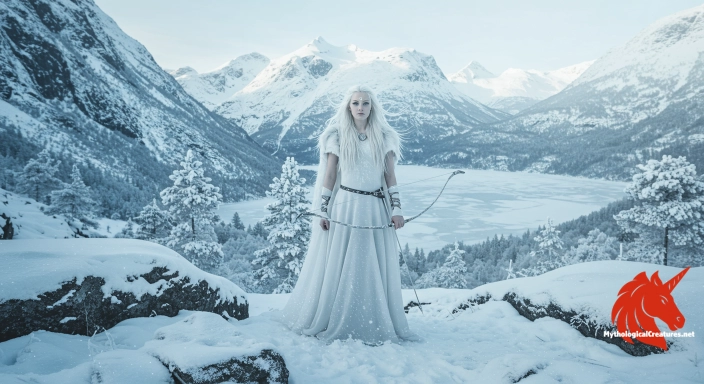
Dare to Meet the Skaði....
Curated by the Mythological Creatures Team
Series editor: Mythological Creatures Directory
Primary desk: Hellenic & Ancient Mediterranean Desk
(rev. November 2025)