
Ahriman: Ahriman, also known as Angra Mainyu, is the personification of destructive evil in Zoroastrianism.
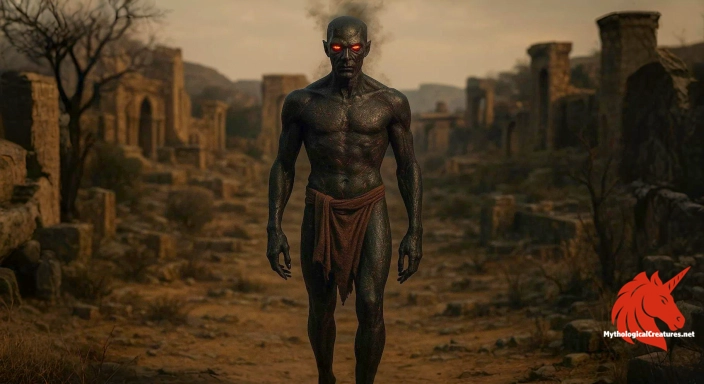
Ahriman
Ahriman - A central figure in Zoroastrian dualism, Ahriman represents the destructive force opposing the order and creativity of Ahura Mazda and the Spenta Mainyu.
the legend in five swipes.
the legend in five swipes.
The Earliest Known Accounts of Ahriman
Ahriman, often identified by his Avestan name Angra Mainyu, emerges as the quintessential personification of evil within Zoroastrian cosmology. His origins are deeply embedded in ancient religious texts that delineate a stark duality between creation and destruction. Born from a mythic tradition that sought to explain the nature of chaos, he has long been portrayed as the adversary of the supreme deity, Ahura Mazda, and the benevolent Spenta Mainyu. His first attestation in the sacred Avesta has continually influenced the theological and ethical debates that underpin this ancient belief system. In the cultural context of early Persia, the figure of Ahriman symbolised the ever-present challenges to order, serving as a stark reminder of the perils of moral corruption. The narrative of his opposition provided early Zoroastrian communities with a framework in which to interpret the vicissitudes of life and the struggle between light and darkness. His ethos has been instrumental in shaping ritual practices and the communal perception of cosmic fairness. Often woven into allegorical tales, his mythical persona invites reflection on the intricate balance between good and evil. Over centuries, his identity has remained a critical point of discussion in understanding the complexities of ancient Persian spirituality.
Ahriman: Variants Across the Sources
The foundational vision of Ahriman is primarily drawn from the Avesta, where his destructive nature is intricately detailed against the backdrop of cosmic dualism. Ancient liturgical hymns and ritual texts present him as a counterbalancing force to the benevolent energies embodied by Ahura Mazda, establishing the eternal conflict that defines Zoroastrian thought. Middle Persian sources, such as the Denkard and Bundahishn, further expand on his character, offering additional layers of narrative and interpretation that have enriched his mythic portrayal over time. These texts often introduce variations that reflect shifts in theological emphasis, demonstrating a flexible approach to his role in the cosmic order. Alongside these codified writings, a wealth of oral traditions preserved by Zoroastrian communities provides alternative renditions, occasionally imbuing him with more allegorical or nuanced traits. Manuscripts and commentaries from later periods reveal subtle regional modifications that emphasise different aspects of his malevolence. Folkloric accounts, while echoing his capacity for sowing disorder, also contribute unique symbolic meanings that resonate with everyday experiences of struggle and resistance. The interplay between these diverse primary sources and story variants creates a multifaceted portrait of Ahriman that continues to intrigue and challenge modern interpretations.
The Appearance and Powers of Ahriman
Descriptions of Ahriman’s manifestation focus less on literal anatomy and more on the symbolic embodiment of decay and chaos. He is seldom depicted in detailed human form, and when he is, his features are intentionally obscured to represent the overwhelming force of destruction he instils. Artistic interpretations often lean towards a shadowed, indistinct figure, shrouded in mists or flames that signify his ethereal presence. Some visual renditions from later periods suggest a gaunt silhouette with piercing, malevolent eyes that betray an inner malevolence. His representation may include swirls of dark vapour or fragmented shapes, reinforcing the idea that his essence defies conventional form. The lack of a fixed physical identity allows for a variety of creative expressions across different media and epochs. In certain manuscripts, the imagery is intentionally abstract, inviting the observer to contemplate the intangible nature of evil. These diverse portrayals converge on the notion that the true form of Ahriman is inherently elusive, mirroring the perpetual instability of the forces he personifies.
Where in the world is Ahriman known?
Across different regions where Zoroastrian thought has taken root, the portrayal of Ahriman exhibits intriguing local nuances. In ancient Persia, his depiction is closely intertwined with the early ritualistic practices and cosmological debates that underscored the battle between good and evil. Among the Parsi communities in India, traditional narratives preserve a version of his character that is both subdued and laden with refined symbolism, reflecting centuries of cultural adaptation. Western depictions, influenced by later translations and interactions with other religious traditions, occasionally cast him in a more personified and anthropomorphic light. Variations in iconography across regions often incorporate local artistic traditions, merging indigenous visual motifs with the established elements of Zoroastrian myth. These regional adaptations underscore the fluidity of his image, allowing for reinterpretations that resonate with changing historical and social contexts. Whether through the austere calligraphy of ancient texts or the vibrant murals of later periods, each tradition adds a distinct layer to his ongoing narrative. The regional variances reinforce the idea that Ahriman’s menace, while constant in its essence, is interpreted in a manner that reflects the diverse cultural landscapes in which his myth endures.
Which figures are similar to Ahriman?
Ahriman’s role as the embodiment of destructive chaos finds resonant echoes in a number of other cultural and mythological frameworks. His eternal opposition to a divine order is reminiscent of figures such as Satan in Christian theology, where the struggle between benevolence and malice remains a central thematic concern. Among the Indo-European traditions, comparisons can be drawn with primordial beings that symbolise the inherent duality of the cosmos. Eastern mythologies, too, present adversaries who challenge the harmonious forces of creation, underscoring the universality of this narrative construct. This cross-cultural parallel emphasises how societies, regardless of geographical boundaries, have long sought to embody the concept of evil through distinct yet conceptually similar figures. The symbolic interplay between creative light and destructive darkness shared by these figures fosters a broader understanding of the human experience of moral conflict. Contemporary comparative analyses highlight Ahriman as a bridge between ancient doctrinal beliefs and modern allegories of existential struggle. In examining these cultural parallels, one gains insight into the shared symbolic language that continues to shape perceptions of divinity and malevolence worldwide.
Ahriman: Modern Retellings and Reinventions
Throughout the annals of history, the figure of Ahriman has evolved in tandem with shifts in religious doctrine and cultural expression. In early Zoroastrian scripture, his role was primarily abstract, representing the metaphysical embodiment of destruction and moral decay. Over time, however, his depiction has acquired a richer tapestry of meanings, ranging from a literal malevolent entity to a metaphor for the internal challenges faced by humanity. Artistic and literary interpretations during the medieval period expanded on his darkly charismatic persona, often infusing him with nuanced symbolism that went beyond a simple dichotomy of good versus evil. In modern times, reimaginings in literature, cinema, and even video games have recontextualised Ahriman as a complex symbol of misfortune, existential dread, and the inevitable presence of chaos within the human condition. His enduring relevance is found in the way his myth continues to inspire debates on the nature of evil, the importance of moral choice, and the balance inherent in all cosmic orders. Contemporary scholars and cultural commentators often invoke his image when discussing the broader human propensity for self-destruction and disorder. Today, Ahriman stands as a timeless emblem that challenges individuals to confront the darker aspects of existence, serving as a potent reminder of the perpetual tension between the forces that create and those that destroy.
Interesting Fact
An interesting aspect of Ahriman is that his role as the embodiment of evil has not only shaped Zoroastrian theology, but has also influenced later conceptualizations of satanic figures in other religious traditions.
Mythological Treasures
Greek Myths: A field guide to the monsters of ancient Greece
Every monster here earned its place in legend, and each gets a full page of artwork and the story behind it.
Norse Sagas: A field guide to the beasts of the Viking world
Drawn from the saga accounts themselves, with the powers, weaknesses and doom of each being set out.
Egyptian Legends: A field guide to the gods and monsters of ancient Egypt
Guardians of the living and devourers of the dead, with the role each played in judgement.
the legend in five swipes.
Curated sponsor space
One subtle banner. Thousands of myth lovers.
We offer a small number of curated sponsor spots for relevant books, courses, games, and art. No clutter, just well-matched partners.
Partner with usQuick Creature Info
Origin:
Associations:
Our Mythic Legendary Rating:

Also Sometimes Known As:
Habitat:
Supernatural Powers:
Abilities:
Behavior:
Weaknesses:
Lore:
References
Discover Another Mythical Legend You May Not Have Heard Of?
Uncover the mysteries of ancient folklore and expand your knowledge of legendary beings from cultures around the world.
Dare to Meet the Seonaidh....

The Mythological Creatures Book Series
Yokai, Greek, Norse, Egyptian & Chinese. Five illustrated field guides to the creatures the old stories either warned or told you about.


Curated by the Mythological Creatures Team
Series editor: Mythological Creatures Directory
Primary desk: Hellenic & Ancient Mediterranean Desk
(rev. November 2025)