
Dunnie: The Dunnie is a small, ghostly, Brownie-like being from the Anglo-Scottish borders, renowned for its mischievous trickery.

Dunnie
Dunnie - Embodies the mysterious, mischievous spirit of the borderlands and serves as a reminder of historical reiving and local legend.
the legend in five swipes.
the legend in five swipes.
What are the origins of the Dunnie?
The Dunnie emerges from the mists of Anglo-Scottish folklore as a mysterious and mischievous spirit with deep roots in the borderlands of Northumberland. Born out of rustic tradition and the oral storytelling of the countryside, this creature is akin in temperament to the Brownie yet possesses a unique capacity for trickery and transformation. Its earliest narratives seem to blend the folklore of household sprites with that of raucous reivers, hinting at both benevolence and menace. Local tradition in areas such as Hazlerigg in the parish of Chatton preserves its most enduring legend, where the Dunnie is seen as both a playful companion and a cunning rogue. Its very name resonates with the history of border skirmishes, evoking images of ill-gotten gains and spectral guardianship. The folklore suggests that the Dunnie is not merely a creature of fun but also a keeper of secrets and hidden treasures scattered among the fells. Its tales were shared over generations around warming hearths and in the quiet vastness of the countryside. The blend of spectral charm and roguish trickery has turned the Dunnie into an emblem of the ambiguities of human and supernatural boundaries. This captivating heritage situates the creature uniquely between the natural and the paranormal, challenging simple definitions.
Where is the Dunnie written about?
The primary accounts of the Dunnie can be found woven into the fabric of local ballads and oral traditions passed down through generations in the Anglo-Scottish borders. Early narrative sources recount the creature’s escapades, particularly its uncanny ability to assume the guise of a horse, thereby entrapping the unwary. Variants of its legend appear in the recitals of local minstrels, where its transformations are narrated with a mix of awe and humour. Recorded texts, though scant, preserve a verse that hints at the creature’s lamentations and its mysterious connection to forgotten keys and lost treasures. The Dunnie’s lore is enriched by a multiplicity of versions, some of which highlight its role as a guardian of reiver loot while others imbue it with a ghostly presence that haunts the Cheviot crags. Diverse storytellers in Northumberland and beyond have adjusted the details, adapting its song to reflect local place names and cultural nuances. Its multifaceted portrayal has led to a tapestry of stories that both entertain and warn those who wander the remote dales. Folklorists have long noted the fluidity of the Dunnie’s legend, observing how oral transmission has allowed its characteristics and adventures to evolve over time.
What does the Dunnie look like?
The Dunnie is often imagined as a small, elusive entity with a form reminiscent of a Brownie, yet it frequently defies concise physical description by its ability to shapeshift. Contemporary portrayals suggest a diminutive stature marked by an almost spectral luminescence that gives it an ethereal quality on moonlit nights. In tales where it appears as a horse, the Dunnie is described with a sleek, shadowy outline, as if crafted from the very darkness of the moorland itself. Its disguise as a plough-horse further accentuates its trickery, with an appearance that is deceptively ordinary until the moment of its vanishing act. Some accounts hint at features that combine both human and animalistic traits, leaving behind an impression of slight, wry humour in its facial expressions. The creature’s eyes, as legend has it, shimmer with an otherworldly intelligence and a hint of mischievous intent. Variations in narratives imply that its form may be altered by the circumstances of its appearance, suggesting a fluidity that blurs the line between corporeal and ghostly. This mutable physicality reinforces its role as a being that defies the strict classifications of natural creature or supernatural phantom.
Which regions tell stories of the Dunnie?
While the Dunnie is firmly anchored in the folklore of the Anglo-Scottish borders, its depiction varies significantly across different locales. In Northumberland, particularly in the parish of Chatton at Hazlerigg, the Dunnie is renowned as a spectral trickster whose pranks often disrupt the mundane routines of rural life. In nearby regions, local legends embellish the creature’s attributes by incorporating regional landmarks, such as crags, dales, and specific roads known for their treacherous, muddy conditions. Its song, with references to local place names, serves as a verbal map that encapsulates the cultural geography of the borderlands. Some communities use these verses not only to recount the Dunnie’s escapades but also as mnemonic devices linking the creature to the local history of reiving and smuggling. Meanwhile, adjacent areas have offered new interpretations, sometimes infusing the Dunnie’s character with a greater supernatural or even melancholic aspect. This regional adaptation underscores how local environmental features and historical experiences shape the myth’s evolution. The creature’s ability to traverse both the physical and cultural landscapes has cemented its status as a truly borderland phenomenon, adapting its persona to the unique narratives of each community.
Dunnie: Similar Beings in World Folklore
The Dunnie shares intriguing similarities with other small, mischief-laden entities found in British folklore, such as the Brownie and the hobgoblin, though it retains a distinct identity through its association with the Anglo-Scottish border reivers. Much like its kindred spirits, the Dunnie blends benevolence with a propensity for mischief, challenging the boundaries between helpful domestic sprite and capricious trickster. Its ghostly aspect, particularly in versions where it haunts lonely roads or fells, draws parallels with other spectral entities whose narratives straddle the line between life and afterlife. In comparative mythology, the transformation of the Dunnie into a horse mirrors the shapeshifting abilities observed in creatures like Puck or even certain Celtic fairies, underscoring a shared tradition of transformation as a means of both disguise and deception. Unlike many of its counterparts who are often confined to the domestic sphere, the Dunnie’s roaming presence across crags and dales integrates regional topography directly into its mythos. This interweaving of landscape and legend highlights a cross-cultural connection between nature spirits and historical memory. The dual nature of the Dunnie, as both a playful prankster and a spectral guardian of ill-gotten gains, provides a fascinating contrast to the more uniformly benevolent depictions found in other folk traditions. In this way, the creature occupies a unique position, bridging the gap between supernatural folklore and the gritty realities of borderland history.
Who tells the story of the Dunnie now?
Over the centuries, the image of the Dunnie has evolved from a localized mischief-maker into a symbol of the unpredictable and often capricious nature of folklore itself. Its transformation from a mere trickster into a ghostly guardian of stolen treasures reflects the shifting societal attitudes towards retribution and redemption in rural communities. Modern reinterpretations have appeared in local festivals, literary anthologies, and even visual art, where the Dunnie is celebrated as much for its cultural heritage as for its enigmatic qualities. The enduring popularity of its song, peppered with regional toponyms, continues to evoke a deep sense of place and history among the inhabitants of the borderlands. Contemporary storytellers have embraced the Dunnie as a metaphor for the transient nature of human endeavours and the intermingling of past deeds with present identity. Its legacy resonates in modern narratives that explore the tensions between tradition and modernity, particularly in rural settings where folklore remains a vibrant part of community life. As digital media and academic interest in myth and folklore grow, the Dunnie has found a new platform, allowing its stories to be shared with a global audience. This ongoing evolution from a shadowy figure of local legend to a celebrated icon in modern cultural discourse attests to the enduring power of myth in preserving the nuances of regional identity.
Interesting Fact
An intriguing aspect of the Dunnie is its dual nature, blending the characteristics of a ghostly reiver and a shape-shifting trickster, which reflects the complex tapestry of Anglo-Scottish folklore.
Mythological Treasures
Greek Myths: A field guide to the monsters of ancient Greece
Every monster here earned its place in legend, and each gets a full page of artwork and the story behind it.
Norse Sagas: A field guide to the beasts of the Viking world
Drawn from the saga accounts themselves, with the powers, weaknesses and doom of each being set out.
Egyptian Legends: A field guide to the gods and monsters of ancient Egypt
Guardians of the living and devourers of the dead, with the role each played in judgement.
the legend in five swipes.
Reach myth fans
Connect your myth-driven brand with this audience
Our readers are writers, educators, gamers, and collectors who care about mythology. Enquire about a limited sponsor placement on creature pages.
Enquire about sponsorshipQuick Creature Info
Our Mythic Legendary Rating:

Also Sometimes Known As:
Habitat:
Supernatural Powers:
Physical Attributes:
Abilities:
Behavior:
Weaknesses:
Lore:
References
Discover Another Mythical Legend You May Not Have Heard Of?
Uncover the mysteries of ancient folklore and expand your knowledge of legendary beings from cultures around the world.
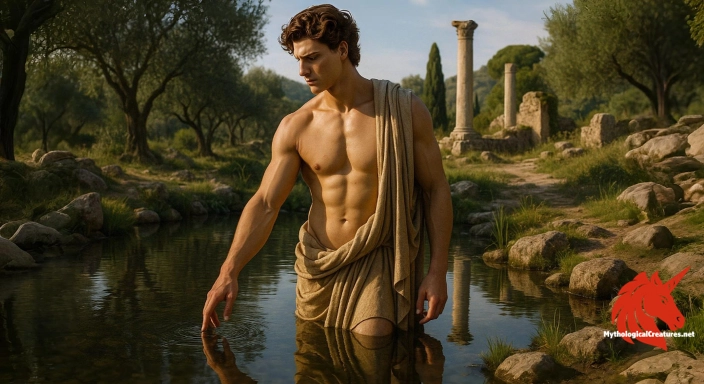
Dare to Meet the Narcissus....
The Mythological Creatures Book Series
Yōkai, Greek, Norse, Egyptian & Chinese. Five illustrated field guides to the creatures the old stories either warned or told you about.
Curated by the Mythological Creatures Team
Series editor: Mythological Creatures Directory
Primary desk: Northern & European Folklore Desk
(rev. November 2025)