
Durius: Durius, also known as Durio, is an ancient river god worshiped by the Lusitanians and Celtiberians on the Iberian Peninsula.
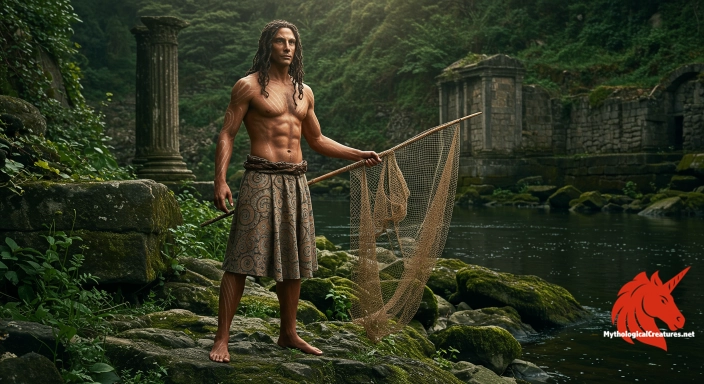
Durius
Durius - Durius represents the vital role of the Douro River in ancient Iberia, linking nature worship with the spiritual life of local peoples.
the legend in five swipes.
the legend in five swipes.
The Beginnings of Durius
Durius emerges from the mists of ancient Iberia as a powerful deity whose essence is entwined with the life-giving river Douro. His veneration by the Lusitanians and Celtiberians reflects deep cultural ties to the natural world and the flowing waters that sustained communities. In a landscape where the interplay of man and nature was celebrated, Durius symbolised the spirit and fertility of the river, playing a central role in local rites. His persona as a divine being was initially shaped by the raw and unpredictable forces of water, which later took on elements of order through religious practice. Early attestations of his worship are found in both local inscriptions and remnants of shrines near Porto, suggesting a longstanding and evolving cult. The iconography of Durius, particularly the fishing net he is often portrayed with, captures his dual role as both nurturer and protector. He is depicted not as a distant, abstract power, but as an intimate presence within the community’s lived experience. The enduring connection between his divine form and the river underlines his importance in an era when natural phenomena bore profound spiritual significance. His myth encapsulates the harmony between human aspiration and the mysterious energies of the natural world.
Durius in the Historical Record
Ancient inscriptions and archaeological remains form the backbone of our understanding of Durius, offering tantalising glimpses into his cultic significance. A shrine near modern-day Porto, attributed to his worship during Roman times, provides a rich source of evidence for his revered status in antiquity. Textual references from regional authors and occasional mentions in broader Iberian mythic traditions have helped preserve his identity. Oral traditions, passed down through generations, have interwoven narratives of his benevolent power with local customs. The scarcity of detailed literary accounts means that much of what is known relies on tangible remnants and artistic depictions. Inscriptions carved into stone and relics recovered from ancient sanctuaries serve as silent testimonies to his once widespread veneration. Diverse story variants have emerged as local communities adapted his myth to suit evolving societal and environmental landscapes. These layers of tradition reveal how his identity was continually reshaped by the people who venerated him. Even fragmentary sources contribute to a mosaic that reflects both historical worship and the creative reinterpretation of his divine persona.
What powers did Durius have?
The visual representation of Durius is suffused with symbolism, where every element conveys his intrinsic connection to water. Most prominently, he is depicted holding a fishing net, an emblem that underscores his stewardship over the river's bounty. Artistic renditions often portray him with muscular contours and an aura of vitality, suggesting both strength and benevolence. His features, while not elaborately detailed in surviving artefacts, evoke the fluidity of the river through a dynamic and almost ethereal expression. The imagery sometimes reveals a flowing mane or beard, reminiscent of water cascading over rocks or banks. Variations in his portrayal indicate that artists emphasised aspects of both human form and natural elements, often integrating aquatic motifs such as waves or fish into his attire. In some depictions, his eyes mirror the reflective quality of water, hinting at his ability to both nurture and challenge those who depend on the river. The size and scale of his representations appear to vary, perhaps reflecting a deity whose significance could change with the needs of a community. Overall, his physical portrayal encapsulates the wild yet sustaining nature of the river he embodies.
Where was Durius best known?
The myth of Durius travelled along the winding courses of the Douro and found expression in varying regional traditions across the Iberian Peninsula. In some areas, local artisans and communities merged the imagery of Durius with other indigenous water deities, reflecting a syncretism that is common in overlapping cultural spheres. For the Celtiberians, his attributes became interlaced with broader Celtic iconography, while the Lusitanians revered him as a distinct guardian of natural resources. These regional adaptations reinforced the idea that the divine could manifest in many forms, yet remain universally tethered to the life-sustaining waters. Differences in local folklore sometimes emphasised his protective aspects, portraying him as a benevolent overseer who ensured the river’s fertility. In neighbouring territories, his depiction occasionally incorporated elements of agrarian symbolism, highlighting the union between water and harvest. Community rituals, seasonal festivals, and local legends each added layers to his character, demonstrating that the divine was as diverse as the landscapes it nurtured. Over time, the regional variations solidified a complex tapestry of narratives that celebrated both the unity and the diversity of Iberian spiritual life.
Durius: Counterparts Around the World
Comparative analysis reveals that Durius shares attributes with a range of water deities from both Celtic and broader European mythologies. His role as a personification of a river is reminiscent of similar deities who symbolise fertility, abundance, and transformation through water. In juxtaposing his image with Celtic river gods such as Coventina, one finds striking commonalities in the reverence for the natural watercourses that define regional identities. Like the later portrayals of Neptune or Poseidon in Mediterranean cultures, Durius was imbued with both the nurturing and potentially destructive aspects of water. Such parallels highlight the universal human need to understand and venerate the elemental forces that shape life and civilisation. While some cultures emphasised martial or tempestuous qualities in their water gods, the emphasis on a fishing net in Durius’s iconography suggests an interpretation more aligned with sustenance and provision. Cross-cultural comparisons also underscore the way local environmental conditions and societal needs dictate the attributes bestowed upon divine beings. The study of these parallels broadens our understanding of how interconnected human communities have long sought to manifest nature’s power in divine form.
Durius: Modern Retellings and Reinventions
The legacy of Durius has evolved alongside the shifting cultural landscape of the Iberian Peninsula. In pre-Roman times, his inextricable link to the river symbolised both the life-giving and the capricious nature of water, a duality that resonated deeply with early local societies. With the advent of Roman influence, his worship was integrated into a broader religious context, as evidenced by the shrine near Porto that attested to his continued importance. Over centuries, the explicit cult of a river god gradually gave way to more abstract representations of nature’s forces, yet echoes of Durius survived in local folklore and regional festivals. Contemporary interpretations often view him as a symbolic protector of natural heritage and a reminder of the ancient bond between humanity and its environment. Modern cultural revival efforts and local artistic expressions have sought to rekindle interest in indigenous deities such as Durius. Today, his image inspires a blend of historical curiosity and environmental stewardship, reflecting a renewed appreciation for the ancient wisdom embedded in the landscape. The evolution of his myth serves as a testament to the enduring power of cultural memory and the continued relevance of ancient symbolism in modern life.
Interesting Fact
It is particularly fascinating that Durius, as a river god, is depicted with a fishing net—a symbol that elegantly ties together the themes of nature, survival, and the beneficent qualities of the Douro River in ancient Iberian culture.
Mythological Treasures
Chinese Beasts: A field guide to the dragons and demon kings of Chinese myth
From river dragons to demon kings, with the legends that shaped five thousand years of storytelling.
Japanese Yōkai: A field guide to the spirits and demons of Japanese folklore
Fifteen spirits, with the signs to watch for and what the old tales say to do if you meet one.
Greek Myths: A field guide to the monsters of ancient Greece
Every monster here earned its place in legend, and each gets a full page of artwork and the story behind it.
the legend in five swipes.
Limited sponsor opportunity
One slot, carefully chosen partners
We only feature a small number of relevant sponsors at any time. If you create serious myth content, we would like to hear from you.
Partner with usQuick Creature Info
Features:
Associations:
Our Mythic Legendary Rating:

Also Sometimes Known As:
Habitat:
Supernatural Powers:
Physical Attributes:
Abilities:
Behavior:
Lore:
Related Creatures, Tales or Lore
- AAchelous
- TTiberinus
- SSequana
References
Discover Another Mythical Legend You May Not Have Heard Of?
Uncover the mysteries of ancient folklore and expand your knowledge of legendary beings from cultures around the world.
Dare to Meet the Adi....

The Mythological Creatures Book Series
Yōkai, Greek, Norse, Egyptian & Chinese. Five illustrated field guides to the creatures the old stories either warned or told you about.
Curated by the Mythological Creatures Team
Series editor: Mythological Creatures Directory
Primary desk: Hellenic & Ancient Mediterranean Desk
(rev. November 2025)