
Egbere: Egbere is a malevolent spirit from Yoruba mythology, known for its constant crying and association with a small mat of wealth.

Egbere
Egbere - Egbere serves as a cautionary figure in Yoruba folklore, symbolising the dual nature of misfortune and fortune through its association with a mat of wealth.
the legend in five swipes.
the legend in five swipes.
Egbere: First Encounters and Early Records
Egbere emerges in Yoruba mythology as a captivating and eerie presence whose origins are woven into the tapestry of ancient oral traditions. It inhabits the deep, shadow-laden woods under the cloak of night, a time when the boundaries between the natural and the supernatural blur. Its story, rich in allegory and subtle warnings, is part of a larger cultural framework that seeks to explain the mysteries of wealth and misfortune. Tales of Egbere have been shared for generations, each retelling reinforcing its status as a malevolent spirit with a paradoxical association to prosperity. The creature is both feared and revered, embodying the idea that great riches may come at an unpredictable, often dangerous cost. Throughout its mythic journey, Egbere's relentless cry has served as a chilling reminder of sorrow and eternal longing. The persistent presence of the small mat, an object believed to hold the key to unimaginable riches, deepens the mystery surrounding this spectral being. Its narrative is intricately interlaced with the rhythms of everyday life and the natural world, making Egbere a symbol of the unpredictable interplay between destiny and desire.
What sources tell us about Egbere?
The story of Egbere finds its roots not in a single ancient manuscript but in a vibrant collection of oral tales, passed down from elders to the next generation. Local griots and community storytellers have long recounted encounters with this enigmatic spirit, each version contributing subtle nuances to its character. Diverse renditions depict Egbere as a wailing presence whose cry serves as either a warning or a challenge to those who dare roam the night. Some versions highlight the spirit’s role as a guardian of a mystical mat, an item that promises unseen riches to the audacious. Other narratives cast it as a tragic figure doomed to express eternal sorrow, its incessant weeping both a lament and a curse. The variability in these accounts reflects the richly layered nature of Yoruba myth, where oral tradition allows for fluid reinterpretation. Occasional references in early folkloric compilations suggest that the legend was once used to explain inexplicable misfortunes occurring in isolated woodlands. Contemporary collectors of folklore continue to gather these varied accounts, ensuring that Egbere remains a living subject of investigation and reinterpretation within cultural studies.
Egbere: What the Legends Describe
Egbere is traditionally depicted as a diminutive, shadow-like entity, its short stature belying the potency of its spectral essence. Its physical form is shrouded in mystery, often seen as a fleeting glimpse rather than a fully discernible figure beneath the moonlit canopy. The creature’s features are characterised by a perpetually tear-stained face, with eyes that seem to glimmer with both pain and malevolence. Alongside its ghostly outline, Egbere is invariably associated with a small, unassuming mat, which is imbued with an aura of almost mystical simplicity. The mat’s ordinary appearance is deceptive, as it holds the promise of unimaginable wealth for those who can claim it, adding a tangible element to the otherwise ethereal legend. There is an inherent contrast in its physical depiction—the blend of vulnerability in its pathetic, ceaseless cry with the dangerous allure of hidden fortune. Some accounts also suggest that its form can appear to shift in size and intensity as it melds with the surrounding darkness. This interplay of visual details contributes to the creature’s enduring power, evoking both pity and dread from those who encounter its story.
How do regional versions of Egbere differ?
Regional interpretations of Egbere reveal a fascinating spectrum of detail, as local communities adapt the myth to fit their environment and cultural values. In some Yoruba settlements, the spirit takes on a more ominous role, becoming a forewarning of impending misfortune for anyone who wanders too close to its woodland abode. Other areas depict Egbere as a cunning gatekeeper, whose possession of the mat of wealth is viewed as not just a curse but also a potential boon for those who are brave enough to challenge its dominion. The creature’s incessant crying is sometimes interpreted as the sound of the forest itself mourning, a natural rhythm that echoes through local lore. Varied rituals and taboos have developed around the legend, with some communities even performing specific rites to appease the spirit during certain night-time hours. Local storytellers have enriched the narrative by imbuing the character with traits that reflect the unique topographical and spiritual climate of their region. Such adaptations ensure the myth remains dynamic, continually engaging with the lived experiences of diverse groups. In this way, the tale of Egbere serves as a mirror, reflecting regional concerns, hopes, and historical shifts within the Yoruba cultural sphere.
Does another culture have a figure like Egbere?
Comparatively, Egbere occupies a peculiar space among global mythological figures, sharing traits with small, elusive spirits found in various cultural narratives. Similar to the mischievous kobolds of Germanic lore or the enigmatic faeries of Celtic legends, Egbere is both a trickster and a bearer of caution, yet its malevolent tone sets it apart. While many such entities are associated with benign pranks or minor mischief, Egbere’s perpetual wailing and connection to immense, albeit dangerous, wealth inject a darker, more complex dimension into its character. The motif of a guarded treasure, embodied by the small mat, resonates with legends from distant cultures that also link material fortune to mysterious or supernatural sources. Cross-cultural comparisons reveal that while supernatural guardians of wealth exist in various mythic traditions, few exhibit the same blend of sorrow and malevolence as Egbere. This uniqueness invites further analysis, placing it in a broader dialogue about the dual nature of fortune and misfortune. The spirit’s inconsistent embodiment—both a challenge to be overcome and a lamentable figure—mirrors similar ambiguities found in other folk traditions. Such comparative insights highlight how Egbere, though rooted in Yoruba mythology, speaks to universal themes found in the folklore of many societies.
Where do you see Egbere today?
The tale of Egbere has evolved considerably over time, adapting its symbolism to resonate with changing societal values and aesthetic sensibilities. Initially conveyed purely through oral tradition, the myth has later found expression in contemporary literature, theatre, and even digital media where reinterpretations of the legend flourish. Modern artists and writers have reimagined Egbere as a metaphor for the perilous pursuit of wealth and the inherent unpredictability of fate. The spirit’s tragic and cautionary attributes continue to evoke deep emotional responses, often symbolising the cost of material greed and the shadows that accompany unbridled ambition. As traditional practices give way to modern cultural dialogues, Egbere's figure has been utilised to explore themes of loss, desire, and the blurred lines between the tangible and the ethereal. This evolution underscores the adaptability of myth, transforming ancient lore into a vessel for contemporary fears and aspirations. The narrative serves not only as a reminder of an ancestral past but also as a warning wrapped in the guise of an age-old legend. Today, Egbere stands as an enduring emblem in both academic discussions and popular culture, a relic of folklore that continues to stimulate creative reinterpretation and philosophical debate.
Interesting Fact
An intriguing aspect of Egbere is the paradoxical belief that while it instills fear with its constant crying, seizing its small mat of wealth could potentially unlock untold riches.
Mythological Treasures
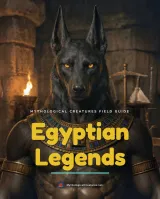
Egyptian Legends: A field guide to the gods and monsters of ancient Egypt
Guardians of the living and devourers of the dead, with the role each played in judgement.
Chinese Beasts: A field guide to the dragons and demon kings of Chinese myth
From river dragons to demon kings, with the legends that shaped five thousand years of storytelling.
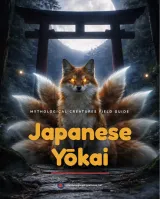
Japanese Yokai: A field guide to the spirits and demons of Japanese folklore
Fifteen spirits, with the signs to watch for and what the old tales say to do if you meet one.
the legend in five swipes.
For publishers and studios
Your next readers are already here
Many of our visitors are looking for books, campaigns, and resources that deepen their journey into myth. Position your title or setting here.
Discuss a placementQuick Creature Info
Origin:
Features:
Associations:
Our Mythic Legendary Rating:

Habitat:
Supernatural Powers:
Physical Attributes:
Abilities:
Behavior:
Lore:
Related Creatures, Tales or Lore
References
Discover Another Mythical Legend You May Not Have Heard Of?
Uncover the mysteries of ancient folklore and expand your knowledge of legendary beings from cultures around the world.
Dare to Meet the Khoriphaba....

The Mythological Creatures Book Series
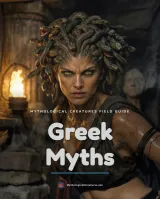
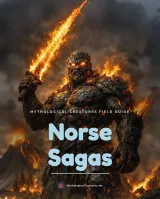
Yokai, Greek, Norse, Egyptian & Chinese. Five illustrated field guides to the creatures the old stories either warned or told you about.
Curated by the Mythological Creatures Team
Series editor: Mythological Creatures Directory
Primary desk: African & Diaspora Traditions Desk
(rev. November 2025)