
Enchanted Moura: The Enchanted Moura is a mystical, alluring supernatural being from Portuguese and Galician folklore.
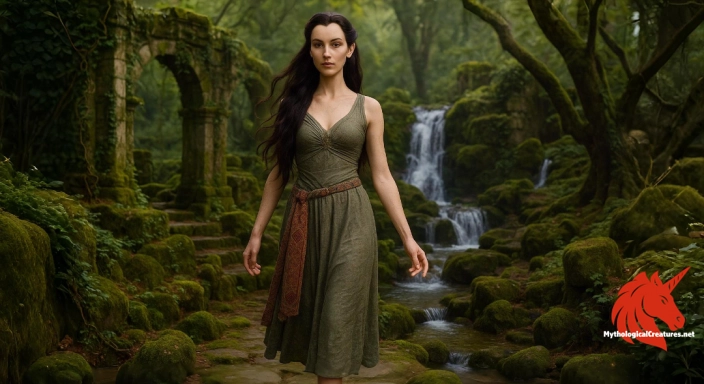
Enchanted Moura
Enchanted Moura - Represents the mystical interplay between beauty, magic, and nature in the Iberian mythological landscape.
the legend in five swipes.
the legend in five swipes.
The First Records of the Enchanted Moura
The Enchanted Moura, known as the moura encantada, emerges from the mystical traditions of Portuguese and Galician folklore with an irresistible allure and enigmatic presence. Born from ancient myth, she is portrayed as a supernatural maiden bound by an occult spell that both captivates and cautions. Her origins seem rooted in pre-Christian rituals and local legends that later intermingled with medieval narratives. Many early attestations hint at her role as a guardian of sacred spaces, bridging the natural and the otherworldly. Influenced by both pagan and later Christian traditions, she embodies the liminal spaces between everyday life and the realm of the supernatural. Local tales recount her beauty and seductive powers in a way that both enchants and warns her admirers. Rich in cultural symbolism, the moura encantada is celebrated as much for her mysterious charm as for her enduring connection with the landscape. The folklore surrounding her often portrays her as part of an ancient continuum of female spirits who protect hidden treasures and forgotten lore. This mythical figure continues to inspire wonder, reflecting the deep intertwinement of nature, magic, and cultural identity.
Enchanted Moura: From Oral Tale to Written Record
Various folkloric sources and oral traditions have preserved the tales of the Enchanted Moura through generations in both Portugal and Galicia. Narrative fragments found in medieval manuscripts offer glimpses of her character as a bewitching entity whose very existence challenges the boundaries of the natural world. Differing versions of her story have travelled through time, with some accounts focusing on her bewitching allure and others highlighting her role in stone masonry and construction. Folkloric compilations and local ballads have enriched her image over centuries, blending ancient pagan customs with later literary embellishments. Some variants describe her as a solitary figure cursed to dwell in the twilight of enchanted landscapes, while others celebrate her as a benefactor of hidden treasures. The diversity of these narratives testifies to the flexible nature of her myth, as storytellers adapted the character to mirror the evolving cultural narratives of their communities. Each retelling adds layers of complexity and sometimes contrasting qualities, emphasising both her bewitching beauty and formidable strength. The enduring prominence of her legend in folk and oral traditions ensures that her story remains a vital part of regional cultural heritage.
What does the Enchanted Moura look like?
In visual depictions, the Enchanted Moura is often illustrated as possessing an ethereal beauty that defies mortal standards. Her appearance is described with luminous, flowing hair and eyes that shimmer with an ancient, otherworldly light, mirroring the mystery of twilight. Many artists imagine her draped in garments that evoke the colours of dusk and dawn, with intricate patterns reminiscent of archaic symbols. Her form is both delicate and powerful, a reflection of her dual ability to seduce and to construct formidable stone edifices. Some accounts detail a subtle transformation in her features, where aspects of the natural world—like the texture of stone or the fluidity of water—are echoed in her visage. Her allure is intensified by an almost palpable aura of magic that clings to her, suggesting that her beauty is as much a product of enchantment as of nature. The varying descriptions also hint at her shapeshifting nature, with some legends recounting moments when her form melds with the surrounding landscape. This complex blend of refined elegance and elemental strength marks her as a figure both mysterious and profoundly memorable.
Which regions tell stories of the Enchanted Moura?
Regional interpretations of the Enchanted Moura reveal a rich tapestry of local adaptations across Portugal and Galicia. In some northern Galician traditions, she is revered as a luminous guardian of ancient, meandering rivers and misty hilltops, her presence woven into the fabric of the natural world. By contrast, certain Portuguese narratives place greater emphasis on her role as the enigmatic architect behind formidable stone constructions and ancient ruins. In rural communities, her legend has often been linked to specific natural landmarks, where she is believed to have left her indelible mark on the land. These diverse regional stories sometimes portray her as more benevolent, offering protection and wisdom, while in other variations she appears as a cautionary presence, ensnaring those who wander too close to her hidden realms. Local festivals and cultural rituals in different areas occasionally celebrate her mysterious influence, reflecting a shared cultural legacy. The shifting portrayal of her character across regions underscores the adaptability of folklore to local customs and landscapes. Such variations not only enrich her narrative but also affirm her status as a unifying but multifaceted symbol in Iberian myth.
Legends Comparable to That of the Enchanted Moura
Comparatively, the Enchanted Moura shares intriguing similarities with other mythological figures found across Europe. Echoes of her ethereal beauty and supernatural allure can be discerned in the Celtic fairies and Irish sidhe, whose mystique also bridges the natural and the divine. Like the Greek nymphs, she embodies a connection to nature that is both alluring and capricious, with an ability to enthral and transform the mundane surroundings. Spanish folklore offers parallel figures such as the meiga, who similarly mix charm with an underlying potency that can both heal and bewitch. These cross-cultural parallels highlight a common archetype: the powerful, enchanting maiden who resides at the borders of the known and the unknown. Such comparative analysis reveals how themes of seduction, mystery, and hidden craftsmanship resonate across different mythic traditions. The Enchanted Moura’s narrative is a testament to the enduring fascination with female figures who command the forces of nature. In this way, her legend not only reflects local cultural identities but also participates in a broader European mythological dialogue.
Enchanted Moura: From Folklore to Pop Culture
The evolution of the Enchanted Moura’s myth reflects a dynamic interplay between ancient tradition and modern reinterpretation. Over time, her portrayal has shifted from fearsome cautionary tale to a nuanced symbol of resilience, mystery, and feminine power. Early depictions emphasised the duality of her nature—both dangerously seductive and astronomically potent in her stonecraft—mirroring the societal ambivalence towards the supernatural. In contemporary culture, she has been reimagined in literature, film, and art as a complex character who embodies the timeless interconnection of nature and myth. Modern artists and writers often highlight her role as a custodian of cultural memory, preserving the ancient narratives while inviting fresh perspectives. The resurgence of interest in folklore and myth has also seen her become a favourite subject in festivals and cultural heritage events throughout the Iberian Peninsula. Her enduring legacy is a reflection of society’s continual reinterpretation of myth, where symbols of the past are reinvented to speak to present-day concerns. Today, the Enchanted Moura stands as a bridge linking a storied historical past with the imaginative spirit of modern creativity, ensuring that her enchanted tale remains vibrant and relevant.
Interesting Fact
One intriguing observation is that some local legends credit her stone-building prowess with the creation of ancient megalithic structures, blurring the lines between myth and history.
Mythological Treasures
Chinese Beasts: A field guide to the dragons and demon kings of Chinese myth
From river dragons to demon kings, with the legends that shaped five thousand years of storytelling.
Japanese Yōkai: A field guide to the spirits and demons of Japanese folklore
Fifteen spirits, with the signs to watch for and what the old tales say to do if you meet one.
Greek Myths: A field guide to the monsters of ancient Greece
Every monster here earned its place in legend, and each gets a full page of artwork and the story behind it.
the legend in five swipes.
Mythology commerce, done carefully
Align your store with our global myth audience
If you sell myth-inspired jewellery, prints, decks, or collectibles, we can feature your brand without overwhelming the reading experience.
Partner with usQuick Creature Info
Associations:
Our Mythic Legendary Rating:

Also Sometimes Known As:
Habitat:
Supernatural Powers:
Physical Attributes:
Abilities:
Behavior:
Weaknesses:
Lore:
Related Creatures, Tales or Lore
- FFada
- SSiren
- NNymph
References
Discover Another Mythical Legend You May Not Have Heard Of?
Uncover the mysteries of ancient folklore and expand your knowledge of legendary beings from cultures around the world.
Dare to Meet the Ares....
The Mythological Creatures Book Series
Yōkai, Greek, Norse, Egyptian & Chinese. Five illustrated field guides to the creatures the old stories either warned or told you about.
Curated by the Mythological Creatures Team
Series editor: Mythological Creatures Directory
Primary desk: Hellenic & Ancient Mediterranean Desk
(rev. November 2025)