
Enêpsigos: Enêsigos is a fallen angel from the Testament of Solomon known for her ability to assume three distinct forms.

Enêpsigos
Enêpsigos - Enêsigos represents the enigmatic interplay between divine prophecy and celestial punishment, symbolised by her binding chains and lunar abode.
Origins & First Encounters
The Enæpsigos emerges from the shadows of ancient myth as a mysterious fallen angel whose origins are steeped in enigmatic lore. Her earliest appearance in the apocryphal Testament of Solomon hints at a bride of both darkness and divine light, setting her apart from conventional celestial beings. The entity is renowned for assuming three distinct forms, each tied to a unique aspect of cosmic influence. One of her incarnations intriguingly aligns with the figure of Kronos, evoking an aura of primordial time and inexorable change. Her dwelling on the moon further enriches her character, imbuing her existence with an ethereal luminescence that straddles the line between beauty and terror. The narrative surrounding her often intertwines themes of divine rebellion and the delicate balance between order and chaos. In the cultural landscape of ancient mysticism, her tale is interwoven with the legacy of King Solomon and his legendary dealings with supernatural forces. Over time, the story of Enæpsigos has come to symbolise the eternal struggle between celestial might and human endeavour, resonating with audiences who seek to understand the mysteries of the unseen world.
Source Texts & Tale Variants
The primary narrative of Enæpsigos is preserved within the Testament of Solomon, a text that casts her as an enigmatic force bound by potent magical constraints. Her depiction in this early work establishes her connection to both lunar majesty and the formidable power of divine prophecy. Multiple manuscript traditions over centuries have reworked her story, each variant enriching her multifaceted identity with subtle alterations. In some accounts, she is portrayed as a harbinger of doom whose prophetic words were delivered to an incredulous King Solomon, while other renditions emphasise her inherent power and tragic defiance. The evolving texts illustrate a dynamic tradition in which her triple forms and her binding by triple-link chains are depicted with captivating detail. Some versions merge her characteristics with those of ancient deities, blurring boundaries between angelic rebellion and mythical immortality. This multiplicity in storytelling not only testifies to her enduring place in occult lore but also links her directly to the broader currents of mystical literature. Over centuries, these story variants have played a central role in refining our understanding of the interplay between divine authority and supernatural resistance.
Form & Powers
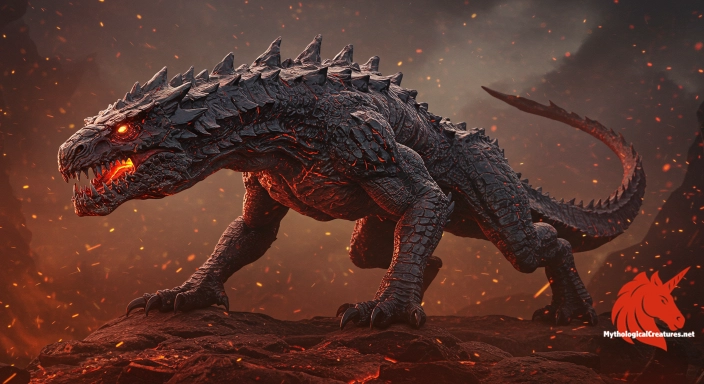
Enæpsigos is described as possessing a striking physical presence that defies simple categorisation, manifesting in three distinct forms that mirror the complexity of cosmic forces. One of her appearances reflects the silvery radiance of the moon, the light of which seems to outline a form both mysterious and otherworldly. In another guise, she is conjured in the image of Kronos, where an ancient, almost regal countenance is revealed through time-worn features and a commanding yet somber gaze. Her body is often depicted with an elusive fluidity that shifts seamlessly between ethereal beauty and a formidable, almost tangible dread. Dominating her form are triple-link chains that glow with an internal light, each link a tangible symbol of the mystical forces that bind her. The interplay between these chains and her shifting countenance creates an arresting visual, suggesting both subjugation and latent potency. Her eyes, deep and ever-watchful, appear as portals to ages long past and futures yet unwritten. The physical description of Enæpsigos serves as a poignant reminder of the duality inherent in beings that straddle the celestial and the fallen.
Regional Faces
Across diverse cultural terrains, the image of Enæpsigos is reshaped by local mythologies and regional spiritual sensibilities. In Middle Eastern and Judaic traditions, she is primarily seen as a fallen celestial force whose dark mystique serves as both a cautionary tale and a symbol of hidden wisdom. Mediterranean occult lore infuses her with attributes of lunar divinity, where the interplay between light and shadow underscores the complexity of her character. Greco-Roman interpretations, fostered by her association with Kronos, lean into themes of temporal decay and cosmic inevitability. In Eastern European occult traditions, her narrative is often intertwined with regional demonological archetypes, emphasising an air of tragic defiance and restrained power. Local adaptations may alter her iconography to include indigenous symbols of fate and rebirth, reinforcing the universal appeal of her myth. Artistic depictions in these regions frequently highlight her bound state, using local motifs such as intricate chain patterns or crescent moon symbolism. Despite these regional variations, the core essence of her identity—marked by the juxtaposition of celestial beauty and dark captivity—remains remarkably consistent.
Cultural Parallels
The character of Enæpsigos resonates deeply with other mythological figures that embody the paradox of beauty, power, and subjugation. Her lunar affiliation recalls the mystique of moon goddesses and nocturnal spirits in various traditions, while her connection to Kronos invites parallels with the Greek titan revered as the personification of time. Much like other fallen angels and rebellious divine beings such as Lilith, her narrative is imbued with themes of defiance and the struggle against cosmic order. The motif of being bound by unbreakable chains is a recurring one, found in stories where formidable entities are subdued through ingenuity or divine intervention. This aspect of her tale echoes similar legends in which celestial forces are contained by human or divine means, serving as metaphors for the limits of power. Her multifaceted nature, straddling a world of light and shadow, bears a striking resemblance to figures in other cultures who challenge the hierarchy between mortal and divine. Comparative analysis draws intriguing connections between her story and those of mythic archetypes that navigate the blurred boundaries of destiny and free will. In every cultural retelling, her figure stands as a mirror reflecting humanity’s perpetual fascination with the unknown and the eternal.
Legacy & Modern Evolution
Over the centuries, the myth of Enæpsigos has undergone a remarkable evolution, transforming from an obscure figure in apocryphal texts into a potent emblem of eldritch power and mysterious allure. Early accounts in the Testament of Solomon laid a foundation that was continuously reinterpreted by medieval mystics, Renaissance occultists, and modern writers alike. Her depiction shifted subtly from that of a purely ominous fallen angel to a more complex symbol of both divine defiance and precarious beauty. In modern times, her image has been revitalised within literature, film, and digital art, where she is often portrayed as a mesmerizing embodiment of cosmic contradictions. Contemporary occult circles frequently revisit her story as a means of exploring themes of power, captivity, and the ineffable nature of destiny. Her chained state, in particular, has become a powerful metaphor for the human struggle against overwhelming cosmic forces. The visual and symbolic legacy of Enæpsigos continues to inspire original artistic interpretations and academic debates, reminding us of the dynamic nature of myth. Today, her narrative stands as a testimony to the lasting allure of ancient lore and the enduring power of myth to challenge our perceptions of the divine and the profane.
Interesting Fact
An intriguing aspect of Enêsigos is her dual identity as both a fallen angel and a manifestation of Kronos, reflecting a unique synthesis of ancient Judeo-Christian and Greek mythological traditions.
For serious mythcraft
Your project belongs among the legends
If your work deepens how people understand, play with, or teach mythology, a sponsor placement here keeps it in front of the right readers all year.
Submit a sponsorship enquiryQuick Creature Info
Origin:
Features:
Associations:
Our Mythic Legendary Rating:

Also Sometimes Known As:
Habitat:
Supernatural Powers:
Physical Attributes:
Abilities:
Behavior:
Weaknesses:
Lore:
References
Discover Another Mythical Legend You May Not Have Heard Of?
Uncover the mysteries of ancient folklore and expand your knowledge of legendary beings from cultures around the world.
Dare to Meet the Gangcheori....
Curated by the Mythological Creatures Team
Series editor: Mythological Creatures Directory
Primary desk: Hellenic & Ancient Mediterranean Desk
(rev. November 2025)