
Eos: Eos is the ancient Greek goddess of the dawn who heralds the arrival of daylight each morning.

Eos
Eos - Represents the eternal cycle of daybreak and renewal; her daily journey dispels darkness while her passionate affairs highlight the human–divine interplay.
the legend in five swipes.
the legend in five swipes.
Where does the story of Eos begin?
Eos shines as a luminous embodiment of the dawn, heralding a daily rebirth that intertwines the realms of light and the timeless cycle of night. Born from the divine union of the Titans Hyperion and Theia, her origins are steeped in the ancient narratives that shaped early Greek myth. Emerging each morning, she gracefully ushers the first rays of light, symbolising the renewal of hope and the promise of a new beginning. Her presence is immortalised in the epithet 'rosy-fingered', a striking image that captures the delicate interplay of colours at daybreak. The goddess is celebrated not only for her celestial role but also for her potent allure and insatiable passion, which led her into numerous remarkable liaisons with mortal men and gods alike. Poets of antiquity celebrated her dual nature, intertwining her identity as both a nurturing force and a catalyst for fervent desire. Her narrative, rich with both poetic beauty and cosmic significance, reflects the intrinsic human connection to the cycles of nature. The myth of Eos has resonated through the ages, offering a vivid portrayal of the transition from darkness to light. Her legacy endures as a symbol of rejuvenation and the eternal optimism that accompanies every sunrise.
How many versions of the Eos story are there?
Ancient literary traditions provide a wealth of depictions that enshrine Eos as the luminous bringer of day. Poetic fragments from the Homeric era paint her as the tender yet powerful manifestation of dawn, celebrated for her radiant beauty and complex love affairs. Several texts offer variant genealogies, with some traditions naming her as a daughter of the Titan Pallas, thus illustrating the fluidity inherent in mythic storytelling. The vivid epithet 'rosy-fingered' captures the imagery of her touch upon the skies, an image echoed in multiple epic poems. Her adventures span accounts where she interacts with mortal heroes, each version adding layers to her multifaceted character. In comparison, later sources like those in Roman literature establish her parallel in the form of Aurora, thereby linking her myth with broader Mediterranean traditions. Diverse poetic voices have portrayed her both as a nurturing herald of light and an impulsive deity driven by passion. Lesser-known ritual texts and local cult practices, though sparse, hint at a once richer tapestry of worship and devotion. These assorted narratives collectively underscore her role as a bridge between the cosmic and the earthly, a motif that has captivated audiences throughout antiquity. Every account, whether grand or subtle, contributes a unique shade to the evolving portrait of this radiant goddess.
What was Eos believed to be capable of?
Visual depictions of Eos evoke a sense of sublime radiance, with her figure commonly rendered as an ethereal beauty bathed in the gentle glow of early light. Her skin is often illustrated as softly luminescent, reminiscent of the pale colours that grace the sky at daybreak. In classical art, delicate features and graceful contours highlight her divine elegance, while her eyes are portrayed as mirroring the vast, clear expanse of a morning horizon. Flowing tresses, tinged with hues of rose and gold, cascade around her shoulders, capturing the ephemeral quality of dawn’s first light. Her garments, usually depicted as diaphanous and light, mimic the pastel palette of the sunrise, moving like whispers in the cool air of early morning. Eos is frequently shown riding a chariot drawn by resplendent horses, each detail crafted to evoke the dynamic energy of an awakening world. Some representations accentuate her slender, almost fragile form, while others imbue her with a more robust, commanding presence, reflecting regional aesthetic preferences. Such artistic treatments convey the intricacy of light and shadow, underscoring both her ephemeral charm and enduring might. Every portrayal is a study in contrasts—the delicate and the dynamic—mirroring the transient beauty and power of the dawn itself.
What do different regions call Eos?
Regional interpretations of Eos reveal a fascinating spectrum of adaptations that reflect the diverse cultural landscapes of the ancient world. In mainland Greece, she is revered as the gentle and luminous herald of light, whose daily emergence is inextricably linked to the natural rhythm of life. In Roman culture, her counterpart Aurora carries a similar radiance, though her iconography is often imbued with nuances that emphasise the grandeur of the empire. Regions on the periphery of the Hellenic world, such as parts of Asia Minor, integrated local motifs that modified her appearance and function, blending indigenous symbols of rebirth with the established myth. These adaptations occasionally introduced additional layers of fertility and prosperity into her persona, aligning her with local agricultural rites. Folk traditions across various regions sometimes recast her as an omen-bringer, wherein the ephemeral glow of dawn signalled both hope and portents of change. Such variations underscore how the fundamental archetype of the dawn goddess was malleable, evolving to reflect the distinct values and needs of different communities. The enduring appeal of her myth allowed her to be reborn in myriad forms, each echoing the universal human embrace of renewal. This rich tapestry of regional adaptations highlights the interconnectedness of myth across cultures, demonstrating how Eos served as a unifying symbol of light and regeneration throughout the ancient world.
What parallels exist to Eos in other traditions?
Examining Eos alongside similar deities from other mythological traditions reveals a compelling network of shared motifs and themes. Her role as the bringer of dawn finds a close parallel in the Roman Aurora, whose very name conveys the same radiant promise of renewal. In the ancient Vedic texts, the goddess Ushas emerges with a strikingly similar function, shepherding in the light and dispelling the darkness with her vibrant energy. These deities, though rooted in distinct cultures, each embody the timeless transition from night to day and serve as symbols of hope and new beginnings. Comparative analyses show that the initial blush of morning, as personified by Eos, often intersects with themes of love and desire—a duality that is subtly echoed in figures like Aphrodite. While Eos’s narrative includes passionate escapades that blur the lines between divinity and mortal longing, similar echoes can be discerned in other cultural traditions that link the break of day with the stirrings of life and love. The widespread appeal of the dawn motif underscores its capacity to encapsulate both the ephemeral and the eternal aspects of human experience. Across varied cultural tapestries, these figures reaffirm the intrinsic human connection to the cycles of nature, linking cosmic rhythms with earthly passions. This convergence of mythic imagery highlights a shared heritage among ancient peoples, each venerating the dawn as a profound emblem of renewal and possibility. Through these cross-cultural connections, Eos remains a vibrant testament to the universal language of light and hope.
How has the image of Eos evolved?
The legacy of Eos has traversed the centuries, evolving from the poetic imaginings of ancient Greece to become a symbol of perpetual renewal in modern cultural expressions. In the wake of classical antiquity, her luminous image underwent transformation during the Renaissance, when artists reinterpreted her radiance in painting and sculpture. Over time, her representation has shifted subtly as literary and artistic movements have sought to capture both the transient beauty of the dawn and the bittersweet nature of mortal passion. Modern adaptations in literature, film, and digital art often portray her as a multidimensional figure, one who embodies the eternal cycle of regeneration and the poignant interplay of light and shadow. Contemporary narratives draw on her myth to explore themes of transition, unfulfilled desire, and the relentless march of time, resonating with audiences in a rapidly changing world. Her depiction today is equally a celebration of nature’s cycles and a meditation on the fleeting nature of beauty. As academic and popular cultures alike continue to re-examine ancient mythologies, the figure of Eos stands out as a bridge between archaic symbolism and modern existential themes. Her enduring influence is evident in the sustained fascination with dawn as a metaphor for hope and the possibility of new beginnings. Through the lens of modern reinterpretation, Eos remains a dynamic muse, inspiring creations that merge classical heritage with contemporary insight. Ultimately, her myth persists not only as an element of ancient lore but as a living symbol ripe for continual reinvention in the modern creative imagination.
Interesting Fact
An intriguing aspect of Eos's myth is her dual influence on love and light, exemplified by her relationship with Tithonus, which poignantly underscores the bittersweet nature of immortality.
Mythological Treasures
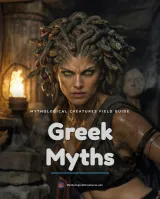
Greek Myths: A field guide to the monsters of ancient Greece
Every monster here earned its place in legend, and each gets a full page of artwork and the story behind it.
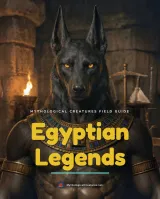
Egyptian Legends: A field guide to the gods and monsters of ancient Egypt
Guardians of the living and devourers of the dead, with the role each played in judgement.
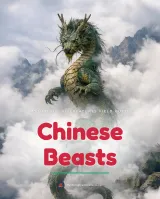
Chinese Beasts: A field guide to the dragons and demon kings of Chinese myth
From river dragons to demon kings, with the legends that shaped five thousand years of storytelling.
the legend in five swipes.
Support the directory
Promote your myth project and fund more research
Sponsor placements help keep this directory growing and free to use while giving your work a focused, relevant audience.
Learn how sponsorship worksQuick Creature Info
Origin:
Associations:
Our Mythic Legendary Rating:

Also Sometimes Known As:
Habitat:
Supernatural Powers:
Physical Attributes:
Abilities:
Behavior:
Lore:
Related Creatures, Tales or Lore
- AAurora
- UUshas
- HHausos
References
Discover Another Mythical Legend You May Not Have Heard Of?
Uncover the mysteries of ancient folklore and expand your knowledge of legendary beings from cultures around the world.
Dare to Meet the Amphithoe....

The Mythological Creatures Book Series
Yokai, Greek, Norse, Egyptian & Chinese. Five illustrated field guides to the creatures the old stories either warned or told you about.

Curated by the Mythological Creatures Team
Series editor: Mythological Creatures Directory
Primary desk: Hellenic & Ancient Mediterranean Desk
(rev. November 2025)