
Epiales: Epiales is the Greek daemon and personification of nightmares.
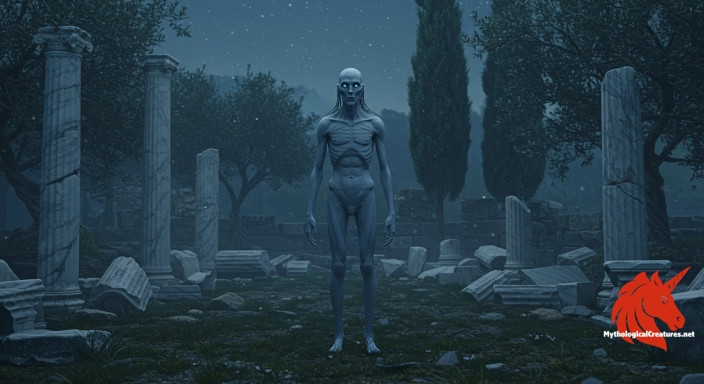
Epiales
Epiales - Embodies the terror and psychological impact of nightmares, offering insight into ancient Greek interpretations of the subconscious.
Origins & First Encounters
Epiales stands as a captivating figure in ancient Greek mythology, embodying the eerie realm of nightmares with a presence that is both elusive and formidable. Born from the complex tapestry of Greek daemons, he was envisioned as the personification of the terror that haunts the sleeping mind. His myth emerged during periods when the Greeks sought to explain the sudden surge of fear and strange visions in the night, serving as a bridge between the known and the mysterious. Ancient narratives attest that his name and myth evolved with multiple variants, such as Epialos and Ephialtes, reflecting a fluid tradition rather than a single canonical story. Often linked to the darker aspects of sleep, Epiales was considered both a harbinger of night terrors and a symbol of the unconscious forces that precipitate fear. His early mentions in oral and literary traditions highlight the ancient Greeks’ fascination with dreams and the supernatural. The myth of Epiales coincided with broader cultural practices that revered and feared the nocturnal, positioning him as a key figure in discussions about the mysteries of sleep. His enduring presence in myth underscores a timeless exploration of the human experience of vulnerability during the dark hours.
Source Texts & Tale Variants
The primary references to Epiales are scattered throughout fragments of ancient texts, where he is often mentioned in connection with the realm of dreams. Although no single source provides a complete narrative, various authors alluded to him as the spectral force behind the uncanny visions experienced during slumber. Early playwrights and poets subtly embedded his character in their works, thereby leaving behind a legacy interwoven with Greek literary traditions. Some texts portray him within the wider pantheon of daemons linked to night and sleep, underscoring his integration into the mythological framework. In addition, regional folklore and lesser-known local stories contributed supplementary layers to his myth, each reflecting the fears and interpretive styles of their communities. These assorted sources indicate that Epiales was not a central deity but a potent symbol of the unpredictable and unsettling nature of the subconscious. Multiple variants of his name also appear throughout the corpus, suggesting that his characteristics were open to regional reinterpretation. Although details remain sparse, the collected narratives provide a mosaic of viewpoints that continue to intrigue modern scholars and enthusiasts of myth.
Form & Powers
Descriptions of Epiales are notably elusive, as his form is more an embodiment of abstract terror than that of a fully defined creature. Ancient artistic interpretations, where they exist, hint at a shadowy, amorphous figure that defies conventional physical parameters. He is often envisaged as a being cloaked in darkness, with a silhouette that shifts and distorts in the half-light between sleep and wakefulness. The scant visual details suggest eyes that burn with an otherworldly intensity, resembling the void that one experiences in moments of deep, disturbing dreams. Some artistic depictions, though rare, contrast his gossamer form against the setting of an impoverished, starless night sky, thereby amplifying his spectral nature. His physique, when imagined, is neither wholly human nor entirely beastly, symbolising the unpredictable quality of nightmares where reality and illusion intertwine. The absence of a rigid anatomical definition contributes to the eerie adaptability of his myth, allowing him to appear in myriad forms. This fluidity in physical description reinforces the idea that Epiales is as much a psychological presence as he is a mythological one.
Regional Faces
While Epiales is rooted firmly in ancient Greek myth, his influence can be discerned in a number of regional traditions that adapted his essence to local superstitions. In various parts of the Mediterranean basin, folklore embraced similar entities that presided over the realm of disturbed sleep, often merging local fears with the notion of an ethereal nightmare spirit. In some areas of ancient Anatolia and the Near East, figures resembling Epiales were recast in a slightly altered cultural mould, reflecting local practices in dream interpretation and mystical belief. The fluidity of his myth allowed these communities to imbue him with qualities that resonated with indigenous understandings of the night’s mysteries. Artistic and literary representations in these regions often portrayed him alongside other nocturnal forces, thereby linking his identity to a broader behavioural mosaic of sleep and fear. Variations in his depiction, from subtle shadows to more defined phantom forms, mark the adaptations he underwent as cultures exchanged ideas about the spiritual origins of nightmares. The evolving local narratives illustrate how mythological motifs can transcend geographic boundaries and acquire unique local flavours. Consequently, Epiales’s myth serves as a prime example of the dynamic interplay between central myth and regional reinterpretation.
Cultural Parallels
Explorations of myth from different cultures reveal striking parallels with Epiales, especially in the realm of nightmare personifications. Across various European traditions, the concept of a shadowy demon bringing disquieting dreams resonates with figures like the Germanic Mara, whose name even underpins the modern term ‘nightmare’. Similarly, Scandinavian folklore features entities that embody the terror of the unseen, akin to Epiales in their power to disrupt peaceful slumber. In Nordic and Slavic traditions, these beings share a common thematic link with the Greek daemon, symbolising an ever-present fear of the night. Comparisons extend into Eastern mythologies as well, where elusive dream demons surface in varied guises but retain the intrinsic quality of manifesting unconscious anxieties. While the details of these figures differ culturally, the universal motif of a supernatural instigator of fear underscores a shared human condition. This cross-cultural resonance highlights the enduring appeal of narratives that seek to rationalise the inexplicable terrors experienced in sleep. The comparative analysis of these mythic creatures not only bridges disparate cultural landscapes but also enriches our understanding of how different societies have processed the phenomenon of nightmares.
Legacy & Modern Evolution
Over the centuries, Epiales has transitioned from an obscure mythological figure into a symbol deeply embedded in both historical and modern cultural contexts. In antiquity, his legacy was entwined with the broader understanding of dreams and the mysterious forces governing the realm of sleep. During medieval times, when the interpretation of nocturnal terrors became interwoven with superstition and early psychological thought, variants of his myth re-emerged, often as chilling cautionary tales. With the advent of modernity, the figure of Epiales found renewed significance in horror literature and cinema, where he is frequently alluded to as a personification of the nightmares that continue to afflict the human psyche. Contemporary interpretations of his myth serve as metaphors for the inner struggles and shadowy aspects of the subconscious. Scholars and artists alike have revisited his narrative to explore themes of anxiety, alienation, and the inescapable nature of fear. His transformation into a modern symbol of psychological terror has allowed Epiales to traverse time periods, maintaining relevance in discussions of mental health and surreal horror. Thus, the evolution of his legacy not only reflects changes in cultural paradigms but also underscores the timeless allure of myth as a mirror to the complexities of the human mind.
Interesting Fact
The term 'Epiales' is etymologically linked to the modern word 'nightmare', underscoring the lasting cultural impact of this ancient daemon.
Support the directory
Promote your myth project and fund more research
Sponsor placements help keep this directory growing and free to use while giving your work a focused, relevant audience.
Learn how sponsorship worksQuick Creature Info
Origin:
Features:
Associations:
Our Mythic Legendary Rating:

Also Sometimes Known As:
Habitat:
Supernatural Powers:
Physical Attributes:
Abilities:
Behavior:
Lore:
Related Creatures, Tales or Lore
- PPhobetor
- MMara
- NNight Hag
References
Discover Another Mythical Legend You May Not Have Heard Of?
Uncover the mysteries of ancient folklore and expand your knowledge of legendary beings from cultures around the world.
Dare to Meet the Gyllir....
Curated by the Mythological Creatures Team
Series editor: Mythological Creatures Directory
Primary desk: Hellenic & Ancient Mediterranean Desk
(rev. November 2025)