
Hector: Hector is a Trojan prince and the foremost warrior of Troy in Greek mythology.

Hector
Hector - A symbol of Trojan heroism and tragic nobility, whose death marked a turning point in the Trojan War.
the legend in five swipes.
the legend in five swipes.
What are the origins of Hector?
Hector emerges as a paramount figure in Greek mythology, a Trojan prince whose legacy has endured through the ages. His origins are traced to the royal house of Troy, where valor and duty were the pillars of his identity. Raised amidst the turbulence of impending war, he quickly established himself as the foremost defender of his city. His earliest attestation is in the epic narratives of the Trojan War, where his martial prowess and stoic demeanour set him apart. In these ancient texts, Hector is portrayed as the embodiment of noble resistance in the face of overwhelming adversity. His character bridges both the ideals of personal sacrifice and the weight of a collective destiny. The cultural milieu surrounding his story reflects the complexities of heroism, familial bonds, and the tragic consequences of war. A multifaceted hero, he is as much a loving father and devoted husband as he is a warrior, making his narrative richly human and timeless.
What are the earliest texts about Hector?
The core narrative about Hector finds its roots primarily in Homer's Iliad, where vivid accounts of his bravery stand unrivalled. Various fragments of the Epic Cycle also contribute additional context and alternative depictions of his exploits, even though these texts survive in a more elusive form. Ancient dramatists such as Euripides and Sophocles touched upon themes surrounding his life, adding layers to his internal conflicts and familial ties. Over time, oral traditions and local literary renditions have expanded upon the epic conversations about his character, endowing him with subtler dimensions of honour and duty. Diverse ancient commentaries further enriched the tapestry of his legacy, sometimes highlighting his moral dilemmas in contrast with his martial heroism. The classical sources, though differing in details, converge on the portrayal of Hector as a tragic figure caught between destiny and personal honour. Later interpretations by Roman poets and medieval chroniclers continued to reference his valor and the inevitable sorrow of his fate. Modern scholars and translators often revisit these texts, ensuring that the multiplicity of Hector’s story is preserved and appreciated from various perspectives.
How did the old accounts describe Hector?
Hector is typically depicted as an imposing figure, whose physical presence resonates with both strength and dignified nobility. His stature and robust build are often celebrated in poetic descriptions, symbolising the peak of Trojan warrior ideals. In artistic portrayals, he is shown wearing intricately detailed armour that speaks to both the grandeur of Troy and the utilitarian demands of battle. His facial features, marked by a resolute expression and deep-set eyes, reflect a profound mixture of determination and reflective sorrow. Classical art often captures him with broad shoulders and an athletic form, exemplifying the heroic physique celebrated in ancient Greek culture. The design of his helmet, frequently adorned with mythological motifs, serves as a testament to his noble lineage and the divine favour that is sometimes hinted at in his legend. There is a recurring emphasis on his measured posture and the calm intensity that he carries into the fray of battle. While literary descriptions may vary slightly, the recurring elements of symmetry, grace, and martial readiness underscore the almost iconic status of his physical representation. His form is rendered not only as an idealised warrior but also as a man whose presence commands both respect and pity.
Hector: The Same Figure in Different Places
The depiction of Hector has undergone significant regional adaptations as his legend traversed not only the breadth of the ancient Greek world but also later cultural landscapes. In some Greek local traditions, he is celebrated primarily as a paragon of filial and civic duty, with particular emphasis on his role as a devoted family man. Byzantine retellings further embellished his image as a tragic martyr of a doomed civilisation, adding layers of ethical and philosophical reflection to his narrative. In the Eastern Mediterranean, local poets sometimes cast him in a role akin to that of an eternal defender against overwhelming odds, a theme resonating with the region's history of conflict. As his story was transmitted into medieval European literature, echoes of Hector’s chivalric nature intertwined with emerging notions of knighthood and honour. Each region imparted its own cultural nuances, whether through subtle shifts in his heroic deeds or by stressing his humanitarian qualities over his martial prowess. In art and literature, adaptations have focused on different aspects of his persona, ranging from the stoic warrior to the tragic, fated hero. These regional variations not only celebrate Hector’s universal appeal but also serve as reflections of the particular societal values and historical contexts in which his story was told.
Hector: Parallels in Other Cultures
Across the varied mythological landscapes, Hector shares intriguing parallels with other heroic figures such as Aeneas and Cú Chulainn, each embodying the ideals of duty and sacrifice in the face of insurmountable challenges. Despite his tragic end, Hector’s ability to balance personal honour with responsibility for his people resonates with the archetypes found in epics from diverse cultures. His character, marked by self-sacrifice and stoicism, finds a counterpart in the heroic narratives of Beowulf, where the virtues of bravery and loyalty are paramount. Just as Aeneas symbolises the endurance of a nation in the face of collapse, Hector stands as a poignant reminder of the cost of war on both personal and communal levels. In many respects, these heroes serve as cultural mirrors, reflecting shared values and the universal human struggle against fate. Their stories transcend regional boundaries, offering insights into how different societies have come to understand moral integrity and heroic sacrifice. Comparative studies often highlight Hector’s uniquely compassionate nature, which contrasts with the relentless quest for glory seen in some other traditions. Such cross-cultural analyses amplify the timeless nature of his narrative, resonating with modern audiences as much as they did in antiquity. Through these dialogues between myth and memory, Hector’s tale emerges as a bridge connecting disparate cultures through the shared language of heroism and loss.
Where does Hector appear in films and games?
The evolution of Hector’s character in historical narratives reveals a transformation from a classical warrior into a symbol of noble defiance and tragic beauty. Over the centuries, his depiction has been revisited by artists, writers, and even filmmakers who explore the profound emotional depths of his story. In a modern context, Hector is often portrayed as a relatable figure whose fate underscores the perennial human concerns of duty, sacrifice, and the ravages of war. Contemporary reinterpretations, whether in literature or visual media, frequently emphasise his internal struggles and the poignant conflicts between personal honour and collective responsibility. His character has become emblematic of the universal tragedy of war, reflecting the juxtaposition of personal loss against the backdrop of epic destinies. Modern scholars frequently use his narrative to explore themes of heroism, mortality, and the moral ambiguities inherent in conflict. Even beyond academia, his image has traversed into popular culture, influencing modern portrayals of heroic figures in various adaptations of classical myths. The enduring legacy of Hector not only highlights the timeless nature of his values but also serves as a reminder of the costs incurred when noble ideals clash with the harsh realities of fate. In reimagining his story for a new generation, creators continue to find in Hector a rich tapestry of themes that speak both to ancient traditions and contemporary human experience.
Interesting Fact
Hector's portrayal as a paragon of honor and bravery in the face of overwhelming odds continues to influence modern interpretations of heroism and the tragic nature of war.
Mythological Treasures
Greek Myths: A field guide to the monsters of ancient Greece
Every monster here earned its place in legend, and each gets a full page of artwork and the story behind it.
Japanese Yōkai: A field guide to the spirits and demons of Japanese folklore
Fifteen spirits, with the signs to watch for and what the old tales say to do if you meet one.
Norse Sagas: A field guide to the beasts of the Viking world
Drawn from the saga accounts themselves, with the powers, weaknesses and doom of each being set out.
the legend in five swipes.
For serious mythcraft
Your project belongs among the legends
If your work deepens how people understand, play with, or teach mythology, a sponsor placement here keeps it in front of the right readers all year.
Submit a sponsorship enquiryQuick Creature Info
Origin:
Features:
Our Mythic Legendary Rating:

Also Sometimes Known As:
Habitat:
Supernatural Powers:
Physical Attributes:
Abilities:
Behavior:
Weaknesses:
Lore:
Related Creatures, Tales or Lore
- AAchilles
- AAjax the Great
- AAeneas
References
Discover Another Mythical Legend You May Not Have Heard Of?
Uncover the mysteries of ancient folklore and expand your knowledge of legendary beings from cultures around the world.
Dare to Meet the Auxesia....
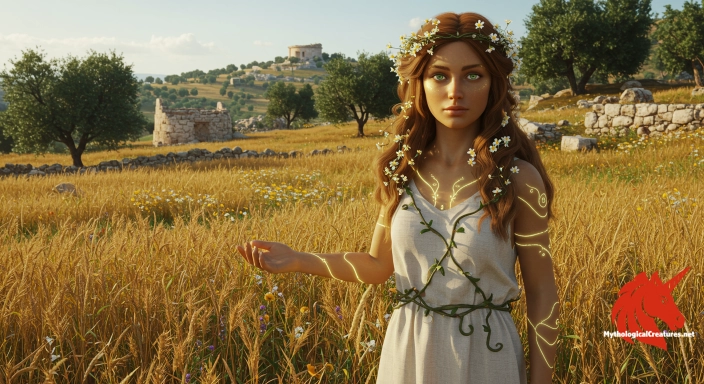
The Mythological Creatures Book Series
Yōkai, Greek, Norse, Egyptian & Chinese. Five illustrated field guides to the creatures the old stories either warned or told you about.


Curated by the Mythological Creatures Team
Series editor: Mythological Creatures Directory
Primary desk: Hellenic & Ancient Mediterranean Desk
(rev. November 2025)