
Hödekin: Hödekin is a kobold and house spirit from German folklore, infamous for his vindictive nature.
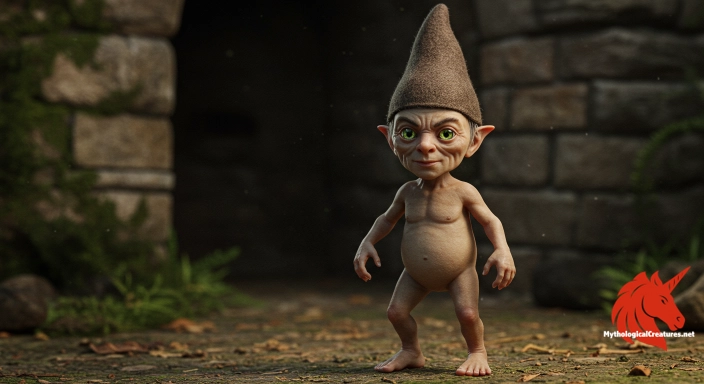
Hödekin
Hödekin - Embodies the unpredictable nature of household spirits, reflecting both benevolence and malevolence in German myth
the legend in five swipes.
the legend in five swipes.
The Beginnings of Hödekin
Hödekin is a captivating figure in German folklore, renowned as a diminutive kobold whose name translates to 'Little Hat', a reference to his distinctive felt headgear. Born from the rich tapestry of medieval household spirits, he appears in legends as both whimsical and unpredictable. His earliest attestation is intertwined with the storied castle of Bishop Bernard in Hildesheim, reflecting the societal and political backdrop of Lower Saxony. The creature’s narrative emerges from a time when supernatural explanations were sought for everyday mysteries and misfortunes. His presence was not merely confined to causing mischief; it also symbolised the blurred boundaries between protection and punishment in domestic life. Over time, his myth has served as an allegory for the complexities of authority and retribution in a hierarchical society. The integration of his story with ecclesiastical and secular power hints at the complex interaction between religious incantations and local traditions. Ultimately, Hödekin remains an emblematic reminder of the medieval belief in spirits that both safeguarded and challenged human endeavours.
Where can you read about Hödekin?
Primary sources for the lore of Hödekin originate from medieval chronicles and a wealth of oral traditions that recount his escapades across castle corridors and rural homesteads. Detailed accounts describe his haunting of Bishop Bernard’s castle, where his misadventures are interlaced with episodes of both benevolence and vindictiveness. Various manuscript fragments and folklore publications have preserved multiple narrative strands which highlight his role in territorial disputes and domestic interventions. Some versions of his tale focus on his interactions with the aristocracy, such as aiding the bishop in acquiring territories, while others recount his ruthless responses to insults by common folk. The incident involving the dismemberment of a kitchen boy and the subsequent poisoning of meat underscores the darker facets of his character recorded in these texts. A parallel version recounts how a seemingly frivolous assignment of a wife was met with his zealous protection against unwelcome advances. There is also a documented narrative about his magical gift of a laurel ring that transformed a clerk into a figure of erudition. These diverse sources collectively present a mosaic of stories that have been adapted through centuries, each version contributing to the multifaceted image of Hödekin.
The Appearance and Powers of Hödekin
The physical portrayal of Hödekin is as distinctive as his name, with his diminutive stature making him both unnoticed and unforgettable in household lore. Central to his iconography is the iconic felt hat, fashioned in the style of a pileus, which has come to symbolise his identity. His appearance is often depicted with a mischievous glimmer in his eyes and subtle features that hint at both human and otherworldly traits. Traditional illustrations suggest that his form is wiry yet agile, perfectly suited for the sneaky manoeuvres characteristic of a kobold. Detailed descriptions sometimes imbue him with an almost luminescent aura, giving him a magical presence amidst the mundane. His attire, typically simple and utilitarian, echoes the humble origins of a house spirit while adding a rustic charm to his image. Variation in depictions may include slight alterations in facial features or the precise cut of his hat, reflective of regional artistic influences. Such physical details not only distinguish Hödekin from other spectral beings but also contribute to the enduring visual legacy of this enigmatic creature.
Hödekin: Local Variations in the Story
The lore surrounding Hödekin exhibits notable regional variation, with his character adapting to the distinct cultural climates of different areas within German-speaking regions. In Lower Saxony, his narrative is deeply enmeshed with ecclesiastical and courtly intrigues, reflecting local histories and power dynamics. Some regions portray him as a benign household guardian who only resorts to retribution when disrespected, while neighbouring areas emphasise his harsher, vindictive side. The version associated with Winzenburg, for instance, situates him amidst territorial disputes and political manoeuvring, lending his actions a quasi-judicial significance. Local dialects also influence his various names, such as Hödeken, Hütgin, and Hütchen, each variant echoing a unique regional flavour. Folklore in more rural communities sometimes accentuates his trickster attributes, aligning him more closely with other European household sprites. Meanwhile, urban retellings may soften his more brutal episodes, transforming him into a character of endearing eccentricity. In all these regions, Hödekin remains a dynamic cultural symbol, simultaneously reflecting and shaping the local mythological landscape.
Hödekin: Echoes in Other Mythologies
Hödekin shares many attributes with other legendary household spirits found throughout European folklore, yet his portrayal is uniquely complex. Similar to the British brownie or the Scandinavian tomte, he embodies the duality of benevolence and mischief, serving both as a protector and a punisher. Comparative mythology often points to parallels with the Slavic domovoi, another domestic spirit with an ambivalent nature, though Hödekin’s stories distinctly emphasise his violent retribution when affronted. The interplay between his helpful interventions and his vengeful acts demonstrates a universality found in mythological figures who mediate between the human and the supernatural. While many such beings are uniformly benign, Hödekin's character challenges this norm by integrating unpredictable aggression with his more helpful deeds. This blend allows him to serve as a moral arbiter within his narrative, much like other mythic entities that use their powers to enforce societal norms. By examining these cultural intersections, one can appreciate how households across Europe have long relied on such beings to symbolise both the protective and punitive sides of domestic life. In doing so, Hödekin reinforces the idea that the spiritual realm mirrors the complexities and contradictions of human society.
How has Hödekin changed over time?
Over the centuries, the image of Hödekin has undergone a significant transformation, reflecting the evolving attitudes toward the supernatural in society. Early depictions in medieval chronicles cast him as a formidable, even fearsome, house spirit whose actions directly impacted the feudal order and daily life. As time progressed, his portrayal softened, with later narratives often highlighting his quirky mischief and capricious nature over outright brutality. Modern reinterpretations tend to balance his darker episodes with a lighthearted charm, making him a subject of interest in both folklore studies and popular culture. Contemporary literature and visual arts have embraced his legacy, sometimes reimagining his traditional attributes to comment on modern social issues such as power dynamics and personal accountability. This evolution has mirrored broader cultural shifts, where once-frightening legends are now explored through nuanced, symbolic lenses. Despite these changes, the core elements of Hödekin’s myth—mystery, retribution, and trickery—continue to resonate with audiences. His enduring legacy is a testament to the timeless nature of myth and the perpetual human fascination with the interplay between the mundane and the magical.
Interesting Fact
The diminutive name 'Hödekin' directly translates to 'Little Hat', a nod to his ever‐present distinctive felt hat, which is a unique marker among kobolds in German folklore.
Mythological Treasures
Norse Sagas: A field guide to the beasts of the Viking world
Drawn from the saga accounts themselves, with the powers, weaknesses and doom of each being set out.
Chinese Beasts: A field guide to the dragons and demon kings of Chinese myth
From river dragons to demon kings, with the legends that shaped five thousand years of storytelling.
Japanese Yōkai: A field guide to the spirits and demons of Japanese folklore
Fifteen spirits, with the signs to watch for and what the old tales say to do if you meet one.
the legend in five swipes.
For publishers and studios
Your next readers are already here
Many of our visitors are looking for books, campaigns, and resources that deepen their journey into myth. Position your title or setting here.
Discuss a placementQuick Creature Info
Origin:
Associations:
Our Mythic Legendary Rating:

Also Sometimes Known As:
Habitat:
Supernatural Powers:
Physical Attributes:
Abilities:
Behavior:
Weaknesses:
Lore:
Related Creatures, Tales or Lore
- HHeinzelmännchen
- DDomovoi
- BBrownie
References
Discover Another Mythical Legend You May Not Have Heard Of?
Uncover the mysteries of ancient folklore and expand your knowledge of legendary beings from cultures around the world.
Dare to Meet the Poroniec....
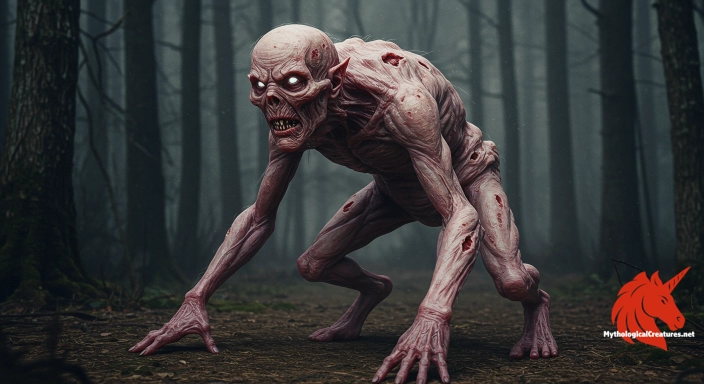
The Mythological Creatures Book Series
Yōkai, Greek, Norse, Egyptian & Chinese. Five illustrated field guides to the creatures the old stories either warned or told you about.


Curated by the Mythological Creatures Team
Series editor: Mythological Creatures Directory
Primary desk: Northern & European Folklore Desk
(rev. November 2025)