
Hylates: Hylates is an ancient Cypriot god later equated with Apollo, embodying aspects of nature and prophecy.
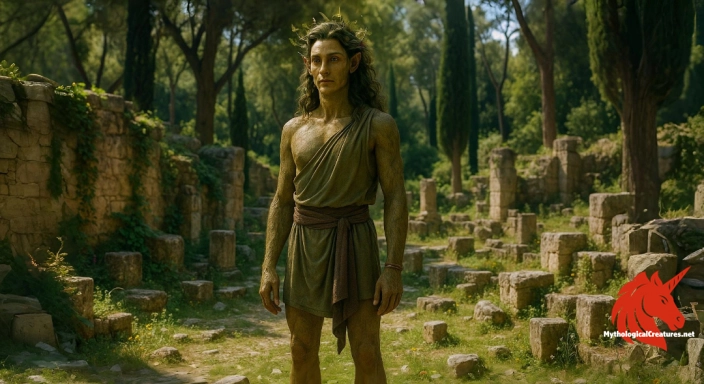
Hylates
Hylates - Played an important role in local worship on Cyprus and symbolizes the integration of indigenous religious practices with the Hellenic pantheon.
Origins & First Encounters
Hylates is an enigmatic divinity originally celebrated on the island of Cyprus, whose roots delve deep into a blend of indigenous worship and early Hellenic influences. His mythic persona merges the untamed spirit of the wilderness with the cultivated grace associated with later images of Apollo. The god’s name, evoking either the sound of barking or the verdant mystery of the forest, hints at an ancient connection with nature’s primal forces. Early evidence of his veneration is found in local inscriptions and dedications, particularly around the renowned sanctuary at Kourion. The synthesis of local cultic practices with broader Greco-Roman ideology allowed Hylates to acquire complex attributes that resonate with both rustic and classical themes. His divine character appears as a guardian of natural order, embodying both the wild unpredictability of the forest and the disciplined brilliance of the sun. Although direct references to his myths are sparse, the enduring presence of his iconography signals a deep spiritual significance for early Cypriot communities. Through the interplay of native tradition and imported beliefs, Hylates emerged as a bridge between the elemental world of nature and the structured realm of the gods. His mysterious origins continue to provoke scholarly debate and stimulate the imagination of modern enthusiasts. The legacy of his cult illustrates a fascinating convergence of the wild and the divine that has left an indelible mark on Cypriot spirituality.
Source Texts & Tale Variants
Fragmentary inscriptions and localized dedications form the core of our knowledge about Hylates, even though the surviving texts offer only glimpses into his extensive mythos. Various epigraphic records from sanctuaries like Kourion reveal that his worship was both specialised and deeply integrated with regional religious practices. While comprehensive narrative texts are lacking, oral traditions and periodic votive offerings have imbued his memory with layers of symbolic meaning. Some sources emphasise his association with solar attributes, aligning him with later images of Apollo, whereas others spotlight his connection to the raw power of nature. The diverse variants of his myth are reconstructed from archaeological finds that hint at rituals celebrating both fertility and the ferocity of the wild. These remnants suggest that early Cypriot communities revered him as much for his protective qualities as for his linkage to the woodland. Although detailed literary accounts are rare, the combined evidence from inscriptions and cultic paraphernalia paints a picture of a deity highly respected in local lore. The fragmented primary sources encourage modern scholars to explore alternative interpretations and contextualise his significance within a broader spiritual tradition. Such disparate clues provide a mosaic of perspectives, reflecting the dynamic evolution of his worship over time. In this way, each source contributes to an intricate narrative, underscoring the complexity of Hylates' role in ancient religion.
Form & Powers
Artistic and sculptural evidence regarding Hylates is sparse, yet available depictions suggest an intriguing amalgam of graceful human form and primal, wild characteristics. In some artistic renditions, he is portrayed with an athletic build reminiscent of other classical deities, while subtle hints of animalistic features evoke the raw symbolism behind his name. The visage attributed to him often encapsulates a serene yet potent expression, underscoring a duality that bridges the cultivated ideals of civilisation with the untamed aspects of nature. Iconographic details, such as the incorporation of vegetal motifs or animalistic attributes like a hint of canine aggression, hint at his deep connection with the forest. Votive offerings and minor reliefs sometimes show him adorned in wreaths or garlands, suggesting a reverence for natural cycles and fertility. In certain local artefacts, Hylates appears with an ambiguous, almost chimeric quality that defies a single fixed image. This hybrid portrayal emphasises both the divine poise of a solar figure and the unpredictable force of a nature deity. Variations in artistic style across different regions imply that local craftsmen adapted his image to reflect communal values as well as natural surroundings. The nuanced physical descriptions not only enhance his mysterious allure but also serve as symbols of the fluid boundary between human culture and the wild. Such depictions continue to intrigue modern researchers who seek to decode the layered symbolism inherent in his iconography.
Regional Faces
The cult of Hylates was notably flexible, adapting to a range of local customs and environmental contexts across Cyprus. Within the sanctuary of Kourion, his worship was deeply intertwined with the rhythms of the natural world, reflecting the island’s lush landscapes and ancient woodland cultures. Rural communities, in particular, emphasised his role as a protector and arbiter of the forest, imbuing him with qualities that celebrated regional identity and ecological harmony. In coastal and urban centres alike, his myth underwent subtle shifts as his luminous, heliotropic characteristics came to mirror those of Apollo. This adaptability allowed Hylates to function both as a symbol of untouched nature and a mediator who integrated local spiritual needs with the prevailing Greco-Roman pantheon. Each community shaped his iconography and ritual practices to highlight unique aspects of his dual nature, be it the raw energy of untamed forests or the refined brilliance of celestial fire. The development of local narratives, influenced by regional geography and cultural exchange, resulted in a diversified portrayal of the deity. Over time, these variations helped sustain his legacy, ensuring his relevance amidst the shifting tides of religious practice. The fluidity of his representation across different parts of Cyprus illustrates the broader capacity of ancient myth to resonate with a wide array of human experiences. Thus, Hylates remains emblematic of the mutable interplay between regional character and timeless divine archetypes.
Cultural Parallels
The mythic character of Hylates invites a rich comparative analysis with a range of deities who straddle the boundary between nature and civilisation. His later association with Apollo is a prime example of how diverse mythological traditions can converge, merging solar brilliance with forest mysticism. Similar to figures like Pan, who embody the untamed and ecstatic aspects of nature, Hylates also reflects the deep-rooted human impulse to personify the wilderness and its mysteries. Furthermore, his name—evocative of both the barking of wild animals and the essence of the forest—resonates with motifs found in various indigenous mythologies across the Mediterranean and Near East. This overlapping quality creates a thematic parallel with other nature deities, highlighting a universal recognition of the forest as a symbol of both danger and renewal. The duality in his character, marked by elements of both wild exuberance and refined divinity, speaks to recurring archetypes found in Celtic and Anatolian religious traditions. Comparative mythology reveals that the synthesis of local natural forces with divine principles is a recurring motif, offering insight into how ancient societies reconciled the chaos of nature with human order. The striking similarities between Hylates and other regional deities underscore the cultural exchanges that enriched ancient mythologies. Such parallels not only illuminate common symbolic patterns but also invite modern interpretations that celebrate the shared heritage of diverse spiritual traditions. Through this comparative lens, Hylates emerges as a multifaceted figure, encapsulating the enduring bond between humanity and the natural world.
Legacy & Modern Evolution
The evolution of Hylates from a locally revered nature deity to a figure interconnected with broader classical themes illustrates the dynamic nature of ancient mythmaking. Over the centuries, his cult gradually interwove with the more dominant narratives of deities like Apollo, reflecting a broader cultural trend of amalgamating local and Hellenic beliefs. His early attributes, steeped in the raw power and mystery of the forest, were reinterpreted through a classical lens that emphasised order, harmony, and cosmic light. This process of cultural assimilation allowed Hylates to retain a distinctive aura even as his image evolved, ensuring that his original character was not entirely lost. In modern times, scholars and artists have rediscovered his multifaceted legacy, casting him as a symbol of ecological awareness and the enduring interplay between man and nature. Contemporary reinterpretations in literature, visual arts, and neo-pagan practices have served to revive and recontextualise his myth. His narrative now resonates with those who seek to reconnect with the ancient wisdom of the natural world and explore the boundaries of myth and modernity. Despite the sparse historical record, the sustained intrigue surrounding Hylates has contributed to a renewed appreciation for the subtleties of ancient Cypriot spirituality. Today, his legacy endures as a testament to the transformative power of myth and the perpetual dialogue between humanity and its environment. In this way, Hylates continues to inspire a rich tapestry of cultural and artistic expressions that celebrate the unity of tradition and natural beauty.
Interesting Fact
Hylates’ etymology, linked to both 'barking' and 'forest', hints at a dual aspect of nature worship that merges the wild, untamed forces of the natural world with the refined attributes later associated with Apollo.
For indie creators
Give your myth project a permanent home
Indie authors, artists, small studios, and makers can secure an annual, non-intrusive sponsor slot that meets readers where they explore.
Obtain more informationQuick Creature Info
Origin:
Associations:
Our Mythic Legendary Rating:

Also Sometimes Known As:
Habitat:
Supernatural Powers:
Physical Attributes:
Abilities:
Behavior:
Lore:
References
Discover Another Mythical Legend You May Not Have Heard Of?
Uncover the mysteries of ancient folklore and expand your knowledge of legendary beings from cultures around the world.
Dare to Meet the Ghaddar....
Curated by the Mythological Creatures Team
Series editor: Mythological Creatures Directory
Primary desk: Hellenic & Ancient Mediterranean Desk
(rev. November 2025)