
Ghaddar: Ghaddar is a fearsome demon from Islamic mythology known for her brutal predations on men.
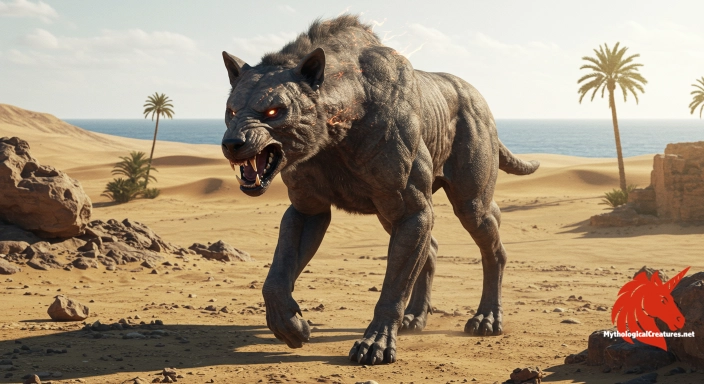
Ghaddar
Ghaddar - Serves as a cautionary figure in Islamic folklore symbolising the dangers and malevolence of infernal forces.
Origins & First Encounters
Gharrar is a striking figure in Islamic mythology, regarded as a demon emerging from tales that evoke both fear and fascination. Its origins are linked to dark magical traditions and infernal lineages woven into the folklore of arid deserts near the Red Sea. Born from the fires of Samum and sired by the notorious Iblis, Gharrar embodies an unholy synthesis of demonic power and wild, untamed nature. Traditionally portrayed as a female entity, she exudes a blend of seductive allure and ruthless malice. Early attestations of her come from oral traditions and scattered written accounts among desert communities, where her story served as both a cautionary tale and a symbol of supernatural transgression. Her narrative reflects the tension between the natural brutality of the wilderness and the metaphysical realm of sin and punishment. Over time, Gharrar has come to represent the dangerous interplay of desire and defiance, encapsulating societal anxieties of the human condition. The very essence of her legend is interlaced with themes of retribution, forbidden attraction, and the unpredictable forces of nature. Her lineage, directly tied to Iblis, underscores a broader tradition of demonic figures in Islamic lore. Overall, Gharrar's myth continues to captivate and terrify, standing as a potent emblem of both moral warning and the mystical unknown.
Source Texts & Tale Variants
Accounts of Gharrar emerge from an array of Islamic folklore, where her presence is chronicled within texts that explore the nature of jinn and demons. Early manuscripts and oral traditions document her as part of a dark ecosystem of supernatural beings, each imbued with moral and mystical significance. In select medieval narratives and mystical treatises, her origins are intricately tied to the flames of Samum and the rebellion of Iblis, lending her story both gravitas and terror. Multiple story variants exist, with some recensions casting her as a spectral beauty and others as a hideous monster, thus highlighting the diverse ways in which her terror is perceived. Bedouin poetry and folklore often recount vivid episodes of her nocturnal prowls, emphasising her predatory attacks on unwary travellers and men. In some regions, Gharrar is interwoven into moral parables, serving as a dire warning against the perils of transgression and intimate contact with the forbidden. Other versions of the tale elaborate on her shapeshifting abilities, describing her transition between forms that resemble wild canines or caprine figures. While the primary sources remain fragmented, their collective imagery consistently portrays Gharrar as a figure of dread and moral consequence. The multiplicity of these narratives reflects the dynamic nature of myth-making in desert cultures. Ultimately, the diversity in story variants underscores a rich tapestry of belief that has evolved over centuries.
Form & Powers
Descriptions of Gharrar’s appearance evoke an unsettling blend of animalistic and demonic features that are carefully crafted to disturb and fascinate. She is commonly depicted with a fusion of traits reminiscent of wild dogs and agile goats, making her visage distinctive and otherworldly. Her eyes, often described as glowing and predatory, seem to pierce through the darkest desert nights with an unnerving intensity. The demon’s features include elongated muzzles, subtle horns, and a dishevelled coat of fur that hints at her infernal origin. Every detail, from the taut muscles to the sharp, clawed extremities, speaks of a creature perfectly adapted to the harsh, unforgiving desert environment. Variations in her portrayal depict her either as lithe and spectral or as robust and formidable, a reflection of the multifaceted approach to her myth. Some accounts stress the scorched, almost charred texture of her skin—a remnant of the blazing fires from which she was born. More vivid descriptions highlight her dual nature, where elegance collides with bestial violence in a disquieting display. The amalgamation of canine and caprine characteristics underlines a broader symbolic meaning: the merging of natural instincts with supernatural malice. In sum, her physical form is as mutable as it is menacing, ensuring that those who encounter her tale are left with an indelible image of fear.
Regional Faces
Local narratives of Gharrar vary significantly across the diverse cultures of the Islamic world, each adding layers of nuance to her terrifying persona. In the arid expanses near the Red Sea, her legend is deeply intertwined with the local Bedouin traditions, where desert life and supernatural danger coalesce. These communities often portray her as an ominous guardian of the night, her presence a dire omen that permeates the stillness of the shifting sands. In regions where the desert meets ancient trade routes, tales of her seduction and savage violence have been adapted to reinforce social mores and preserve communal order. Variations can be noted in the descriptive elements—some local stories accentuate her bestial, feral nature, while others imbue her with an almost seductive grace that hides her deadly intent. North African retellings occasionally merge her myth with indigenous jinn lore, presenting her as a hybrid entity formed from intersecting cultural influences. Such regional adaptations reflect the capacity of folklore to evolve and absorb local colour, with each community refining her character to mirror its own values and fears. Even within a single culture, contrasting depictions may emerge, emphasising either a monstrous physicality or a dangerously alluring persona. This regional dynamism ensures that Gharrar’s myth remains alive and mutable, a testament to the enduring power of oral and written tradition. In every retelling, her narrative serves as both a warning and a mirror to the collective psyche, shaped by the unique environment in which it is recounted.
Cultural Parallels
When considered in the broader context of global mythology, Gharrar shares striking similarities with various female demonic figures found across different cultural landscapes. Her predatory nature, particularly in her violent assaults on men, resonates with the archetypal image of the succubus and echoes the notorious reputation of figures such as Lilith. Comparisons are also drawn with the Greek lamia, whose hybrid beastly form and lethal sexuality served as cautionary symbols of dangerous femininity. In many traditions, female figures that embody both allure and violence function as metaphors for societal fears surrounding gender and power, a theme that is strongly present in Gharrar's myth. Similar to these counterparts, her narrative encapsulates a dual nature of seduction intertwined with retribution. While Gharrar firmly belongs to Islamic folklore, the recurring international motifs present in her story reflect shared human concerns about lust, vulnerability, and the wilderness of the untamed unknown. Some scholars note that her characteristics—in particular, the merging of human and animalistic features—are reminiscent of universal myths about creatures that exist on the boundaries between civilization and chaos. This comparative perspective highlights how diverse cultures utilise analogous symbols to address similar existential anxieties. By aligning her with global legends, Gharrar’s myth not only reinforces particular cultural taboos but also illustrates the universality of the struggle between order and the chaotic forces of nature. Through these parallels, her story emerges as part of a larger, interwoven tradition of mythic warnings that spans continents and eras.
Legacy & Modern Evolution
The evolution of Gharrar’s myth from ancient folklore to contemporary reinterpretation mirrors broader shifts in cultural attitudes towards gender, sexuality, and the supernatural. Initially, her legend functioned as a stark, cautionary tale intended to instil fear and enforce social taboos, particularly regarding forbidden encounters and moral transgressions. Over time, however, modern audiences have reexamined her narrative, sometimes casting her as a complex femme fatale rather than a straightforward monster. Contemporary adaptations in literature, film, and digital art have explored the ambiguities of her character, blending elements of horror with a nuanced critique of societal power structures. This evolution reflects a broader transformation in how traditional myths are reworked to address modern anxieties and reinterpret age-old warnings. The enduring power of Gharrar’s image lies in her versatility: she is at once a horrifying predator and a symbol of subversive female empowerment. In the modern era, her story invites reinterpretation, allowing creative minds to probe the intersections of sexuality, violence, and myth. The transformation of her narrative also mirrors changing cultural perceptions about the roles and representations of women in myth. Despite these shifts, the core elements of her legend—her supernatural origin, her fearsome beauty, and her violent predations—remain intact, preserving her mythic resonance. Ultimately, Gharrar’s enduring legacy serves as a testament to the mutable nature of folklore, capable of evolving alongside its audience while still retaining its primeval power to both horrify and captivate.
Interesting Fact
A striking aspect of Ghaddar is her distinct portrayal as a female demon, which is uncommon in many mythological traditions and adds a unique dimension to Islamic folklore.
For serious mythcraft
Your project belongs among the legends
If your work deepens how people understand, play with, or teach mythology, a sponsor placement here keeps it in front of the right readers all year.
Submit a sponsorship enquiryQuick Creature Info
Origin:
Associations:
Our Mythic Legendary Rating:

Also Sometimes Known As:
Habitat:
Supernatural Powers:
Physical Attributes:
Abilities:
Behavior:
Lore:
References
Discover Another Mythical Legend You May Not Have Heard Of?
Uncover the mysteries of ancient folklore and expand your knowledge of legendary beings from cultures around the world.
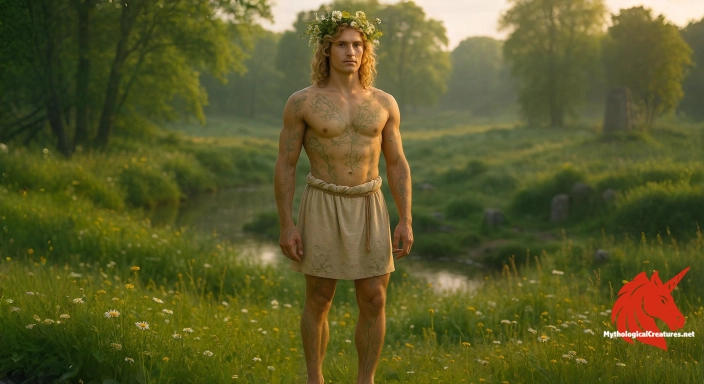
Dare to Meet the Yarilo....
Curated by the Mythological Creatures Team
Series editor: Mythological Creatures Directory
Primary desk: Hellenic & Ancient Mediterranean Desk
(rev. November 2025)