
Isetsuhiko: Isetsuhiko is an obscure Japanese god of the wind known from ancient Fudoki texts.
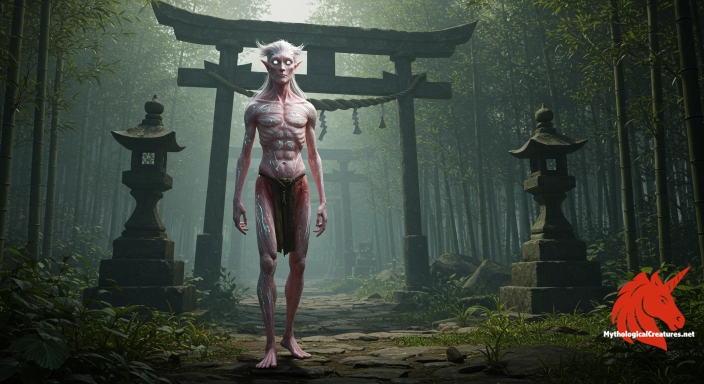
Isetsuhiko
Isetsuhiko - Despite his obscure mention in ancient texts, Isetsuhiko underscores the importance of natural forces in Japanese mythology.
Origins & First Encounters
Isetsuhiko-no-mikoto stands as a lesser known, yet evocative, embodiment of the wind in ancient Japanese spirituality. His presence emerges from the fragmented narratives of regional texts, notably the Fudoki of Ise Province and Harima Province, where natural phenomena and divine influence intermingled. His origins, though shrouded in the mist of antiquity, suggest that early communities viewed the capricious power of the wind as a force both nurturing and formidable. The deity’s name resonates with the energy and transience of a shifting breeze, hinting at a delicate balance between benevolence and unpredictability. Early records subtly allude to his role in mediating the interplay between the human and the natural world. There is a poetic quality to the scant references, reflecting an age when the elements were revered as living expressions of the divine. Over time, local lore adapted his character to mirror the rhythms of agricultural and coastal life, reinforcing nature’s omnipresent influence. Every surviving mention of Isetsuhiko-no-mikoto is a testament to the enduring connection between the natural world and the spiritual imagination of early Japan.
Source Texts & Tale Variants
The primary attestations of Isetsuhiko-no-mikoto are found within the ancient Fudoki texts of Ise and Harima Provinces. These records, though fragmentary, provide a window into local traditions where elemental forces were intertwined with daily life and spiritual practice. The surviving excerpts offer a brief yet intriguing portrait of a deity whose domain was the unpredictable sky. Variations in his naming and subtle narrative details hint at a rich, now largely lost, oral tradition that once animated community rituals. Some accounts suggest he was a mediator of the natural and supernatural realms, a role that would have endowed him with both reverence and mystery. The limited nature of these texts has led to diverse retellings over time, each reflecting the evolving perceptions of wind and its powers. Small fragments and later commentaries have kept his memory alive, even as the original contexts faded. Modern folkloric collections occasionally reference these ancient attestations, inviting a reexamination of his elusive narrative. The sparse material continues to inspire scholars and enthusiasts keen to piece together the broader mythos of this enigmatic wind deity.
Form & Powers
Artistic and literary depictions of Isetsuhiko-no-mikoto are remarkably sparse, leaving much of his appearance to the realms of symbolism and poetic imagination. He is often envisioned as an ethereal figure draped in flowing garments that evoke the textures and subtleties of a shifting sky. In these imaginative portrayals, his attire seems to ripple with the constant movement of invisible breezes, suggesting a direct link to his elemental nature. Many representations confer upon him an almost otherworldly slenderness, as though his form is in perpetual flux like the wind itself. His hair and clothing are sometimes described as perpetually in motion, enhancing the impression of a spirit that defies static form. Some creative traditions even hint at faint, elemental markings on his skin—traces of the storm and gust that have touched his divine being. While there is no universally accepted iconography, these details collectively serve to symbolise the transient yet potent essence of air. The imagery surrounding Isetsuhiko-no-mikoto is less about realistic features and more about evoking the dynamic, impermanent qualities of nature. Each visual suggestion is designed to communicate a sense of mystery, inviting viewers to imagine a deity whose very presence is as fluid and ever-changing as the wind.
Regional Faces
Across the varied landscapes of ancient Japan, the persona of Isetsuhiko-no-mikoto has been uniquely adapted to reflect local environmental and cultural dynamics. In Ise Province, where the harmonious interaction between land and sea is celebrated, he is remembered as a gentle wind spirit who blessed fields and safeguarded harvests. In contrast, the folklore of Harima Province often casts him in a more formidable light, mirroring the raw, untamed energy of coastal gusts and sudden storms. Local traditions in these regions have imbued his myth with characteristics that resonate with their distinctive climatic and geographical experiences. Some communities regarded him not only as a protector but also as an unpredictable force that could herald both prosperity and calamity. Ritual practices and seasonal festivals in different locales were sometimes dedicated to appeasing his temper or celebrating his beneficent breezes. These regional adaptations underscore the capacity of a single divine figure to encompass a broad spectrum of natural phenomena. Despite diverging interpretations, every account reinforces his intrinsic connection to the wind and its endless variability. Such cultural variations illustrate how local communities shaped divine narratives to mirror the intimate ties between nature and daily existence.
Cultural Parallels
Global mythologies abound with deities who command the wind, and Isetsuhiko-no-mikoto shares intriguing parallels with these figures while retaining a uniquely Japanese character. Unlike more vividly portrayed wind gods such as Fujin, whose robust and tempestuous image dominates traditional art, Isetsuhiko is celebrated for his subtle and almost introspective qualities. His gentle yet unpredictable nature finds echoes in the personas of Aeolus from Greek lore and Vayu of Indian tradition, each enshrining the dual capacity of wind to nurture and disrupt. While the deities from these diverse pantheons differ in cultural context and iconographic detail, they all underscore the universal reverence for the forces that govern air and movement. Isetsuhiko’s narrative, with its emphasis on soft breezes and sudden gusts, presents a nuanced counterpoint to more explosive representations found elsewhere. This delicate balance underscores a broader thematic dialogue between restraint and wildness seen in many elemental deities. The comparison highlights that even obscure figures can contribute to a rich cross-cultural tapestry exploring the mysteries of nature. These connections not only illuminate similarities in human attempts to personify natural forces but also celebrate the diversity in artistic and spiritual expressions. Through such comparative analysis, Isetsuhiko-no-mikoto emerges as a vital link in the universal human fascination with the dynamics of wind.
Legacy & Modern Evolution
Over the centuries, the myth of Isetsuhiko-no-mikoto has evolved from a quietly acknowledged presence in ancient texts to a subject of modern artistic and cultural reinterpretation. His initial mentions in the fragmentary Fudoki gave way to later imaginative retellings that balanced historical reverence with creative modernity. Contemporary cultural movements have embraced his enigmatic nature as a symbol of the ever-changing forces of the natural world. In modern literary and visual arts, he often appears as a metaphor for renewal, transformation, and the delicate interplay between humanity and nature. Seasonal festivals and local folklore now invoke his spirit, reimagining the ancient wind deity as a guardian of ecological balance in a rapidly industrialising world. As traditional ceremonial practices faded, new interpretations have emerged that underscore the importance of environmental stewardship and mindfulness. The evolution of his myth reflects a broader shift in societal attitudes towards nature, blending ancient wisdom with modern ecological concerns. Although his original worship may have diminished, the poetic allure of Isetsuhiko-no-mikoto continues to inspire scholarly inquiry and creative expression. His enduring legacy is a reminder that even the most obscure divine figures can offer profound insights into the timeless relationship between humans and the natural world.
Interesting Fact
One intriguing aspect of Isetsuhiko is the scarcity of detailed myths about him, which emphasizes the complex and layered relationship between humans and natural forces in ancient Japan.
Partner with us
Sponsor this space
Reach thousands of mythology enthusiasts with a curated placement on our creature pages.
Learn about sponsorshipQuick Creature Info
Associations:
Our Mythic Legendary Rating:

Also Sometimes Known As:
Habitat:
Supernatural Powers:
Physical Attributes:
Abilities:
Behavior:
Lore:
References
Discover Another Mythical Legend You May Not Have Heard Of?
Uncover the mysteries of ancient folklore and expand your knowledge of legendary beings from cultures around the world.
Dare to Meet the Madre de aguas....
Curated by the Mythological Creatures Team
Series editor: Mythological Creatures Directory
Primary desk: Asian & Pacific Myth Cycles Desk
(rev. November 2025)