
Lietuvēns: Lietuvēns is a malevolent spirit from Latvian folklore, representing the cursed soul of a murdered or unbaptised individual.
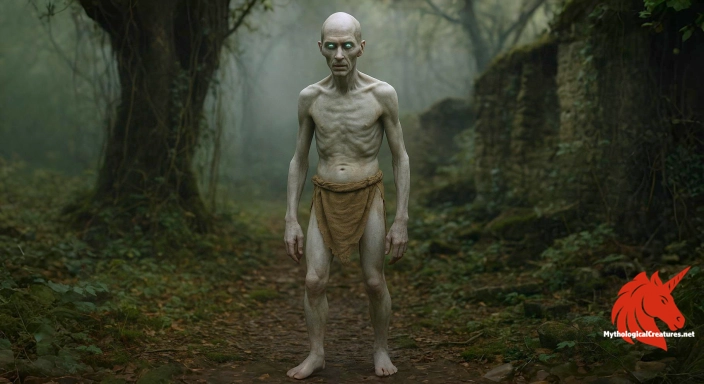
Lietuvēns
Lietuvēns - Explains the phenomenon of sleep paralysis and serves as a cautionary tale about the consequences of untimely, violent death or unbaptised existence in Latvian culture.
Origins & First Encounters
Embedded in the rich tapestry of Latvian folklore, the Lietuvēns emerges as a spectral embodiment of untimely death and lingering sorrow. Its mythic origins are entwined with violent ends such as strangulation, drowning, or hanging, reflecting a profound belief in the curse of an unfulfilled earthly life. This enigmatic creature was first attested in the oral traditions and folk epics of Latvia, where it was vividly portrayed as both a marauding spirit and a lamentable remnant of past violence. The cultural context of its legend reveals deep-seated fears about the disruption of natural order and the sanctity of life. Its existence is also attributed to unbaptised children, thereby intertwining themes of innocence lost with the inevitability of supernatural retribution. Legends surrounding the Lietuvēns capture both the dread of the unknown and the sadness of souls perpetually in limbo. The narrative serves as a stark reminder of the consequences of violent death and the spiritual imbalance left behind. As it continues to be recounted in rural communities and family lore, the Lietuvēns has become a timeless symbol of unresolved tragedy and supernatural punishment.
Source Texts & Tale Variants
Ancient Latvian folklore provides the primary framework for understanding the Lietuvēns, with stories transmitted orally through generations in the form of folk epics and mysterious omens. Tales passed down in village gatherings and family narratives depict a creature born from the violent ends of human life, be it through strangulation, drowning, or hanging. Some accounts suggest that the soul of an unbaptised child also transforms into this fearsome apparition, adding a layer of innocence turned tragic. Variants of the story highlight different aspects of its origin, with some emphasising the act of murder and others focusing on the failure to adhere to spiritual rites. The narrative is interwoven with vivid descriptions of the creature’s malevolent interventions, especially during episodes of sleep paralysis. Local storytellers have adjusted the myth over time, introducing subtle differences to fit regional beliefs and practices. These diverse accounts underscore the adaptability of the lore, where details may shift from one retelling to another without losing its eerie core. The multiplicity of versions serves not only to preserve the legend but also to reflect the complex interplay between fear, guilt, and the mysteries of the afterlife.
Form & Powers
Accounts of the Lietuvēns do not present a fixed physical form but instead evoke the essence of an ever-shifting, ghostly presence that defies ordinary description. It is often depicted as a shadow-like figure, its contours blurring into the darkness as if it were made of smoke or vapour. Some descriptions hint at a gaunt silhouette with fleeting, ephemeral features that barely register in the corner of one’s vision. This eerie form is further accentuated by reports of its ability to infiltrate homes through the smallest of openings, such as keyholes, suggesting a flexibility that challenges material boundaries. Witnesses describe a cold, oppressive aura accompanying its presence—a tangible chill that seems to drain the warmth from the air. At times, the creature is alluded to as having spectral tendrils or an intangible reach, capable of manifesting in the most unexpected places. Its size and dimensions remain ambiguous, an intentional mystery that enhances the terror it inspires. Such descriptions build a picture of an entity born not of flesh, but of sorrow, anger, and the ineffable power of a cursed existence.
Regional Faces
Regional renditions of the Lietuvēns vary dramatically, with communities in areas like Latgale referring to it as lietonis or even lītūņš. In these local accounts, nuances emerge that colour its persona in subtle but significant ways, reflecting the unique cultural fabric of each region. In some locales, the creature is portrayed as an aggressively vengeful spirit that leaves little room for pity, while in others, it is described with an underlying melancholy, as if it mourns its own tragic fate. Local superstitions often dictate specific rites or movements—such as shifting the left toe—to repel the spectral attacker. These variations underscore how local customs and environmental factors shape the lore, making the Lietuvēns a mirror to regional attitudes toward death and the supernatural. Differences in narrative detail, from its method of attack to its subtle physical manifestations, accentuate the regional diversity of its myth. The creature is often linked to sudden, unexplained phenomena in nature, such as abrupt weather changes or eerie mists, which further deepen its mystique. Despite these regional adaptations, a common thread of fear and awe unites all portrayals, ensuring that the legend remains a dynamic part of Latvia’s cultural heritage.
Cultural Parallels
The myth of the Lietuvēns resonates with striking similarities to other spectral entities found in neighbouring traditions, such as the Slavic mara in Russian folklore and the Lithuanian lauma. These creatures all inhabit that liminal space between life and death, serving as potent reminders of the consequences of a violent or untimely demise. While the mara and lauma possess their own distinctive attributes, they share with the Lietuvēns a profound association with the dread of being haunted by a restless spirit. Such figures are frequently linked to experiences of sleep paralysis and night terrors, where the line between dream and waking life becomes dangerously blurred. This cross-cultural convergence highlights a shared human anxiety over unexplained nocturnal phenomena and the possibility of unquiet souls roaming the earth. The symbolic parallelism is further bolstered by a common narrative of punishment and the lingering impact of unresolved mortal wrongs. These comparative analyses reveal an interconnected mythological landscape, where local variations weave into a larger tapestry of supernatural beliefs. The enduring similarities across these cultures point to a universal fascination with the shadowy realms beyond the natural world, making the Lietuvēns both a distinct local legend and part of a broader, transnational mythos.
Legacy & Modern Evolution
Over the centuries, the depiction of the Lietuvēns has evolved from a stark emblem of cursed mortality to a multifaceted symbol imbued with both terror and tragic beauty. Initially entrenched in warnings about the consequences of violent death and neglected rites, its narrative has been reinterpreted through the lens of modern experiences like sleep paralysis. Artists, writers, and filmmakers have embraced the eerie allure of the Lietuvēns, transforming it into a character that speaks to contemporary concerns about identity, mortality, and the unknown. This evolution reflects a broader trend in which timeless folklore is reimagined to resonate with modern sensibilities, merging traditional myth with elements of psychological exploration. The creature now appears in popular culture as a figure of horror, as well as a metaphor for the enduring human struggle with grief and the inescapable realities of death. Digital media and academic inquiry have also played a role in revitalising the figure, sparking renewed interest in its origins and symbolic implications. Today, the Lietuvēns stands as a bridge between past and present, a spectral reminder of how ancient fears continue to influence modern narratives. Its enduring legacy is a testament to the power of myth to adapt and thrive in an ever-changing cultural landscape.
Interesting Fact
An intriguing aspect of Lietuvēns is the traditional remedy of moving the left toe to ward off its attack, highlighting a unique blend of the physical and supernatural in Latvian folklore.
Reach myth fans
Connect your myth-driven brand with this audience
Our readers are writers, educators, gamers, and collectors who care about mythology. Enquire about a limited sponsor placement on creature pages.
Enquire about sponsorshipQuick Creature Info
Features:
Our Mythic Legendary Rating:

Also Sometimes Known As:
Habitat:
Supernatural Powers:
Physical Attributes:
Abilities:
Behavior:
Weaknesses:
Lore:
References
Discover Another Mythical Legend You May Not Have Heard Of?
Uncover the mysteries of ancient folklore and expand your knowledge of legendary beings from cultures around the world.
Dare to Meet the Bushyasta....
Curated by the Mythological Creatures Team
Series editor: Mythological Creatures Directory
Primary desk: Northern & European Folklore Desk
(rev. November 2025)