
Maalik: Maalik is the chief guardian angel of Hell in Islamic belief.
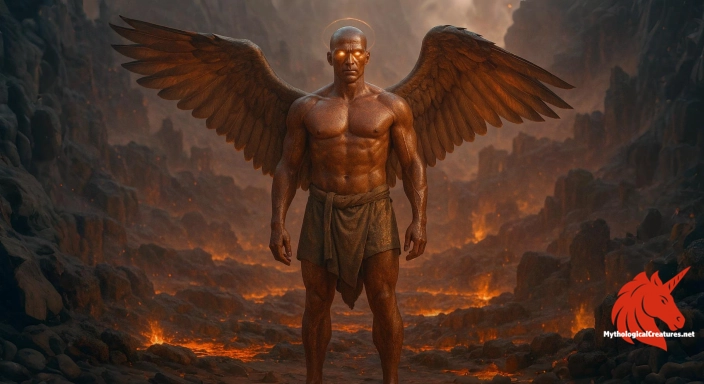
Maalik
Maalik - Maalik is revered as the chief angel in Hell, responsible for guarding Hellfire and overseeing the process of divine retribution.
How did Maalik enter folklore?
Maalik emerges as a formidable figure in Islamic cosmology, embodying the stern and inexorable nature of divine judgement. His role as the chief guardian of Hellfire clearly marks him as a pivotal character in the narrative of the afterlife. Rooted in early Islamic theological traditions, his identity is interlaced with the principles of mercy and retribution that govern the moral universe. He was first attested in sacred texts, ensuring that his image would resonate with the faithful as an arbiter of eternal justice. Over time, the figure of Maalik has not only symbolised punishment but also the overarching order that balances human accountability with divine oversight. His mention in the Qur'an, particularly in Surah Az-Zukhruf, underscores the critical importance of his custodianship over the infernal realms. Early manuscript variants even suggest a linguistic fluidity, where his name overlaps with the general term for angel, reflecting the complexity of his character. His legacy continues to influence Islamic thought, inspiring both reverence and a reflective fear of transcendent retribution. In a broader cultural context, Maalik stands as a reminder of the ultimate consequences of moral transgression.
Maalik: How the Tale Was Told and Retold
The primary source that enshrines Maalik’s reputation is the Qur’an, where his name is explicitly mentioned to denote a central role in the judgement of souls. Ancient codices reveal alternative renderings of his name, occasionally interchanging with the generic term for angel, which adds layers of interpretative nuance. Classical Tafsir literature provides elaborate commentaries on his function and significance, situating him within the divine hierarchy of retribution. The narratives extend into various hadith traditions, where subtle details about his duties and the nature of his watchfulness are provided. Early Islamic scholars and mystics further enriched his story through allegorical interpretations, delving into the symbolic meaning of his presence in Hell. Despite textual variations, there is a consistent portrayal of Maalik as the vigilant sentinel of the infernal realms. Story variants sometimes merge his character with broader themes of cosmic justice, thus enhancing his mythic stature. The diversity in the sources reflects the dynamic evolution of Islamic eschatological thought and underscores the enduring impact of his story.
How would you recognise Maalik?
Maalik is often envisioned as a being whose physical presence radiates both awe and a forbidding intensity. Although Islamic scripture provides little in the way of explicit physical detail, later artistic traditions have filled the gaps with vivid imagery. Some descriptions symbolically attribute to him a form forged of pure, incandescent light that mirrors the unyielding heat of Hell. He is sometimes imagined with expansive, formidable wings that evoke the majestic and terrifying aspects of his authority. Traditional representations may allude to piercing eyes and an austere countenance, capturing the essence of his watchful vigilance. In various literary traditions, his form is portrayed as colossal, reflecting the magnitude of divine punishments he administers. There is an artistic consensus that his visage, though abstract, conveys both the severity and the order of the infernal realm. In later iconography, subtle hints of a crown or sceptre appear as symbols of his command, merging the ethereal with an air of regal duty.
What do different regions call Maalik?
Across the vast expanse of the Islamic world, interpretations of Maalik’s character have evolved to incorporate local cultural and theological nuances. In the Middle Eastern context, his image is often underscored by an emphasis on authority, embodying an uncompromising arbiter of divine justice. North African narratives sometimes blend indigenous folklore with Islamic doctrine, thereby enriching his role with additional symbolic dimensions. In Persian and Central Asian traditions, Maalik is occasionally reinterpreted through allegorical lenses, resonating with themes of spiritual purification and renewal. Sufi narratives, in particular, explore his role as an internal guardian, representing the burning away of sin and the attainment of higher truths. Different schools of thought, including both Sunni and Shia perspectives, have adapted his myth to reflect varying doctrinal emphases. These regional adaptations highlight the fluidity of myth in a world where the sacred and the local intermingle seamlessly. As a result, Maalik stands not only as a static figure of condemnation but also as a dynamic symbol whose interpretation shifts with regional cultural practices.
Which myths echo the story of Maalik?
The role of Maalik in overseeing the punishment of the wicked invites reflections on similar figures found in a variety of cultural traditions. In some Christian apocalyptic narratives, figures who preside over the final judgement share a kinship with the stern authority that characterises Maalik. Jewish mystical texts also mention celestial beings bearing retributive responsibilities that echo his function within the divine order. Greco-Roman mythology contributes further comparative imagery, where guardians of the underworld exemplify the eternal balance between life and death. Unlike some of these other depictions, however, Maalik is intricately woven into a narrative that blends both punitive severity and an element of divine mercy. His portrayal is unique in its dual role as both a literal custodian of Hell and an allegorical symbol of moral rectitude. Comparative analyses of various mythologies reveal that while supernatural enforcers of justice appear universally, the intricacies of Maalik’s duties are particularly refined within the Islamic tradition. These resonances underscore a shared human preoccupation with the maintenance of cosmic order, as well as the eternal struggle between virtue and vice.
Maalik: Then and Now
Over the centuries, the portrayal of Maalik has undergone a significant evolution, reflecting shifts in both artistic tradition and theological discourse. Early Islamic scholars largely conceptualised him as an almost ineffable spirit of retribution, existing primarily as an extension of divine will rather than a corporeal entity. As the visual arts flourished within Persian and Ottoman cultures, Maalik’s image began to take on more detailed allegorical forms that symbolised the fearsome aspects of divine judgement. In modern times, his character has appeared in a variety of creative interpretations, ranging from classical literary retellings to contemporary graphic novels and films. Artists and writers often draw on his potent symbolism to explore themes of morality, sin, and the complexities of cosmic justice. His evolving representation also mirrors broader changes in the cultural zeitgeist, where ancient mythic figures are reimagined to speak to new audiences and modern anxieties. The figure of Maalik continues to serve as a powerful metaphor for the inexorable presence of accountability and the ultimate triumph of order over chaos. Even as modern interpretations diversify, the core attributes associated with his legacy—vigilance, authority, and the stark reality of retribution—remain firmly intact.
Interesting Fact
An interesting aspect of Maalik is that he is the only angel specifically designated to guard Hell, reflecting a unique judicial role in Islamic eschatology.
For serious mythcraft
Your project belongs among the legends
If your work deepens how people understand, play with, or teach mythology, a sponsor placement here keeps it in front of the right readers all year.
Submit a sponsorship enquiryQuick Creature Info
Origin:
Associations:
Our Mythic Legendary Rating:

Also Sometimes Known As:
Habitat:
Supernatural Powers:
Physical Attributes:
Abilities:
Behavior:
Lore:
Related Creatures, Tales or Lore
- GGabriel
- MMika'il
- IIsrafil
References
Discover Another Mythical Legend You May Not Have Heard Of?
Uncover the mysteries of ancient folklore and expand your knowledge of legendary beings from cultures around the world.
Dare to Meet the Hyades....
-fba38b22-d35a-496f-892b-4f4ffc0e61d9_small.webp "Depiction of Hyades")
Curated by the Mythological Creatures Team
Series editor: Mythological Creatures Directory
Primary desk: Hellenic & Ancient Mediterranean Desk
(rev. November 2025)