
Nawarupa: Nawarupa, also known as Byala, is a mythological chimeric creature from Burmese and Rakhine folklore known for its nine transformative forms.
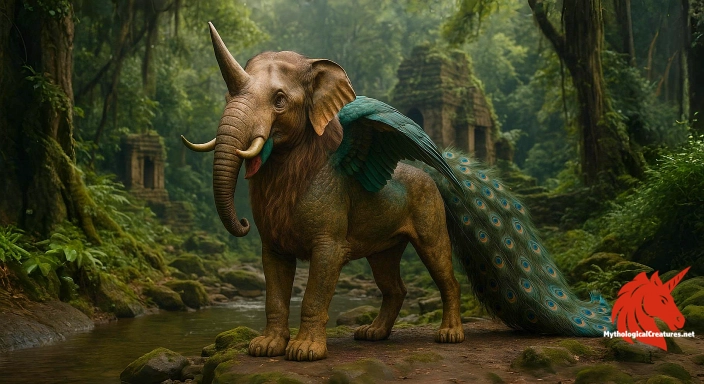
Nawarupa
Nawarupa - Symbolises the multifaceted nature of existence and the blending of different natural forces in Burmese folklore
the legend in five swipes.
the legend in five swipes.
How old is the legend of Nawarupa?
Nawarupa is a legendary chimeric creature that occupies a prominent role in Burmese and Rakhine mythologies. Its name, meaning 'nine forms', reflects a sophisticated symbology that fuses disparate animalistic and mystical elements into a single entity. The myth of Nawarupa can be traced back to ancient temple murals and inscriptions, revealing its long-standing cultural importance. It is believed to have emerged from a confluence of indigenous animistic traditions and the pervasive influences of Buddhist cosmology. The creature’s depiction has evolved over time, mirroring the layered spiritual beliefs of its communities. It has come to symbolise both protection and the mysterious forces governing the cosmos. Diverse narratives have cast it as a being capable of bridging the visible and the unseen realms. Its enduring presence in folklore underlines its role as a cultural emblem, reflecting the dynamic interplay of faith, art, and tradition. Over the centuries, Nawarupa has become a multifaceted icon that embodies the resilience and transformative power of its mythological heritage.
Which texts first mention Nawarupa?
Ancient chronicles and temple inscriptions provide some of the earliest attestations of Nawarupa, highlighting its deep roots in the region’s mythic traditions. Royal manuscripts and local folklore collections have also preserved varied narratives that depict the creature’s mysterious origins. Texts written in Pali alongside indigenous oral traditions contribute to a rich tapestry of accounts that evolve over time. Numerous temple reliefs and mural paintings portray the creature in dynamic and symbolic poses. In Rakhine sources, the creature is often referred to as Byala, adding another layer to its cultural identity. Stories passed down through generations emphasise different aspects of its character, sometimes portraying it as a divine protector and at other times as a portent of change. Variants of the legend reflect both somber and celebratory interpretations, capturing the imagination of diverse audiences. The multiplicity of sources ensures that Nawarupa's myth remains open to reinterpretation and further scholarly exploration. These varied narrative strands reveal how the creature has served as a vessel for collective memory across centuries and communities.
What was Nawarupa believed to be capable of?
The physical depiction of Nawarupa is a brilliant tapestry of assorted animal traits and magical embellishments. It is often illustrated with the majestic head of a lion, which conveys both strength and regality. In other artistic lineages, however, the same aura of majesty is reimagined through a ninefold hybrid form, in which the creature bears an elephant-like head, soft, deer-like eyes, a rhinoceros-style horn, a tongue and sweeping wings reminiscent of a parrot, a lion’s muscular body and legs, and a tail patterned on the ornate plumes of a peafowl. The creature’s torso may mirror that of a bull, symbolising robust vitality, while certain representations imbue it with the sinuous characteristics of a serpent. In some artistic traditions, a pair of phoenix-like wings sprout from its back, suggesting themes of renewal and transcendence. The idea of nine distinct forms is embodied in the careful integration of various features, each carrying its own symbolic weight. Elaborate detailing, such as iridescent scales and intricately patterned fur or feathers, adds a layer of mystique to its overall appearance. The eyes of Nawarupa are frequently depicted as deep and penetrating, evoking a sense of both wisdom and otherworldly power. Local artists have played with proportions and textures, ensuring that no two depictions are entirely alike. This composite anatomy not only enhances its visual impact but also serves as an allegory for the manifold aspects of existence in both the physical and metaphysical realms.
The Geography of the Nawarupa Legend
Across Burmese and Rakhine traditions, Nawarupa takes on distinctive regional characteristics that reflect the unique cultural backdrops of each community. In Burmese narratives, the creature is often celebrated as an auspicious guardian whose presence promises protection and prosperity. In Rakhine tales, where it is known as Byala, its portrayal tends to be more imposing and formidable, reflecting the region’s martial history and rugged landscapes. The creature’s design may vary from one locale to another, with differences noted in features like the curvature of its horns or the spread of its wings. Folk traditions in coastal areas sometimes imbue it with maritime associations, linking its form to the ebb and flow of natural forces. Inland, its appearance is more closely tied to terrestrial and agrarian symbols, reinforcing its role as a mediator between nature and the divine. Local festivals and ritual performances often utilise its imagery, adapting the myth to celebrate regional identity. The fluidity of its depiction underscores a broader tradition of storytelling that embraces both unity and diversity. Thus, Nawarupa serves as a dynamic symbol that is at once universally recognised yet locally distinct.
Do other traditions know Nawarupa by another name?
The chimeric nature of Nawarupa invites comparison with composite creatures found in mythologies around the world. Its amalgamation of distinct animal attributes recalls the Greek chimera, where multiple traits converge to create a being of both wonder and awe. In Indian mythology, similar hybrid forms often serve as intermediaries between human realms and the divine, a role that Nawarupa also fulfils. Like the multi-headed deities and powerful animal avatars in South Asian lore, the nine forms of Nawarupa symbolically represent the multiplicity of life’s forces. Elements such as its lion’s head and phoenix-like wings mirror common motifs of power and regeneration seen in various cultural narratives. Cross-cultural exchanges over ancient trade routes may have facilitated the sharing of these symbolic motifs, enriching regional interpretations. This comparative perspective not only highlights shared mythological themes but also underscores the unique adaptations that each tradition brings to the motif. The creature’s layered symbolism resonates with universal concepts of balance, transformation, and protection. In this way, Nawarupa stands as a testament to the enduring human fascination with hybrid forms that transcend ordinary boundaries.
The Lasting Influence of Nawarupa
Throughout history, the imagery of Nawarupa has undergone continual refinement, reflecting shifts in cultural, political, and artistic trends. In earlier epochs, its depictions were relatively austere, serving as stark symbols of cosmic order and protective might etched into temple walls. As artistic sensibilities evolved, later illustrations began to incorporate elaborate ornamental details, thus broadening its interpretive scope to include ideas of rebirth and transformation. The creature’s enduring popularity has led to its frequent appearance in traditional festivals, religious ceremonies, and public art, where it remains a potent emblem of communal identity. Modern renderings in literature, film, and visual art have embraced both its mythic gravitas and its playful, mysterious nature. Contemporary artists often reimagine Nawarupa by blending historic elements with innovative design, thereby creating a dialogue between tradition and modernity. Its role has expanded into a symbol of resilience and cultural continuity in the face of change. Despite evolving interpretations, the core myth of the ninefold creature endures as a powerful reminder of the region’s rich and complex heritage. Thus, Nawarupa continues to enchant and inspire, embodying an ageless artistry that bridges ancient lore and current creative expression.
Interesting Fact
The very name 'Nawarupa' highlights its inherent ability to assume nine distinct forms, a rare and symbolically potent characteristic within mythological lore.
Mythological Treasures
Chinese Beasts: A field guide to the dragons and demon kings of Chinese myth
From river dragons to demon kings, with the legends that shaped five thousand years of storytelling.
Japanese Yōkai: A field guide to the spirits and demons of Japanese folklore
Fifteen spirits, with the signs to watch for and what the old tales say to do if you meet one.
Greek Myths: A field guide to the monsters of ancient Greece
Every monster here earned its place in legend, and each gets a full page of artwork and the story behind it.
the legend in five swipes.
Advertising opportunity
Showcase your mythology project
We offer limited sponsor placements for books, courses, games, and creators aligned with our audience.
View partnership optionsQuick Creature Info
Origin:
Features:
Our Mythic Legendary Rating:

Also Sometimes Known As:
Habitat:
Supernatural Powers:
Physical Attributes:
Abilities:
Lore:
Related Creatures, Tales or Lore
- NNaga (Burmese serpentine deities)
- CChimera (Greek mythology)
- YYali (South Indian mythical lion-like creature)
References
Discover Another Mythical Legend You May Not Have Heard Of?
Uncover the mysteries of ancient folklore and expand your knowledge of legendary beings from cultures around the world.
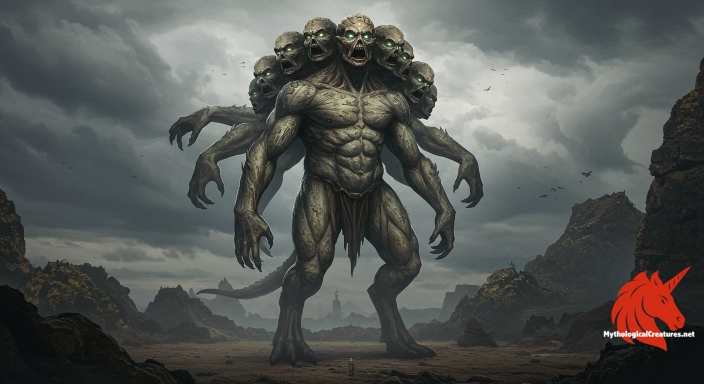
Dare to Meet the Hecatoncheires....
The Mythological Creatures Book Series
Yōkai, Greek, Norse, Egyptian & Chinese. Five illustrated field guides to the creatures the old stories either warned or told you about.
Curated by the Mythological Creatures Team
Series editor: Mythological Creatures Directory
Primary desk: Asian & Pacific Myth Cycles Desk
(rev. November 2025)