
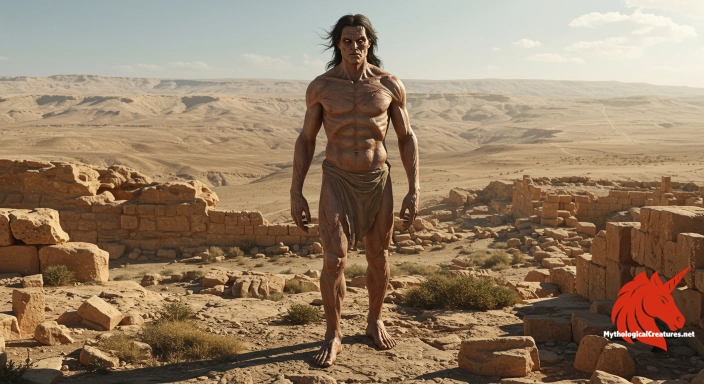
Nephilim: The Nephilim are mysterious, giant beings mentioned in biblical texts.
Nephilim
Nephilim - They exemplify the mysterious interactions between the divine and mortal realms and have fueled debates on the nature of sin, rebellion, and the origins of evil in ancient narratives.
the legend in five swipes.
the legend in five swipes.
Who first told stories about the Nephilim?
The Nephilim have persistently captured the imagination as mysterious figures woven into the earliest biblical narratives. Their ambiguous origins, straddling the boundaries between divine and mortal, serve as a cornerstone for myriad interpretations. Emerging from narratives that date back to the dawn of recorded tradition, these beings are depicted as possessing an awe-inspiring combination of strength and enigmatic authority. Some traditions envisage them as the offsprings of celestial rebels intertwined with humanity, while others trace their lineage to the progenitors of both virtue and sin. This duality in origin has cemented their status as symbols of both cosmic rebellion and the tragic consequences of transgressing sacred laws. Their initial attestation in scriptural texts has, over the centuries, spurred debates among theologians and historians alike. The Nephilim’s elusive character has come to represent broader themes of moral decay and the disruptive impact of supernatural influence. Legends surrounding them continue to evoke a sense of wonder and foreboding, inviting continual reinterpretation. Their story resonates as a mythic reminder of a time when the divine was believed to roam amidst mankind. Ultimately, the Nephilim remain emblematic of the enduring mystery that bridges the human and the heavenly.
Where can you read about the Nephilim?
Ancient writings provide the principal narrative framework through which the Nephilim have been understood. Genesis, for instance, offers a brief but potent reference to these beings during the period preceding the flood. The enigmatic account in Genesis 6 has yielded a multitude of interpretations, challenging readers to reconcile divine intent with human legacy. The Book of Enoch expands this narrative significantly, portraying detailed interactions between celestial entities and mortals. In Numbers, the report of the spies encountering these beings in Canaan adds another layer of mythic complexity. The prophetic texts, including passages in Ezekiel, echo this ambiguity with references that hint at extraordinary origins and fallenness. Deuterocanonical texts such as Judith, Sirach, Baruch, and Wisdom further contribute by weaving in subtle thematic allusions to beings of unimaginable stature and influence. Each source layer has helped to develop a tapestry of stories that merge divine mystery with earthly consequence. Over time, varied story variants have emerged that reflect both literal interpretations and metaphorical readings. This rich and sometimes contentious textual heritage cements the Nephilim as a perpetual subject of scholarly fascination and cultural reinterpretation.
The Described Form of the Nephilim
Descriptions of the Nephilim evoke images of beings whose physical presence far surpasses that of ordinary mortals. They are often imagined as giants, endowed with towering height and an imposing frame that epitomises raw, elemental power. Ancient texts suggest that their musculature was both massive and intricately balanced, as if designed for both combat and the enduring toil of early civilisation. Their eyes and facial features are frequently portrayed as having an almost supernatural intensity, hinting at the blend of earthly and celestial qualities within. Traditional depictions lean towards a robust, almost rugged anatomy, where every attribute serves to emphasise their inhuman strength. Despite the sparse direct references, artistic interpretations have imbued them with traits such as luminous auras or a spectral sheen that underscores their paradoxical nature. In some accounts, their skin or appearance might hint at a divine radiance or, conversely, a shadowed reminder of their fallen state. The physical depiction of the Nephilim is often interlaced with notions of both beauty and menace, reflecting their ambiguous origins. Variations in description across different texts suggest that while their colossal physicality is a common denominator, details of their form have evolved in tandem with cultural reinterpretations. In essence, the Nephilim remain a symbol of extraordinary physical presence paired with an enigmatic, almost otherworldly allure.
Where were the Nephilim best known?
The legend of the Nephilim has travelled far beyond its original scriptural roots, adapting to a variety of cultural contexts. In Jewish tradition, they are frequently viewed through the dual lenses of fallen angels and hybrid progeny, embodying themes of cosmic transgression. Christian interpretations, while acknowledging their connection to divine power, often infuse the narrative with moral allegory and cautionary undertones. In the Near Eastern historical context, local myths have interwoven elements of ancient deities and heroes with the Nephilim lore, thus blurring the line between myth and historical memory. European medieval renditions further enriched the tale by introducing iconographic representations that emphasised both their monstrous dimensions and their tragic origins. Different regions assign varied symbolic meanings to these giants, with some cultures perceiving them as godlike protectors and others as ominous harbingers of divine retribution. Indigenous narratives in parts of the Middle East and the Mediterranean have at times incorporated natural landmarks into their retelling, using the myth to explain the grandeur or decay of ancient structures. Such regional adaptations have allowed local artists and storytellers to project their own societal values onto the legend. The Nephilim myth, therefore, mirrors the cultural diversity of the regions that have hosted their legend. This regional versatility ensures that their story remains a dynamic and evolving facet of world mythology.
Which figures are similar to the Nephilim?
The Nephilim invite comparative reflection with other mythic giants found across disparate cultures. In many respects, they share intriguing similarities with the Titans of Greek mythology, both representing primordial forces that defy conventional human limitations. Comparable to the Jötunn of Norse lore, the Nephilim evoke images of colossal beings whose existence challenges the order of both nature and the cosmos. Such cross-cultural comparisons underscore a universal fascination with beings that bridge the realms of the divine and the mortal. Beyond European traditions, many ancient cultures have woven giant figures into their mythic tapestries, each imbued with local spiritual significance. The motif of hybrids—part divine, part human—appears repeatedly, suggesting that the Nephilim embody a broader archetype of celestial transgression. In this light, the Nephilim serve as a mirror to other cultural giants whose legends similarly explore the themes of creation, destruction, and renewal. Comparative analysis reveals that whether seen as agents of chaos or as tragic heroes, these figures speak to a shared human preoccupation with the limits of power. The mythic narrative of the Nephilim, therefore, offers fertile ground for studying parallel themes in global storytelling. Through such analysis, their enduring appeal as embodiments of the extraordinary becomes ever more apparent.
How are the Nephilim remembered today?
The evolution of the Nephilim myth reflects a complex interplay between ancient scripture and modern reinterpretation. In early tradition, they were presented as harbingers of divine retribution and as anomalies in the natural order, a theme that resonated deeply with communities facing moral and existential dilemmas. The medieval era saw their transformation into symbols of hubris and forbidden power, often depicted in art as both awe-inspiring and cautionary. As the narrative entered the modern era, literature and popular media reimagined the Nephilim in numerous innovative ways, sometimes casting them as antiheroes or agents of an ancient, secret past. This reimagining has allowed contemporary audiences to reinterpret their symbolism in terms of modern anxieties and aspirations, linking the myth to current cultural themes such as technological change or the disruption of established order. The Nephilim have also featured prominently in discussions of alternative histories and conspiracy theories, underlining their role as perennial icons of the mysterious and the unexplained. In academic circles, they continue to ignite debate over the nature of myth-making and the dynamics between written texts and oral traditions. Visual artists and filmmakers recycle and reshape the image of the Nephilim to reflect both historical grandeur and modern existential dread. Their legacy, therefore, is not fixed but evolves in layered and multifaceted ways with each cultural reinterpretation. Ultimately, the Nephilim stand as enduring symbols of the timeless tension between divinity and mortality, a myth that adapts as readily to the present as it does to the ancient past.
Interesting Fact
The debate over the Nephilim's origins highlights the complexity of ancient texts and continues to influence modern interpretations of biblical history.
Mythological Treasures
Greek Myths: A field guide to the monsters of ancient Greece
Every monster here earned its place in legend, and each gets a full page of artwork and the story behind it.
Norse Sagas: A field guide to the beasts of the Viking world
Drawn from the saga accounts themselves, with the powers, weaknesses and doom of each being set out.
Egyptian Legends: A field guide to the gods and monsters of ancient Egypt
Guardians of the living and devourers of the dead, with the role each played in judgement.
the legend in five swipes.
Mythology-aligned partners
Showcase your myth-friendly brand here
Run a store, studio, or platform that lives in the world of myth and folklore? A curated sponsor panel on these pages may fit.
Explore partnership optionsQuick Creature Info
Origin:
Features:
Our Mythic Legendary Rating:

Also Sometimes Known As:
Habitat:
Supernatural Powers:
Physical Attributes:
Abilities:
Behavior:
Lore:
Related Creatures, Tales or Lore
- AAnakim
- GGoliath
- RRephaim
References
Discover Another Mythical Legend You May Not Have Heard Of?
Uncover the mysteries of ancient folklore and expand your knowledge of legendary beings from cultures around the world.
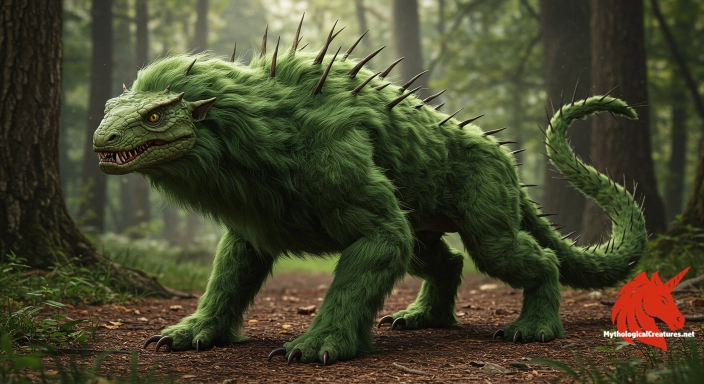
Dare to Meet the Peluda....
The Mythological Creatures Book Series
Yokai, Greek, Norse, Egyptian & Chinese. Five illustrated field guides to the creatures the old stories either warned or told you about.

Curated by the Mythological Creatures Team
Series editor: Mythological Creatures Directory
Primary desk: Hellenic & Ancient Mediterranean Desk
(rev. November 2025)