
Nerthus: Nerthus is an ancient Germanic goddess revered as Mother Earth.
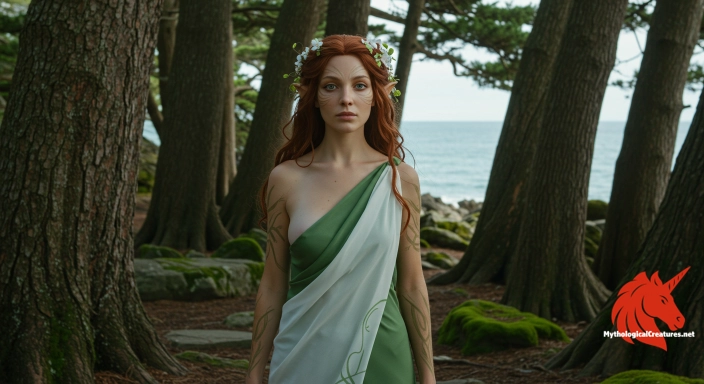
Nerthus
Nerthus - Nerthus represents the sanctity of nature and the cyclical renewal of the earth; her rituals ensured societal peace and fertility.
Origins & First Encounters
Nerthus emerges from the mists of early Germanic paganism as a powerful figure symbolising the fertile embrace of the Earth. Her mythic existence is anchored in ancient tradition, with the first detailed attestation found in the first-century work of Tacitus, who portrayed her as an embodiment of Mother Earth. Her sacred rites, revolving around a ceremonial wagon procession, reveal a profound connection between the natural cycles and human society. The cult devoted to her highlights themes of renewal, peace, and unity, where the very act of her procession halted warfare and brought communities together. Nerthus is depicted as an ever-nurturing presence, infusing the land with life and abundance. The rituals dedicated to her not only celebrated the bounty of nature but also reinforced the social and spiritual fabric of early Germanic tribes. Her story weaves together the tangible elements of society, such as the ceremonial wagon and its attendant rites, with metaphysical ideas of cyclical rebirth. The enduring impact of her myth underscores the intrinsic bond between the divine and earthly realms in ancient belief systems. Her veneration, preserved through both oral and archaeological traditions, continues to evoke the mystique of an era when nature and divinity were one.
Source Texts & Tale Variants
The primary literary source for Nerthus is Tacitus’s ethnographic narrative in Germania, a work that furnishes us with one of the earliest detailed glimpses into her cultic worship. His account provides an intricate description of the ritual wagon procession, where the goddess’s cart is treated with utmost reverence and care. Despite the sparseness of written records, the vivid portrayal offered by Tacitus has spurred scholarly debate and comparative studies with later Scandinavian texts and archaeological findings. Over time, related narratives appear in sources from the Viking Age, linking similar ceremonial practices with deities such as Njörðr and his kin. Tacitus’s depiction, although brief, has inspired numerous interpretations and variants that colour our understanding of ancient Germanic rites. Later folklore and ritual remnants lend further credence to these early accounts, even as they have evolved in subtle yet significant ways. The narrative of Nerthus has been distilled through both the lens of classical antiquity and the transformative traditions of later Norse literature. As a result, her myth is a composite of textual, folkloric, and material evidence that extends far beyond the original Roman commentaries.
Form & Powers
The physical representation of Nerthus is not conveyed through a detailed description of her person but is vividly symbolised by the celebrated wagon and its accoutrements. The sacred cart, elaborately draped in white cloth and kept within a consecrated grove, stands as a potent emblem of her divine presence. Carved and decorated with intentional precision, the wagon appears to encapsulate the cyclical cycle of nature and human celebration. It is drawn by heifers whose strength and gentle demeanour complement the nurturing aspects of the goddess. The exclusivity with which only a priest may handle the cart underscores an aura of sanctity and ritual purity. In artistic and archaeological reconstructions, the imagery associated with Nerthus often features motifs emblematic of fertility and earth’s abundance, suggesting that her form was as much symbolic as it was revered. The interplay between the tangible relic—the wagon—and the intangible divine essence encapsulates a rare instance of physical embodiment of spiritual power. Even though no consistent bodily iconography of Nerthus survives, the ritual objects linked to her continue to evoke a timeless serenity and robust vitality.
Regional Faces
Across the diverse landscapes of early Northern Europe, the veneration of Nerthus took on distinctive regional flavours that reflected local cultural and environmental influences. In regions now known as Denmark and Germany, the goddess’s ritual procession was intimately connected with the landscape; sacred groves, secluded lakes, and coastal inlets all formed the setting for her veneration. While Tacitus’s account offers a unified picture, archaeological evidence suggests that regional adaptations enriched the tradition with unique local symbols. Rural communities integrated the goddess into their seasonal festivities, blending her myth with agricultural cycles and local rites of purification. In some areas, her imagery merged with that of other deities, contributing to a gradual reconfiguration of her identity, notably towards forms seen in later Norse mythology. The physical layout of ceremonial spaces often mirrored the cosmological principles inherent in her cult and underscored a community’s reliance on the land’s fertility. Northern European variations built upon her image as a mediator between the terrestrial and the divine, adapting her narrative to address local needs. These adaptations not only diversified the rituals associated with Nerthus but also cemented her legacy as a mutable and regionally embedded figure.
Cultural Parallels
Nerthus’s attributes resonate strongly with similar Mother Earth figures found throughout the ancient world, facilitating interesting cross-cultural comparisons. Her role in fostering fertility and communal harmony invites parallels with Mediterranean deities such as Demeter and Ceres, who too symbolised the nurturing aspects of the natural world. The ritual elements surrounding her worship, particularly the ceremonial procession and the sacred cleansing rites, echo practices seen in the Celtic and Baltic traditions, creating a shared tapestry of fertility and seasonal renewal. Her transformation from a female earth goddess in early Germanic lore to a more ambiguously gendered figure in later Norse mythology highlights a fascinating process of mythological evolution that is mirrored in other cultures. Such dualities, wherein deities embody both nurturing and martial qualities, are found in various traditions, underscoring a universal recognition of nature’s dual aspects. The metamorphosis also draws a parallel with the shifting gender roles observed in other ancient mythologies, where the fluidity of divine representation accommodated changing social values. These interconnections offer a rich comparative framework that helps to elucidate how different communities revered the sacred forces of nature. Through these cross-cultural ties, Nerthus stands as part of an enduring mythological continuum that spans both geographical and temporal boundaries.
Legacy & Modern Evolution
The evolution of Nerthus’s myth from its genesis in early Germanic society to its reinterpretation in modern contexts reveals a journey marked by transformation and renewed interest. Early accounts by Tacitus provided a foundation that, over centuries, was reshaped by the confluence of shifting religious paradigms and cultural exchanges. As her narrative traversed from a venerated earth goddess to a figure whose attributes were eventually absorbed into the Norse pantheon, her symbolism adapted to reflect emerging societal values. The archaeological rediscovery of ritual wagons and related artefacts has lent tangible substance to her legend, reawakening scholarly and public fascination with ancient ceremonial practices. In the modern era, artistic reinterpretations and cultural revivals have drawn on her image as a symbol of environmental stewardship and the cyclical nature of life. Despite debates and reinterpretation—such as the contested manuscript reading of Hertha—Nerthus continues to inspire contemporary literature, art, and neo-pagan rituals. Her enduring legacy is celebrated in a variety of formats, from academic discussions of early Germanic spirituality to modern festivals that echo her age-old themes of fertility and peace. This transformation underscores not only the resilience of myth but also its capacity to be reimagined in alignment with the evolving concerns of new generations.
Interesting Fact
Despite her benevolent influence in ensuring peace and fertility, the cult of Nerthus involved harsh sacrificial rites, reflecting the complex and often contradictory nature of ancient religious practices.
Mythology commerce, done carefully
Align your store with our global myth audience
If you sell myth-inspired jewellery, prints, decks, or collectibles, we can feature your brand without overwhelming the reading experience.
Partner with usQuick Creature Info
Origin:
Features:
Associations:
Our Mythic Legendary Rating:

Also Sometimes Known As:
Habitat:
Supernatural Powers:
Physical Attributes:
Abilities:
Behavior:
Lore:
References
Discover Another Mythical Legend You May Not Have Heard Of?
Uncover the mysteries of ancient folklore and expand your knowledge of legendary beings from cultures around the world.
Dare to Meet the Móðguðr....

Curated by the Mythological Creatures Team
Series editor: Mythological Creatures Directory
Primary desk: Northern & European Folklore Desk
(rev. November 2025)