
Ninpumuna: Ninpumuna is an ancient Mesopotamian goddess associated with salt springs and possibly the underworld.
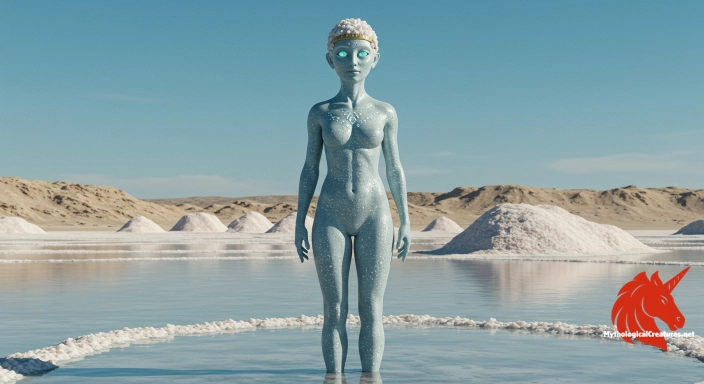
Ninpumuna
Ninpumuna - Represents the importance of salt in economic and ritual practices while embodying a liminal position between the living world and the underworld.
the legend in five swipes.
the legend in five swipes.
The Origin Story of Ninpumuna
Ninpumuna emerges as a captivating figure from the early Mesopotamian pantheon, intricately linked to the vital salt springs that sustained life in ancient urban centres. She is recorded in a handful of texts from the Ur III period, suggesting that she played a specific, though nuanced, role in the spiritual landscape of her time. Her origins are rooted in the culturally rich environment of Ur and Puzrish-Dagan, where the interplay of natural resources and divine influence was keenly observed. The goddess is thought to embody both the nourishing properties of salt and mysterious underworld elements, reflecting the dual nature of existence that permeated Mesopotamian thought. Her presence in the texts alongside established deities like Ninazu and Ningishzida indicates a complex network of divine interrelations. This layered identity positions her as not only a provider of essential sustenance but also as a guardian of the threshold between life and death. The cultural context of her worship highlights how the Mesopotamians revered elements of nature that were both life-affirming and transformative. Over time, even these brief attestations have allowed modern interpretations to view Ninpumuna as a symbol of balance and renewal in the natural as well as the spiritual realm.
Which texts first mention Ninpumuna?
The principal sources mentioning Ninpumuna are a limited collection of Ur III period texts recovered from sites such as Ur and Puzrish-Dagan. These clay tablet records, though fragmentary, offer intriguing snippets of her worship and mythic associations. In several texts, she appears in the company of deities like Ninazu and Ningishzida, which underscores her possible role in the underworld and her connection with local cultic practices. The texts explore themes that intertwine the use of salt with ritual purification and the mysteries of death, suggesting that her function extended beyond mere earthly nourishment. Variants in the narratives imply that her significance might have shifted subtly depending on the local cultic needs or ritual contexts. Some inscriptions hint at her integration into rites that overlapped with those of more prominent deities, thereby preserving a delicate balance in divine responsibilities. The sparse primary evidence has, however, left many aspects of her mythology open to interpretation, encouraging scholars to seek parallels with more thoroughly documented figures. Additionally, the proposal of her worship in the cult centre of Gishbanda further enriches the dialogue surrounding her myth and highlights the regional divergence in her veneration.
Ninpumuna: Size, Shape and Strange Features
While direct artistic depictions of Ninpumuna are notably scarce, inferences about her physical appearance can be drawn from broader Mesopotamian artistic traditions. It is plausible that she was depicted with a dignified countenance that merged the austerity of a chthonic deity with the grace associated with water spirits. Artistic conventions of the time often portrayed such deities with flowing garments and intricate ornamentation, suggesting that Ninpumuna might have been adorned with symbols echoing the natural motif of salt and water. Subtle iconographic cues, such as stylised water motifs or abstract representations of salt crystals, could have been incorporated into her attire to signify her domain. There may have been an intentional ambiguity in her appearance, reflecting her dual role as both a nurturer and a guide of the underworld. The limited surviving impressions on seals and reliefs from the period hint at a form that balanced strength with a serene, almost otherworldly beauty. Although there are no definitive size variations documented, comparative analysis with contemporary deities suggests that her depictions would have been both modest and imbued with symbolic potency. This inferred imagery captures the essence of a goddess who seamlessly intertwined physical vitality with the mysteries of the afterlife.
Ninpumuna: One Legend, Many Local Versions
The regional expression of Ninpumuna’s cult underscores the diversity of religious practice within ancient Mesopotamia. In the urban centres of Ur and Puzrish-Dagan, her worship appears to have been closely linked to the local natural features, notably the salt springs that were central to the community’s economy and ritual life. Variations in her portrayal suggest that in some locales she was emphasised as a benevolent guardian of earthly sustenance, while in others her underworld associations were more pronounced. Her occasional appearance alongside deities like Ningishzida in certain texts indicates that local traditions may have adapted her character to fit into broader mythological narratives. Differences in regional epithets and attributes hint that dialectical variations and local cultic needs influenced her portrayal. In an area where natural resources such as salt were integral to survival, her image might have been celebrated with more elaborate representations of water and mineral symbolism. Conversely, in regions leaning towards chthonic interpretations, her darker aspects would have been accentuated. This dynamic interplay between geography, resource availability, and spirituality illustrates how ancient communities tailored their divine figures to reflect local realities.
What parallels exist to Ninpumuna in other traditions?
Examining Ninpumuna within the wider framework of mythology reveals intriguing parallels with other cultures’ deities who embody the convergence of life-giving and underworld forces. The dual nature of her character, bridging the fruitful properties of salt with the enigmatic realm of the dead, resonates with the thematic complexities found in figures such as the Greek Persephone. In similar fashion, several Egyptian goddesses also display a blend of nurturing elements with associations to mortality and renewal, reflecting a universal narrative of duality and transformation. Her intrinsic connection to natural elements draws comparisons with local water spirits and nymphs that appear in numerous ancient traditions. Furthermore, the symbolic use of salt as both a preservative and a purifier is a motif that transcends cultural boundaries, enhancing her cross-cultural significance. The synthesis of life-affirming sustenance and the inevitability of decay in her myth mirrors broader patterns prevalent in ancient religious systems. Such comparative analysis demonstrates that even lesser-known deities like Ninpumuna contribute to a mosaic of mythological archetypes shared among diverse cultures. Her role, though specific to Mesopotamian tradition, aligns with a timeless motif where opposing forces are harmoniously unified.
Why does Ninpumuna still matter?
The historical evolution of Ninpumuna reflects the broader shifts in Mesopotamian mythological thought from a period of localised cults to a more integrated religious system. Despite her limited mention in the textual record, the layers of her character have continued to invite scholarly interest and reinterpretation over the centuries. As ancient ritual practices transformed and the pantheon evolved, her attributes were sometimes absorbed by or merged with those of other deities, preserving her symbolic resonance. Modern interpretations have begun to cast her as a subtle emblem of nature’s dual capacity to nurture and transform, a theme that remains compelling in contemporary spiritual discourse. In recent years, historians and enthusiasts have embraced her story as a window into the complex interplay between elemental forces and divine authority. Artistic and literary works have revived her imagery, reimagining her as a bridge between the realms of life and death. This reimagining underscores the enduring allure of ancient mythologies and their ability to speak to modern experiences of change and continuum. Although her worship was once confined to specific locales, the themes encapsulated in her myth have universal appeal. Today, Ninpumuna stands as a testament to the intricate symbolism of early Mesopotamian spirituality and continues to inspire new cultural and academic explorations.
Interesting Fact
An intriguing aspect of Ninpumuna is her dual role as a goddess of both salt springs and the underworld, highlighting the symbolic significance of salt as both a preservative of life and a marker of transformation.
Mythological Treasures
Norse Sagas: A field guide to the beasts of the Viking world
Drawn from the saga accounts themselves, with the powers, weaknesses and doom of each being set out.
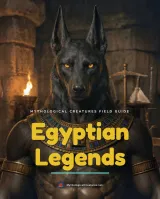
Egyptian Legends: A field guide to the gods and monsters of ancient Egypt
Guardians of the living and devourers of the dead, with the role each played in judgement.
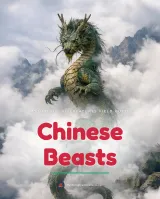
Chinese Beasts: A field guide to the dragons and demon kings of Chinese myth
From river dragons to demon kings, with the legends that shaped five thousand years of storytelling.
the legend in five swipes.
Mythology commerce, done carefully
Align your store with our global myth audience
If you sell myth-inspired jewellery, prints, decks, or collectibles, we can feature your brand without overwhelming the reading experience.
Partner with usQuick Creature Info
Origin:
Associations:
Our Mythic Legendary Rating:

Habitat:
Supernatural Powers:
Physical Attributes:
Abilities:
Behavior:
Lore:
Related Creatures, Tales or Lore
- EEreshkigal
- NNinazu
- NNingishzida
References
Discover Another Mythical Legend You May Not Have Heard Of?
Uncover the mysteries of ancient folklore and expand your knowledge of legendary beings from cultures around the world.
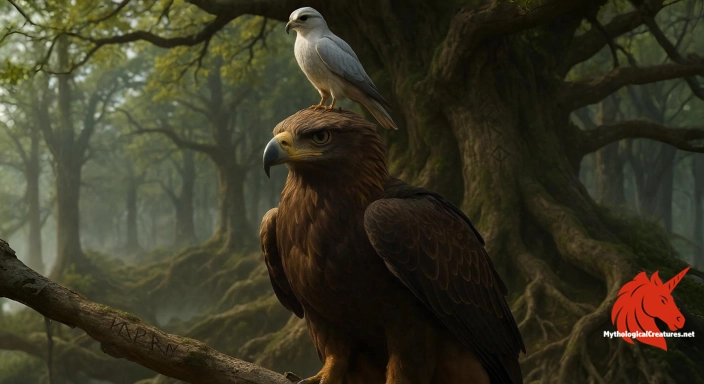
Dare to Meet the Veðrfölnir and eagle....
The Mythological Creatures Book Series
Yōkai, Greek, Norse, Egyptian & Chinese. Five illustrated field guides to the creatures the old stories either warned or told you about.

Curated by the Mythological Creatures Team
Series editor: Mythological Creatures Directory
Primary desk: Hellenic & Ancient Mediterranean Desk
(rev. November 2025)