
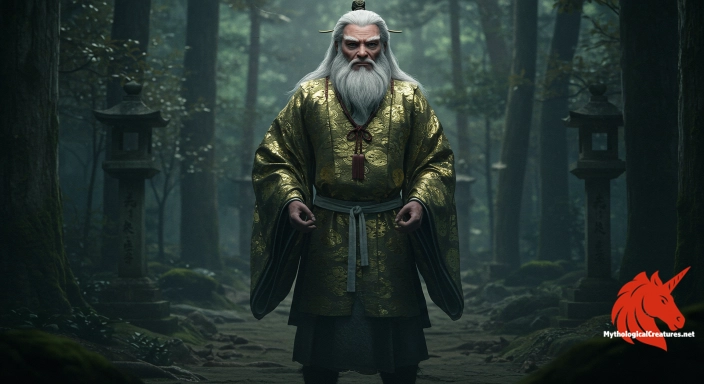
Ōkuninushi: Ōkuninushi is a prominent kami in Japanese mythology known as the sovereign of the terrestrial world and head of the kunitsukami.
Ōkuninushi
Ōkuninushi - Reflects the integration of local deities into the Yamato state and the transition of power from earthly rule to the celestial order
the legend in five swipes.
the legend in five swipes.
What are the origins of Ōkuninushi?
Ōkuninushi is celebrated as one of the most compelling and multifaceted deities within Japanese mythology, embodying the spirit of an ancient earth ruler whose influence resonates through both lore and ritual. His origins are steeped in the early mythic traditions recorded in the Kojiki and Nihon Shoki, where he is depicted as the leader of the kunitsukami – the earthly gods who once governed Ashihara no Nakatsukuni, or the Central Land of Reed Plains. Emerging as a central figure among the divine, his stories illustrate a character who was both mighty and magnanimous, willingly yielding his earthly dominion to the celestial deities. This act of withdrawal, often interpreted as a shift towards a more harmonious cosmic order, marks a pivotal moment in the mythic history of Japan. His familial connections, intertwined with more prominent gods such as Amaterasu and Susanoo, further accentuate his significance in the divine hierarchy. The narrative also reveals a deity of passion and fertility, whose numerous romantic endeavours produced a lineage of divine offspring, thereby interlacing his legacy with the very fabric of creation. Regional traditions, particularly from the Izumo province, vividly celebrate his life and exploits, lending cultural depth to his myth. His story has transcended mere myth to become a symbol of the transition from terrestrial might to spiritual authority. Ōkuninushi continues to evoke awe not only as a mythological character but also as a timeless emblem of power, sacrifice, and renewal. His enduring presence in Japanese cultural identity underscores a myth that bridges ancient narratives with enduring modern reverence.
What are the earliest texts about Ōkuninushi?
The mythic character of Ōkuninushi is primarily chronicled in ancient texts such as the Kojiki and Nihon Shoki, where his story is woven into the fabric of the nation’s early mythology. These ancient chronicles meticulously detail his role as the prime mover among the earthly deities and recount his eventual submission to the heavenly order. Beyond these seminal records, regional documents known as Fudoki also preserve his legends, especially in provinces like Izumo and Harima. These local gazetteers provide a wealth of narratives, each variant lending a unique perspective that reflects the spiritual and environmental realities of its region. While the imperial texts stress his connection to the divine lineage that underpins the Japanese monarchy, the Fudoki embellish his adventures with local lore and natural symbolism. His romantic escapades, which ultimately produced a pantheon of divine progeny, are occasionally recounted with elaborate detail in these varied sources. The multiplicity of texts not only broadens our view of Ōkuninushi’s character but also highlights the diversity within Japanese mythological traditions. Rich layers of narrative emerge from these documents, showcasing how a single deity can be reimagined across regions and epochs. The synthesis of these texts provides a comprehensive portrait of his mythic identity while underscoring the dynamic evolution of his stories over time.
How did the old accounts describe Ōkuninushi?
Ancient depictions of Ōkuninushi, though sparse in literal descriptions, have come to be defined by a dignified and serene countenance in traditional iconography. His face is often illustrated with an expression that balances wisdom and gentle determination, reflecting the profound duality of his earthly and spiritual realms. In artistic renditions, he is portrayed donning flowing robes that symbolise his connection to the natural world as well as his elevated status among deities. A crown or elaborate headpiece is frequently featured in these images, representing his once supreme rule over the terrestrial domain. His posture tends to be regal yet approachable, evoking both martial vigour and a benevolent guardianship. Statues and shrine carvings sometimes present him as slightly larger in stature compared to other gods, a visual cue to his historical association with the governance of the land. Even though explicit anatomical details are rare in the primary texts, the accumulated visual tradition suggests that his figure holds an aura of ageless wisdom and commanding presence. Observers have noted the harmonious integration of robust physicality and a reflective, almost introspective grace in his portrayals. Local artistic variations further embellish his silhouette with regional motifs, reinforcing his link to the landscapes and cultural narratives of the area. Overall, these visual representations have enabled generations to form a vivid and enduring impression of his divine persona.
Ōkuninushi: The Same Figure in Different Places
Regional interpretations of Ōkuninushi reveal a fascinating tapestry of local legends and cultural adaptations that vary widely across Japan. In the Izumo region, particularly in Shimane Prefecture, he is revered as a principal deity whose myth is deeply embedded in the area’s sacred landscapes and traditional festivals. Local narratives emphasise his role as a guardian of the land and a benefactor who brings prosperity, reinforcing his connection with nature and agricultural fertility. In contrast, accounts from provinces such as Harima offer nuanced variations that integrate his myth with indigenous spiritual practices, reflecting a distinct local character. These regional adaptations often underscore his capacity to mediate between the earthly and spiritual worlds, resonating with the specific environmental and social contexts of local communities. The diversity in his regional portrayals illustrates how his myth has been shaped by historical encounters between local powers and the centralised Yamato state. Such local stories also incorporate unique symbols and rituals that celebrate his influence, be it through seasonal ceremonies or community celebrations. Despite these regional differences, the core essence of his personality—marked by benevolence, wisdom, and resilience—remains a unifying thread across various local traditions. Through evolving regional narratives, Ōkuninushi continues to be a dynamic emblem of local identity and communal reverence. His myth, adaptable yet recognisable, persists as an enduring component of Japan’s rich cultural heritage.
How does Ōkuninushi compare to figures in other traditions?
When set alongside other mythological figures, Ōkuninushi emerges as a distinctive archetype of an ancient earth deity who transitions from worldly sovereignty to a more enigmatic role within the unseen realm. His narrative resonates with comparative mythologies where gods of the earth eventually relinquish their mortal reign in favour of cosmic order, a transformation seen in various global traditions. Similar to certain Celtic or Norse deities who navigate the dualities of power and humility, his myth encapsulates the eternal tension between earthly authority and divine transcendence. The fusion of his identity with that of Daikokuten under Buddhist influence further illustrates a broader pattern of syncretism common in East Asia, where local deities absorb aspects of more expansive religious narratives. This merging of traditions mirrors comparative processes seen in other cultural contexts, where mythic figures evolve through religious and cultural interchange. His role as a mediator between human and divine spheres finds parallels in various indigenous and shamanistic traditions, emphasising themes of transformation and renewal. The layered dimensions of his character, including his passionate liaisons and his eventual submission to heavenly order, provide rich material for cross-cultural analysis. Such comparative reflections reveal that his myth is not an isolated phenomenon but part of a shared human narrative exploring the interplay between power, sacrifice, and destiny. Ōkuninushi thereby stands as a universal symbol of the delicate balance maintained between the forces of nature and divine governance. His enduring legacy invites continual reinterpretation and comparative study among scholars and devotees alike.
What does Ōkuninushi mean to people today?
Ōkuninushi’s myth has undergone a remarkable evolution from its ancient origins to its vibrant role in modern cultural and religious life. Historically, he was revered as a potent earth ruler whose surrender to the heavenly gods symbolised a fundamental reordering of cosmic authority. Over the centuries, his narrative has been enriched by subsequent interpretations that align him with prosperity, protection, and the harmonious balance between the natural and the spiritual. His enduring presence at the Grand Shrine of Izumo and numerous regional shrines is a testament to the lasting impact of his legend. The synthesis of Shinto and Buddhist elements, notably the association with Daikokuten, highlights the fluidity and adaptability of his myth in response to changing cultural dynamics. Contemporary interpretations often portray him as a bridge between the ancient and modern, embodying both historic continuity and the evolving nature of spiritual belief in Japan. Festivals, theatrical performances, and literary works continue to draw on his extensive mythos, reaffirming his status as a living symbol of tradition and renewal. His story remains influential in discussions of identity, governance, and the relationship between humanity and the divine. As modern society reclaims ancient narratives to understand its heritage, Ōkuninushi stands out as an icon of transition, wisdom, and communal resilience. Through ongoing reinterpretation and active worship, his legacy continues to inspire both cultural pride and scholarly exploration, ensuring that his myth endures in the collective consciousness of Japan.
Interesting Fact
An interesting aspect of Ōkuninushi’s myth is his seamless transition from sovereign of the visible world to ruler of the unseen realm, symbolizing the delicate balance between order and mystery in Japanese cosmology.
Mythological Treasures
Japanese Yokai: A field guide to the spirits and demons of Japanese folklore
Fifteen spirits, with the signs to watch for and what the old tales say to do if you meet one.
Greek Myths: A field guide to the monsters of ancient Greece
Every monster here earned its place in legend, and each gets a full page of artwork and the story behind it.
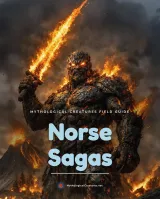
Norse Sagas: A field guide to the beasts of the Viking world
Drawn from the saga accounts themselves, with the powers, weaknesses and doom of each being set out.
the legend in five swipes.
Sponsor this space
Tasteful, fixed-fee placements for myth projects
No bidding wars or flashing banners. We offer simple placements for a small set of creators and brands aligned with our readers.
Request further detailsQuick Creature Info
Associations:
Our Mythic Legendary Rating:

Also Sometimes Known As:
Habitat:
Supernatural Powers:
Physical Attributes:
Abilities:
Behavior:
Lore:
Related Creatures, Tales or Lore
- SSusanoo
- AAmaterasu
- DDaikokuten
References
Discover Another Mythical Legend You May Not Have Heard Of?
Uncover the mysteries of ancient folklore and expand your knowledge of legendary beings from cultures around the world.
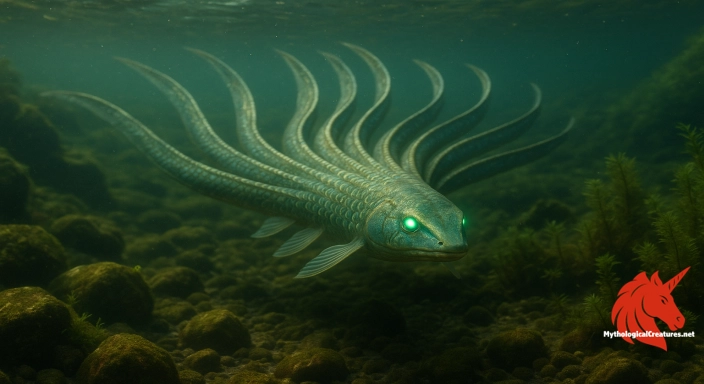
Dare to Meet the Heluo fish....
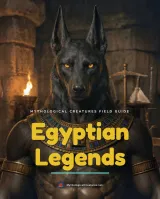
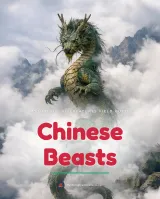
The Mythological Creatures Book Series
Yokai, Greek, Norse, Egyptian & Chinese. Five illustrated field guides to the creatures the old stories either warned or told you about.
Curated by the Mythological Creatures Team
Series editor: Mythological Creatures Directory
Primary desk: Asian & Pacific Myth Cycles Desk
(rev. November 2025)