Olokun: Olokun is a revered orisha of the deep ocean in Yoruba religion, known for bestowing wealth, health, and prosperity.
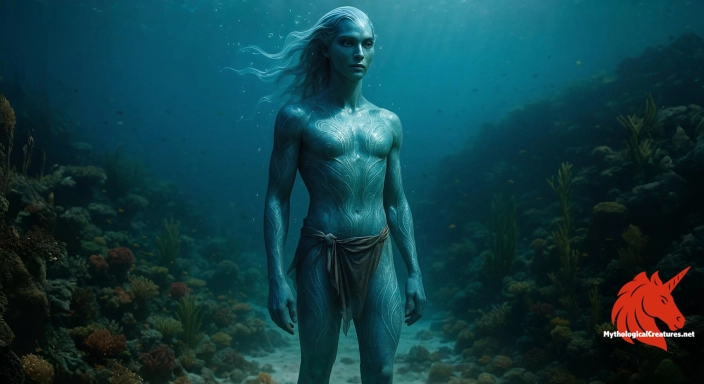
Olokun
Olokun - A central figure in Yoruba religion and the African diaspora, Olokun embodies the abundance, mystery, and transformative power of water.
the legend in five swipes.
the legend in five swipes.
Who first told stories about Olokun?
Olokun stands as one of the most enigmatic and revered figures within the Yoruba pantheon, embodying the unfathomable mysteries of the deep ocean. Born from an age-old connection to water, this orisha has roots that extend deeply into the oral traditions of ancient West Africa. Celebrated for bestowing wealth, health, and prosperity, Olokun has long been a symbol of abundance and the inscrutable nature of life. His early attestation can be traced back to generations of storytellers and ritual practitioners who saw the vast sea as both a nurturing and formidable presence. The deity’s presence is not limited by gender, as communities have viewed Olokun as male, female, or even androgynous, thus reflecting the complexity of human and natural duality. He is revered not only as the progenitor of Aje, the orisha of great wealth, but also as the sovereign over all bodies of water. His myth encapsulates the balance between creation and destruction, which mirrors the ebb and flow of tides. By symbolising the intersection of nature’s bounty and its mysteries, Olokun continues to inspire spiritual and cultural practices throughout the Yoruba world and beyond.
Olokun: Variants Across the Sources
Ancient Yoruba oral traditions have preserved an array of narratives that vividly capture the essence of Olokun. Sacred chants, ritual recitations, and folklore have all contributed to the rich tapestry of stories about this powerful water deity. Over centuries, these stories have been passed down and adapted, each version offering unique insights into his dual nature as a benevolent giver and a mysterious force. The spread of these narratives during the transatlantic era further enriched the lore as communities in the Americas and the Caribbean interwove local elements with traditional myths. In various sacred texts and artefacts, Olokun is depicted as both the source of life and the provider of material wealth, highlighting the multifaceted dimensions of his character. The diverse depictions in oral literature illustrate how different communities emphasise aspects that resonate with their cultural values. Even when written documentation is sparse, the ritualistic practices and communal festivals provide dynamic evidence of his enduring influence. This multiplicity of sources not only underscores the complexity of Olokun’s identity but also reflects the vibrant evolution of his myth throughout history.
The Appearance and Powers of Olokun
Olokun is rarely depicted in a singular, fixed form, with artistic representations often capturing the fluidity of the ocean itself. Traditional iconography presents him with a luminous, shifting form that mirrors the play of light on the water’s surface. Visual portrayals frequently exhibit elements such as flowing robes, shimmering scales, and adornments reminiscent of seashells and coral, which symbolise his deep aquatic connections. His portrayals may blend masculine and feminine features, echoing the androgynous nature attributed to him by various communities. The eyes in many depictions are described as deep and reflective, hinting at the profound mysteries lurking within the ocean depths. Some images show him as a colossal force in control of vast expanses of water, while others render him in a more human-like guise that invites personal contemplation. Artistic interpretations vary widely depending on regional aesthetics and symbolic needs, yet all capture a sense of awe and majesty. Every visual representation of Olokun is designed to evoke the balance between the nurturing and the formidable aspects of the sea.
The Local Faces of Olokun
In his native West African context, Olokun is venerated as the supreme custodian of all aquatic realms, a guardian whose influence safeguards both the bounty and the peril of water. In the heartland of Yoruba culture, he is often regarded with a sense of respect that is both spiritual and utilitarian, reflecting his role in bestowing wealth and health. Local practices in regions such as Nigeria and Benin frequently depict him in forms that emphasise strength and mystery, often with a masculine slant in some interpretations. In contrast, the diasporic communities of the Caribbean and Latin America have embraced a more fluid representation, with Olokun appearing as a feminine or androgynous force that nurtures as much as it empowers. These regional adaptations illustrate a remarkable ability to fuse indigenous religious frameworks with the cultural dynamics of new environments. The syncretic practices in places like Candomblé in Brazil and Santería in Cuba have enriched the mythology by integrating local rituals, music, and art into his worship. Both urban and rural communities continue to evolve his iconography, making each representation unique to its cultural setting. Hence, regional variations of Olokun not only reflect local religious identities but also serve as a bridge between traditional beliefs and contemporary cultural expressions.
Olokun: Counterparts Around the World
The myth of Olokun invites rich comparisons with water deities from a multitude of cultural traditions. Similar to the revered sea gods Poseidon and Neptune, Olokun presides over the vast and unpredictable forces of the ocean, though his androgynous nature sets him distinctly apart. His multifaceted character resonates with other nurturing water spirits like Yemaya, yet his dominion over the hidden and often tumultuous deep diverges from more benevolent portrayals. The dual character of benevolence and mystery shared by many aquatic deities is a common thread, though Olokun uniquely epitomises the inscrutable depths and the transformative energies of water. Some traditions remind us of the ancient concept of primordial water as the source of life, a theme that is central to Olokun’s narrative as well. His fluid representation in art and myth challenges simple categorisations, much like the varying depictions of water gods across cultures. These comparative reflections highlight a universal awe for the power of water while affirming that Olokun occupies a singular space in the Yoruba spiritual cosmos. In bridging different mythological paradigms, his story offers a profound insight into the human reverence for the elemental forces of nature.
Olokun: Modern Retellings and Reinventions
The enduring influence of Olokun is evident in both traditional practices and modern reinterpretations, making him a timeless emblem of water and prosperity. Contemporary spiritual movements frequently invoke his name as a symbol of resilience and transformation in the face of natural and societal challenges. Modern artists and cultural practitioners have reimagined Olokun through various media, from sculptures and paintings to digital art installations that capture his ethereal presence. His mythology continues to inspire festivals, rituals, and community gatherings across the African diaspora, where his influence is seen as a source of empowerment and cultural identity. In a world increasingly concerned with environmental issues, Olokun’s associations with water also resonate with contemporary calls for sustainable stewardship of natural resources. His narrative, which merges ancient tradition with modern concerns, provides a fertile ground for discussions on gender fluidity and the transformative power of nature. By blending age-old symbolism with contemporary relevance, Olokun remains a potent reminder of the interconnection between humanity and the natural world. Through the evolving lens of modern spirituality, his legacy not only honours the past but also continually inspires future generations to seek balance and abundance.
Interesting Fact
Olokun's depiction as both male and female highlights a divine fluidity that transcends traditional gender binaries, mirroring the ever-changing and multifaceted nature of water itself.
Mythological Treasures
Japanese Yōkai: A field guide to the spirits and demons of Japanese folklore
Fifteen spirits, with the signs to watch for and what the old tales say to do if you meet one.
Greek Myths: A field guide to the monsters of ancient Greece
Every monster here earned its place in legend, and each gets a full page of artwork and the story behind it.
Norse Sagas: A field guide to the beasts of the Viking world
Drawn from the saga accounts themselves, with the powers, weaknesses and doom of each being set out.
the legend in five swipes.
Partner with Mythological Creatures
Bring your myth-based world into ours
From game settings to narrative worlds, we work with partners who treat myths with care. Share your project for a potential sponsor slot.
Partner with usQuick Creature Info
Origin:
Associations:
Our Mythic Legendary Rating:

Also Sometimes Known As:
Habitat:
Supernatural Powers:
Physical Attributes:
Abilities:
Behavior:
Lore:
Related Creatures, Tales or Lore
- YYemaya
- MMami Wata
- OOshun
References
Discover Another Mythical Legend You May Not Have Heard Of?
Uncover the mysteries of ancient folklore and expand your knowledge of legendary beings from cultures around the world.
Dare to Meet the Shidaidaka....

The Mythological Creatures Book Series
Yōkai, Greek, Norse, Egyptian & Chinese. Five illustrated field guides to the creatures the old stories either warned or told you about.
Curated by the Mythological Creatures Team
Series editor: Mythological Creatures Directory
Primary desk: African & Diaspora Traditions Desk
(rev. November 2025)