
Phaenon: Phaenon is a divine youth in Greek mythology associated with the celestial bodies.

Phaenon
Phaenon - Symbolises the transition from mortal beauty to divine immortality and the celestial order
Origins & First Encounters
Phaenon emerges in Greek tradition as a radiant celestial figure whose very name embodies brightness and brilliance. Originating from the creative hand of Prometheus, he was fashioned as a youthful exemplar of beauty and divine potential. His creation intertwines the mythic narrative of mankind with a destiny that reaches into the cosmos. The narrative captures his journey from a cherished mortal creation to a luminous presence among the wandering stars. He is celebrated as a symbol of both transient beauty and eternal light, a bridge between human frailty and divine splendour. His name has been poetically applied to the bright planet Saturn, reinforcing his association with celestial radiance. The story of Phaenon reflects the ancient fascination with transformation and the interplay between mortality and immortality. His enduring myth continues to inspire reflections on the luminous power that connects the human soul with the vast, starlit heavens.
Source Texts & Tale Variants
Ancient literary fragments and poetic accounts are the wellsprings from which the myth of Phaenon has flowed, each contributing a unique thread to his storied existence. Early narrations recount his creation by Prometheus and his eventual encounter with Zeus, crafting a narrative that spans both divine intervention and human creativity. Various texts celebrate his exceptional beauty and the subsequent immortalisation that secured his place among the stars. Divergent accounts can be found, with some sources identifying him as the embodiment of the star of Cronus, while others align his destiny with the star of Jove. In particular, Hyginus, drawing on the traditions of Heraclides Ponticus, presents a variant in which Phaenon transforms into the celestial emblem of Jupiter. These differing accounts illustrate a fluid mythological tradition where celestial bodies and divine identities intertwine. Fragments attributed to Eratosthenes further suggest an association with the Sun, adding complexity to his myth. The multiplicity of literary sources underscores the layered and evolving nature of his tale. Such variations demonstrate that Phaenon’s story, far from being fixed, was continually reshaped by the poetic impulses and cultural dialogues of antiquity.
Form & Powers
Visual representations of Phaenon evoke an image of ethereal beauty intertwined with youthful splendor and celestial radiance. He is often imagined with luminous features that seem to capture the very glow of a starlit night, reflecting the shimmer of the heavens. Descriptions hint at a skin of alabaster quality, smooth and unblemished like celestial marble. His eyes are portrayed as deep and resplendent, mirroring the mystery of the expansive night sky. Artists frequently depict him with luxuriously flowing hair that appears to be woven from shafts of light. His graceful posture and serene demeanour further accentuate his dual nature as both a mortal creation and a divine luminary. In some portrayals, his aura is rendered in shifting hues, resonating with the cyclical rhythms of the cosmos. The synthesis of human beauty with cosmic brilliance in his appearance symbolises the delicate interplay between the earthly and the celestial. As a result, his physical form has become a visual metaphor for the enduring light and mystical allure of the universe.
Regional Faces
The portrayal of Phaenon adapts intriguingly across different regions, reflecting the rich tapestry of ancient Mediterranean cultural practices. In certain Greek traditions, he is primarily associated with the planet Saturn, a symbol deeply embedded in the cyclic nature of time and renewal. Conversely, other local narratives have recast him as an emissary of Zeus, emphasising his role in the divine hierarchy and celestial order. In areas along the Eastern Mediterranean, his myth was interwoven with local astrological and religious rituals, thus underscoring a connection between cosmic events and divine destiny. Local festivals and artistic endeavours often allude to his radiant presence, celebrating a luminous hope that transcends the mortal realm. Variations in iconography reveal a blending of his character with other celestial deities, highlighting regional interpretations of divine light. In some locales, storytellers altered his narrative to resonate with local spiritual beliefs and astronomical insights. These regional adaptations not only enriched his myth but also demonstrated how deeply intertwined local cosmologies were with celestial observations. Ultimately, the flexible narrative of Phaenon stands as a testament to the dynamic evolution of myth in response to diverse cultural and regional influences.
Cultural Parallels
Phaenon occupies a distinct niche in mythology while resonating with a broader archetype of radiant, youthful divine figures found across cultures. His story, with its recurrence of transformation and celestial splendour, finds an intriguing parallel in the myth of Phaethon, though each tale has its own unique context and outcome. Across Roman narratives, luminous deities similarly bridge the gap between mortality and divinity, echoing the themes present in his myth. The concept of a youthful figure ascending to the heavens is a motif that recurs in various traditions, symbolising hope, rebirth, and the eternal nature of divine light. In Eastern mythologies, comparable deities also embody the interplay of beauty, brilliance, and cosmic order. Figures such as Eosphoros, known as the morning star, serve as cultural counterparts, representing the promise of a new day after the night. These cross-cultural comparisons highlight a universal fascination with celestial radiance and the transformative journey from the mundane to the divine. Phaenon’s narrative thereby functions as both an individual legend and a part of a wider mythological tradition that celebrates the luminous beauty of the cosmos. Through these parallels, his story continues to evoke a shared human reverence for the mystery and majesty of the celestial sphere.
Legacy & Modern Evolution
Over the centuries, the myth of Phaenon has undergone a fascinating evolution, mirroring the changing paradigms of both myth and astronomy. In classical antiquity, his story was celebrated as a vibrant emblem of youth and celestial beauty, encapsulating an ancient appreciation of the divine through the metaphor of light. Later literary sources, such as Hyginus, introduced subtle reinterpretations that expanded his role beyond a mere symbol of beauty to one imbued with cosmic significance. During the Renaissance, a revival of classical themes saw Phaenon reimagined by artists and scholars as a beacon of transformation and mystical allure. In modern times, his narrative has been embraced as a metaphor for the eternal cycle of rebirth, inspiring works of art, literature, and even cinematic portrayals. Contemporary interpretations often highlight his luminous journey as a reflection on the intersection between human vulnerability and the immensity of the cosmos. His myth has come to represent the harmonious interplay between ancient wisdom and modern exploration of space and identity. Today, Phaenon continues to serve as a powerful symbol in discussions surrounding the nature of light, beauty, and celestial mystery. His timeless legacy bridges the gap between the mythic past and the ever-expanding horizons of modern thought, ensuring that his story retains its enduring appeal.
Interesting Fact
An intriguing aspect of Phaenon’s myth is the fluidity of his celestial association, with some ancient sources linking him to Saturn and others to Jupiter, reflecting nuanced interpretations of astronomical phenomena in Greek mythology.
For serious mythcraft
Your project belongs among the legends
If your work deepens how people understand, play with, or teach mythology, a sponsor placement here keeps it in front of the right readers all year.
Submit a sponsorship enquiryQuick Creature Info
Origin:
Associations:
Our Mythic Legendary Rating:

Also Sometimes Known As:
Habitat:
Supernatural Powers:
Physical Attributes:
Abilities:
Behavior:
Lore:
Related Creatures, Tales or Lore
- PPhaethon
- PPhosphorus
- HHesperus
References
Discover Another Mythical Legend You May Not Have Heard Of?
Uncover the mysteries of ancient folklore and expand your knowledge of legendary beings from cultures around the world.
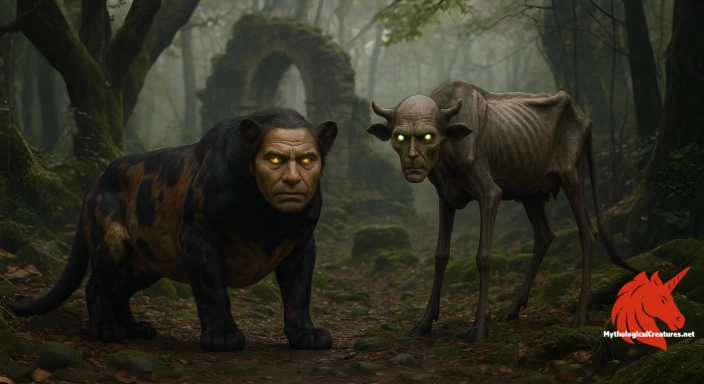
Dare to Meet the Bicorn and Chichevache....
Curated by the Mythological Creatures Team
Series editor: Mythological Creatures Directory
Primary desk: Hellenic & Ancient Mediterranean Desk
(rev. November 2025)