
Prosymna: Prosymna is an Argive naiad from Greek mythology, celebrated for her role as one of the nurses of the goddess Hera.

Prosymna
Prosymna - Prosymna is revered as one of the nurturing naiad daughters who cared for the goddess Hera. Her legacy is immortalized in the naming of the town of Prosymna.
the legend in five swipes.
the legend in five swipes.
Prosymna: Origins and First Sightings
Prosymna emerges in Greek mythology as a luminous naiad whose very essence is intertwined with the life-giving waters of Argos. Born as one of the celebrated daughters of the river-god Asterion, she occupies a cherished place among the divine figures who nurtured the goddess Hera. Her myth is imbued with both spiritual significance and a natural elegance, reflecting a time when water and divinity were seen as inseparable forces. Bearing a name that translates to 'celebrate in song', her identity hints at an intrinsic connection with ritual, music, and the expressive arts. In these early traditions, such rites celebrated the boundless energy and beauty of the natural world. The local cults that revered her helped shape a unique narrative in which the forces of nature and the divine overlapped. Her familial association with Acraea and Euboea not only enriched her character but also expanded the scope of the naiads as custodians of life and beauty. The town of Prosymna, nestled beneath the sacred Heraion, stands as a geographical testament to her enduring influence. Over the centuries, her legend has been woven into the broader fabric of Greek myth, symbolising both the tenderness of care and the elemental power of water.
How many versions of the Prosymna story are there?
Ancient texts and local oral traditions offer tantalising fragments that reveal the multifaceted narrative of Prosymna. Various sources recount her origin as a daughter of Asterion, emphasising the potent connection between rivers and divine care. Many of these early references are found in archaic hymns and local ballads that, though sparse, suggest an enduring cultic admiration. In some versions of the myth, she is depicted not merely as a caretaker of Hera but also as an intermediary who bridges mortal realms and celestial wonders. The scattered scholia and poetic fragments highlight a broader interpretation where her very essence inspires rituals and seasonal celebrations. Some regional accounts elevate her status by portraying her as an embodiment of nature’s rhythmic and rejuvenative cycles. The narrative variants sometimes blend her story with those of her sisters, lending a complex family dynamic to the lore of Argive naiads. In all, these primary sources form a mosaic of religious sentiment and local reverence that underscores her nurturing role. The diversity of accounts testifies to both the adaptability and the compelling allure of her myth within the ancient Greek tradition.
How would you recognise Prosymna?
Artistic depictions of Prosymna consistently capture an ethereal beauty that reflects the sparkling clarity of water. Her form is rendered with delicate, harmonious features that exude both softness and a quiet strength. Ancient vase paintings and sculptures often illustrate her with flowing, lustrous hair and tranquil eyes that mirror the reflective surface of quiet streams. She is frequently portrayed adorned in diaphanous robes that seem to shimmer like the surface of a sunlit river, underscoring her divine origin. Some artworks emphasise subtle details such as a crown woven from river reeds or garlands of water-born blossoms. The aesthetic essence of her portrayal is imbued with the symbolism of both regeneration and celebration, inviting viewers to contemplate the mystery of nature. Variations in her representation sometimes highlight a more dynamic pose, as if she were in mid-dance with the currents. Every visual interpretation delicately balances the notions of fragility and latent power inherent in her myth. The cumulative effect of these depictions creates a timeless image of divine femininity and natural splendour.
Prosymna: One Legend, Many Local Versions
Local traditions have played a significant role in shaping the multifaceted image of Prosymna, with interpretations that vary across different regions of Greece. In the Argolic heartland, she is venerated not only as a gentle nymph but also as a symbol of life-giving fertility and the cyclical rhythms of nature. Regional folklore often casts her as a protector of the land, imbuing her with a more earthy, robust character in line with local agrarian values. In certain coastal and inland communities, her association with water is further enhanced by linking her to the vital rains and seasonal growth. This localised pantheon of beliefs has sometimes elevated her stature, making her a central figure in festivals dedicated to water and harvest. The integration of her myth with local geographic landmarks, especially areas surrounding the Heraion, further cements her as a regional beacon of divine care. Artists and storytellers across different communities have adapted her image, reflecting nuances that speak to the unique environmental and cultural conditions of their locales. These varied portrayals underscore the adaptability of her myth, infused with regional spirit and collective memory. Local reverence for Prosymna remains an enduring thread in the tapestry of Greek myth, demonstrating the seamless blend of nature, divinity, and human tradition.
Do other traditions know Prosymna by another name?
The story of Prosymna finds clear parallels within a wider tapestry of mythological figures who embody the nurturing power of water. Much like other naiads in the Greek pantheon, she captures a universal motif wherein water is both a sustaining and a transformative force. Her role as a nurse to Hera mirrors similar narratives in which divine beings are nurtured by figures associated with nature underlining an intrinsic connection between the mortal and the divine. Comparative traditions in Roman mythology and even in Celtic lore often depict water deities as custodians of fertility and beauty. This cross-cultural reflection suggests that the reverence for water as a life-giving element is a nearly ubiquitous theme in ancient belief systems. Her very name, meaning 'celebrate in song', resonates with other mythic figures celebrated through ritual and lyrical expression in diverse cultural contexts. Such similarities help illuminate the widespread symbolic use of water to represent both physical nourishment and spiritual renewal. Additionally, her story intersects with broader Indo-European mythic patterns that celebrate nature as both a sanctuary and a source of creative inspiration. In this way, Prosymna becomes a point of convergence for multiple cultural narratives that extol the harmonies of nature, care, and divine intervention.
How has the image of Prosymna evolved?
The evolution of Prosymna’s myth from its ancient origins to modern reinterpretations illustrates the enduring appeal of divine nymphs in cultural memory. Early accounts, in which she played a pivotal role as a nurturer of Hera, have gradually merged with broader themes of nature worship and environmental symbolism over time. In later periods, her image took on a more emblematic dimension, representing the sacred interplay between the natural and divine realms. Contemporary artists and writers have rediscovered her as both a muse and a symbol of ecological resilience. Modern cultural festivals and local commemorations in areas near the ancient Heraion continue to echo her legacy through ritual, song, and homage. This blending of ancient tradition and modern re-imagination reinforces her role as a timeless figure who bridges the realms of myth and environmental consciousness. The town bearing her name serves as a living reminder of her once-sacred and enduring presence. As scholarly interest in ancient mythology grows, Prosymna is often re-evaluated through the lens of modern issues such as sustainability and the interconnectivity of life. In every era, she remains a poignant reminder of the intimate link between humanity and the natural world, inspiring both reverence and creative expression.
Interesting Fact
The town of Prosymna, named after this naiad, highlights how geographical locations in ancient Greece were often intimately tied to the divine and mythological figures of the region.
Mythological Treasures
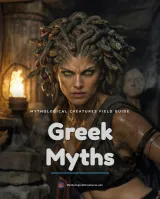
Greek Myths: A field guide to the monsters of ancient Greece
Every monster here earned its place in legend, and each gets a full page of artwork and the story behind it.
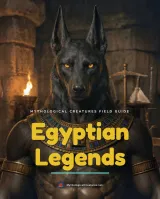
Egyptian Legends: A field guide to the gods and monsters of ancient Egypt
Guardians of the living and devourers of the dead, with the role each played in judgement.
Chinese Beasts: A field guide to the dragons and demon kings of Chinese myth
From river dragons to demon kings, with the legends that shaped five thousand years of storytelling.
the legend in five swipes.
Reach myth fans
Connect your myth-driven brand with this audience
Our readers are writers, educators, gamers, and collectors who care about mythology. Enquire about a limited sponsor placement on creature pages.
Enquire about sponsorshipQuick Creature Info
Origin:
Associations:
Our Mythic Legendary Rating:

Habitat:
Supernatural Powers:
Physical Attributes:
Abilities:
Behavior:
Weaknesses:
Lore:
References
Discover Another Mythical Legend You May Not Have Heard Of?
Uncover the mysteries of ancient folklore and expand your knowledge of legendary beings from cultures around the world.
Dare to Meet the Jengu....

The Mythological Creatures Book Series
Yōkai, Greek, Norse, Egyptian & Chinese. Five illustrated field guides to the creatures the old stories either warned or told you about.



Curated by the Mythological Creatures Team
Series editor: Mythological Creatures Directory
Primary desk: Hellenic & Ancient Mediterranean Desk
(rev. November 2025)