
Ro-langs: The ro-langs is a zombie-like reanimated corpse from Tibetan folklore, created by necromantic forces.
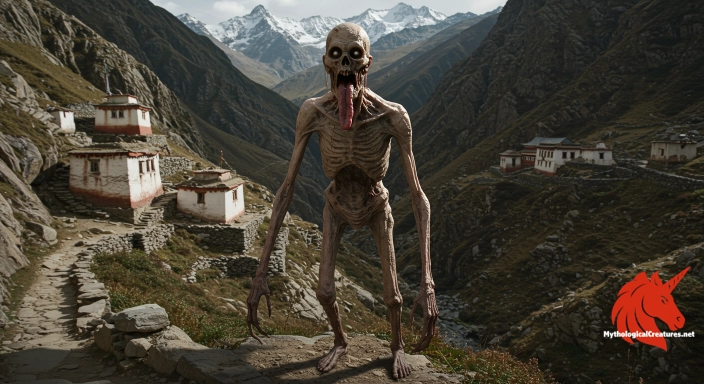
Ro-langs
Ro-langs - Represents the sinister reanimation of corpses and acts as a warning against the practice of necromancy in Tibetan culture.
the legend in five swipes.
the legend in five swipes.
How old is the legend of the Ro-langs?
The ro-langs stands as a haunting emblem within Tibetan folklore, representing the unnerving fusion of death and supernatural reanimation. Born from ancient beliefs that intertwine the realm of the living with that of spiritual forces, this creature is seen as an unnaturally revived corpse, a portent of desecrated boundaries. Its origins are deeply embedded in the folklore of Tibet, where the interplay of sorcery and spiritual transgression gives life to this eerie being. The earliest attestations of the ro-langs can be traced to oral traditions that warned communities of the dangers of tampering with life after death. Over time, this legend became a cautionary symbol against the misuse of necromantic powers and the invocation of malevolent spirits. The narrative of the ro-langs is imbued with a rich cultural context, reflecting the anxieties and spiritual philosophies of a society in close communion with the metaphysical world. Its story serves both as a moral lesson and as a gateway into the mystical dimensions of Tibetan thought. In the shadowed corridors of folklore, the ro-langs continues to captivate due to its blend of terror and moral ambiguity.
How many versions of the Ro-langs story are there?
Accounts of the ro-langs are preserved through a tapestry of oral narratives, ritual texts, and local legends that span across diverse Tibetan communities. The creature is referenced in both ancient chronicles and modern compilations of folk tales, often as a caution regarding the misuse of mystical practices. Although not widely documented in formalised historical texts, its tale persists in temple lore and community storytelling traditions. Variations of its narrative emerge from regions where local shamans and sorcerers were historically revered and feared. Many versions detail the creation of the ro-langs through the intervention of a gdon spirit or the malevolent incantations of a sorcerer. Some accounts suggest that the reanimation of the corpse is an accidental byproduct of ill-considered rituals meant to harness spiritual powers. The persistence of this myth in folklore reflects the dynamic way in which Tibetan communities have recorded and transmitted supernatural knowledge. In essence, the multifaceted sources of the ro-langs story provide a rich canvas that invites both historical investigation and imaginative reinterpretation.
Ro-langs: Size, Shape and Strange Features
Physically, the ro-langs is depicted as a ghastly, reanimated cadaver, marked by an unmistakable rigidity that betrays its unnatural state. Its body, once human, is now a vessel devoid of the instinctive warmth of life and remains locked in a fixed, eerie posture. The creature is notable for its inability to bend its joints, giving rise to a stiff-armed lurch that is as unsettling as it is distinctive. An abnormal gesture further differentiates it; the ro-langs signals its presence by continuously wagging its tongue in an almost deliberate, hypnotic motion. The visage of the ro-langs is often shrouded in decay, with pallid, lifeless skin and absent facial expressions that evoke a haunting emptiness. Its eyes, if present, rarely convey emotion, reinforcing the notion of a spirit stripped of vitality. This grotesque appearance not only terrifies its onlookers but also serves as a stark reminder of the precarious boundary between life and death in Tibetan belief. Detailed depictions of this creature often vary in size and form, yet the underlying physical traits remain a constant source of dread and fascination.
What do different regions call the Ro-langs?
Regional interpretations of the ro-langs have led to interesting variations in its depiction and the rituals associated with its appearance. In some areas of Tibet, practical measures such as the construction of low doorways highlight the tangible fear of these reanimated corpses. These architectural adaptations are a testimony to how deeply entrenched the legend is in local cultural practices. Variants of the lore emphasise different aspects of the creature’s genesis, with some traditions underscoring the role of malevolent sorcery while others focus on the inadvertent calling of a gdon spirit. Certain communities have developed unique practices and talismans designed to ward off the ro-langs, reflecting a blend of superstition and spiritual safeguarding. In more isolated regions, the creature is sometimes seen as a harbinger of misfortune, its appearance prompting elaborate rituals to cleanse a household or a community. The regional diversity in the ro-langs story mirrors the broader spectrum of Tibetan mystical thought, where local customs interact with pan-Tibetan beliefs. Ultimately, these local adaptations and interpretations enrich the legend, ensuring its survival across generations and vast landscapes.
Ro-langs: Related Figures Across Cultures
The motif of a reanimated corpse seen in the ro-langs shares striking similarities with other undead figures found in global mythology, creating a bridge between disparate cultural narratives. Much like the draugr of Norse tradition or the revenants heard of in European folklore, the ro-langs embodies the terror of life coming back from the dead. Its rigid movement and eerie mannerisms resonate with the slow, shambling walk of zombies confronted in modern horror. This parallel not only highlights universal human fears surrounding death and decay but also serves as a cultural dialogue that spans continents. In several traditions, the reanimation of the corpse is associated with unresolved issues, be they moral or spiritual, and this thematic core is very much present in the ro-langs myth. The creature's inability to speak, paired with its communicative tongue wag, provides a distinct contrast to other undead figures who often display a more aggressive demeanour. Unlike some Western interpretations, which sometimes imbue their undead with remnants of humanity, the ro-langs is portrayed purely as a vessel of dread and supernatural consequence. Thus, the ro-langs invites comparative analysis, encouraging a broader understanding of how different cultures have symbolised the fear of death’s transgression.
Ro-langs in Modern Culture
Over the centuries, the depiction of the ro-langs has evolved, transitioning from a cautionary figure in oral lore to an icon in modern horror narratives. Its transformation in popular imagination is marked by a shift from ritualistic superstition to an emblem of eerie, cinematic terror. Contemporary portrayals often focus on the creature’s unsettling physicality and the mysterious aura that surrounds it, thus ensuring its continued fascination. Modern literature and film have appropriated the ro-langs imagery, reinterpreting its stiff, lurching movement as a metaphor for inescapable fate and the loss of control over one’s destiny. The essence of the ro-langs still carries the ancient message of respect for life and death, serving as a grim reminder of boundaries that should never be crossed. Yet, in the realm of fantasy and horror genres, it has become a symbol of enduring mystery and supernatural power. This evolution reflects a broader trend in the reinterpretation of mythological beings, where old legends are imbued with new meanings. Today, the legacy of the ro-langs persists not only within Tibet but also as part of a global narrative of undead mythos that continues to inspire and terrify audiences worldwide.
Interesting Fact
An intriguing aspect of the ro-langs is that its very physical limitations have directly influenced regional architectural designs, creating a living reminder of the folklore's impact on everyday life.
Mythological Treasures
Greek Myths: A field guide to the monsters of ancient Greece
Every monster here earned its place in legend, and each gets a full page of artwork and the story behind it.
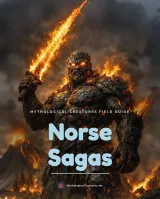
Norse Sagas: A field guide to the beasts of the Viking world
Drawn from the saga accounts themselves, with the powers, weaknesses and doom of each being set out.
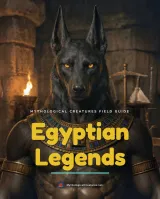
Egyptian Legends: A field guide to the gods and monsters of ancient Egypt
Guardians of the living and devourers of the dead, with the role each played in judgement.
the legend in five swipes.
For myth educators and toolmakers
Built a resource for mythology learners?
If you offer courses, teaching tools, or research platforms focused on myth and folklore, consider a discrete placement on our reference pages.
Introduce your resourceQuick Creature Info
Origin:
Features:
Our Mythic Legendary Rating:

Habitat:
Supernatural Powers:
Physical Attributes:
Abilities:
Behavior:
Weaknesses:
Lore:
References
Discover Another Mythical Legend You May Not Have Heard Of?
Uncover the mysteries of ancient folklore and expand your knowledge of legendary beings from cultures around the world.
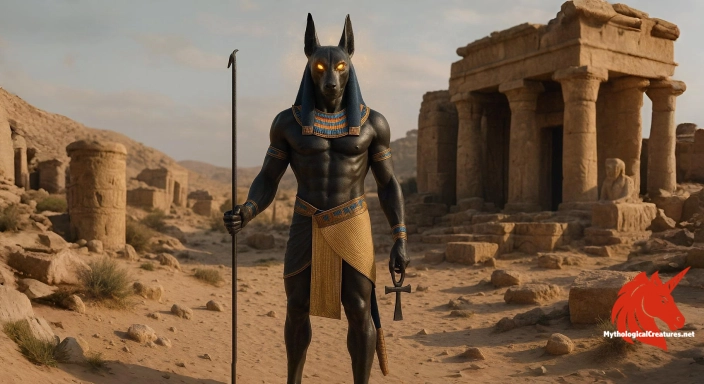
Dare to Meet the Anubis....
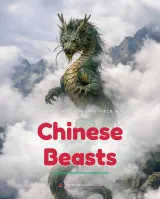
The Mythological Creatures Book Series
Yokai, Greek, Norse, Egyptian & Chinese. Five illustrated field guides to the creatures the old stories either warned or told you about.
Curated by the Mythological Creatures Team
Series editor: Mythological Creatures Directory
Primary desk: Asian & Pacific Myth Cycles Desk
(rev. November 2025)