
Sasabonsam: The Sasabonsam is a vampire-like folkloric being from Akan mythology known for its iron teeth, iron hooks, and enormous bat-like wings.

Sasabonsam
Sasabonsam - Embodies the fears of forest wanderers and enforces the sacred rules of renewal in West African forests.
the legend in five swipes.
the legend in five swipes.
What culture created the Sasabonsam?
The Sasabonsam is a striking entity embedded in the folklore of the Akan people of West Africa, renowned for its eerie presence among the forest canopies. Born from the rich tapestry of oral traditions in southern Ghana, its legend has travelled far beyond its origins. Emerging in narratives as both a vampire-like predator and an ogre-like guardian, the creature has long captured the imagination of communities living near the wild. It is known by the alternate name Asanbosam, a variation that reflects regional linguistic and cultural nuances. Its depiction is intertwined with the belief in nature’s power, whereby the Sasabonsam enforces mystical rules born out of the sanctity of the forest. Over time, these stories have travelled to other regions, including the Caribbean, particularly 18th century Jamaica where enslaved Akan people carried the myth with them. The creature’s mythic role underscores themes of retribution and natural balance, serving as a living reminder of the boundaries between civilization and untamed nature. Its enduring presence in folklore offers insight into ancient perceptions of the wild and the supernatural, and it remains a potent symbol of humanity’s fraught relationship with the natural world.
What do the old texts say about the Sasabonsam?
The primary sources of the Sasabonsam myth are rooted in the rich oral traditions of the Akan people, where storytellers have preserved its legend over generations. Diverse narratives, passed down through community gatherings and ritualistic performances, present a range of interpretations from guardian spirit to a menacing predator. Early ethnographic records and travellers’ accounts further attest to its prominence in local lore, revealing layers of meaning that vary by region. Written records from the colonial era, though fragmentary, contribute additional detail to its story, often complementing the oral traditions. The figure’s handsomeness in art is exemplified by a wood carving dating from the early twentieth century, now housed in The British Museum, which serves as a tangible piece of its mythological legacy. Story variants often diverge on details such as its physical form and behavioural motifs, underlining the fluidity of its character in different contexts. Some accounts lend a moral dimension to the creature’s actions, portraying it as an enforcer of the sacred rules of the forest, while others emphasise its predatory nature. These layered sources collectively forge a robust and multifaceted image of the Sasabonsam that continues to evolve as it is retold in new cultural contexts.
The Appearance and Powers of the Sasabonsam
The physical form of the Sasabonsam is a dramatic blend of human and monstrous elements, crafted by centuries of storytelling. It is often depicted as a humanoid figure with pink skin, an unusual hue that sets it apart from ordinary human appearances. Notably, the creature is said to possess iron teeth that gleam with a cold, unyielding brightness, adding to its intimidating visage. A cascade of long, red hair is frequently mentioned, imbuing the creature with a wild, untamed look that echoes the frenzy of the forest. Bat-like attributes, such as wings that span nearly 20 feet, further enhance its spectral presence, suggesting an ability to launch devastating aerial assaults. In some descriptions, its limbs are elongated and sinewy, ending in feet that resemble iron hooks or even possessing an unnatural duality in their direction. The eyes are often detailed as large and bloodshot, offering an unsettling glance that pierces the darkness. Every aspect of its appearance—from the glimmer of its metallic teeth to the imposing sweep of its wings—contributes to the portrayal of a being that is as formidable as it is mysterious.
Where was the Sasabonsam best known?
The legend of the Sasabonsam is primarily nurtured within the Akan communities of southern Ghana, yet its influence gracefully extends into neighbouring regions such as Côte d'Ivoire and Togo. In these areas, variations of the myth incorporate local artistic and symbolic traditions, resulting in unique adaptations of its character. For instance, while some communities focus on its fearsome reputation as a forest predator, others view it as an arbiter enforcing the natural laws intrinsic to the environment. In Jamaica, where stories of the Sasabonsam amalgamated with the lived experiences of enslaved Akan people, the creature took on additional layers of meaning reflective of displacement and cultural preservation. Such regional adaptations have allowed the creature to evolve, with details like the texture of its hair or the shape of its limbs differing subtly from one community to another. These variations often mirror the local environment, as the creature’s arboreal habitat is reimagined to suit different forest landscapes. In every retelling, the Sasabonsam remains a potent symbol of nature's unpredictable power, whether as a solitary menace or a mythic guardian. This regional diversity highlights the flexibility of oral traditions and the way in which local histories can enrich a shared mythological heritage.
Sasabonsam: Counterparts Around the World
The Sasabonsam stands alongside a host of other mythological creatures that straddle the line between the human and the supernatural, drawing intriguing parallels with figures from diverse cultural traditions. Its vampiric elements evoke comparisons with European legends of night-haunting creatures, yet its origins are deeply embedded in the African forest milieu. Much like the Impundulu of South African lore—an avian vampire that terrorises communities—the Sasabonsam blends animalistic features with a humanoid presence to evoke fear and awe. Its role as both enforcer of supernatural law and a menacing predator resonates with similar figures such as the Japanese Tengu, where nature and spirituality collide in a single, formidable entity. European ogres and other monstrous beings also share the creature’s intimidating physicality and ambiguous moral presence, reinforcing its place within a broader comparative mythology. Despite these parallels, the Sasabonsam retains distinctive traits—its iron teeth, expansive wings, and arboreal haunts—that firmly root it in West African cultural contexts. These similarities and differences offer a fascinating glimpse into the universal human impulse to embody nature’s dual capacity for nurture and destruction. Ultimately, the creature’s narrative serves as a bridge between disparate mythological traditions, underscoring a shared global fascination with the forces that lurk at the edges of human experience.
How has the Sasabonsam changed over time?
Across centuries, the image of the Sasabonsam has metamorphosed from an elusive figure of rural folklore to an emblematic symbol in contemporary myth-making. Traditionally conveyed through oral tradition, its narrative once served both as a cautionary tale and as a means of preserving sacred ecological practices. With the advent of colonial documentation and museum collections, such as the notable wood carving in The British Museum, its depiction has been immortalised in tangible art forms. Modern reinterpretations have seen the Sasabonsam emerge in literature, film, and visual arts, where its fearsome visage is often reimagined in innovative ways. Contemporary artists frequently invoke the creature as a metaphor for nature’s untameable spirit and as a reminder of the animistic beliefs that underpin indigenous worldviews. In academic and popular discourse alike, the Sasabonsam has come to represent the broader struggles between civilisation and the wild, echoing themes of environmental degradation and cultural resilience. Its legacy is further reinforced through cultural festivals and local storytelling sessions that celebrate ancestral traditions. As a result, the Sasabonsam continues to inhabit both the historical and modern imaginations, serving as a potent symbol of the enduring power of myth. Today, its narrative remains a dynamic and evolving part of global folklore, engaging new generations in a dialogue about the mysteries of the natural world.
Interesting Fact
The British Museum holds a 1935 wooden carving of the Sasabonsam, highlighting its cultural impact and artistic representation in West African folklore.
Mythological Treasures
Egyptian Legends: A field guide to the gods and monsters of ancient Egypt
Guardians of the living and devourers of the dead, with the role each played in judgement.
Chinese Beasts: A field guide to the dragons and demon kings of Chinese myth
From river dragons to demon kings, with the legends that shaped five thousand years of storytelling.
Japanese Yōkai: A field guide to the spirits and demons of Japanese folklore
Fifteen spirits, with the signs to watch for and what the old tales say to do if you meet one.
the legend in five swipes.
Limited sponsor opportunity
One slot, carefully chosen partners
We only feature a small number of relevant sponsors at any time. If you create serious myth content, we would like to hear from you.
Partner with usQuick Creature Info
Origin:
Our Mythic Legendary Rating:

Also Sometimes Known As:
Habitat:
Supernatural Powers:
Physical Attributes:
Abilities:
Behavior:
Lore:
References
Discover Another Mythical Legend You May Not Have Heard Of?
Uncover the mysteries of ancient folklore and expand your knowledge of legendary beings from cultures around the world.
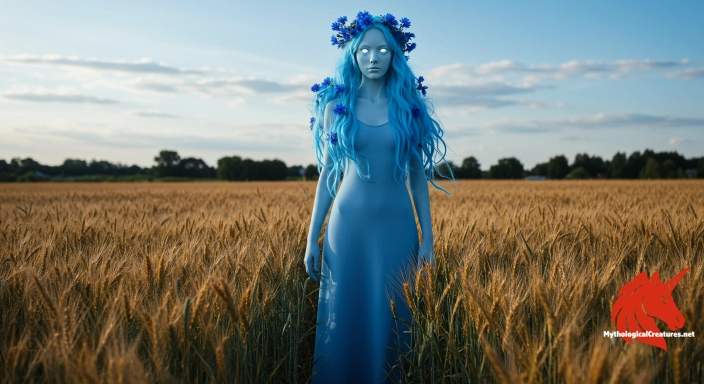
Dare to Meet the Cornflower Wraith....
The Mythological Creatures Book Series
Yōkai, Greek, Norse, Egyptian & Chinese. Five illustrated field guides to the creatures the old stories either warned or told you about.

Curated by the Mythological Creatures Team
Series editor: Mythological Creatures Directory
Primary desk: African & Diaspora Traditions Desk
(rev. November 2025)