
Selene: Selene is the ancient Greek goddess and personification of the Moon.

Selene
Selene - Selene is a central lunar deity whose myths influence not only Greek religious practices but also later associations with Artemis, Hecate, and the Roman goddess Luna.
Origins & First Encounters
Selene emerges as a luminous figure in ancient Greek myth, celebrated as the divine personification of the Moon. Born of the Titan pair Hyperion and Theia, her celestial origins granted her a revered position within the pantheon, intertwining her fate with that of her equally illustrious siblings. Her presence in early mythic texts intimates a deep connection between the rhythms of the lunar cycle and the order of the cosmos. Often depicted as traversing the night sky in a radiant chariot, she symbolises the eternal dance of light and shadow. The goddess embodies themes of change, mystery, and renewal, reflected in the ever-transforming phases of the Moon. Her narrative was not only closely linked to celestial observations but also to human experiences of time and cyclical renewal. Over centuries, her myth adapted to reflect broader cultural practices and the spiritual quests of diverse communities. Artistic and poetic traditions have perpetuated her image as both a celestial wanderer and a powerful symbol of the night. As a central figure in ancient religious observances, Selene continues to inspire modern interpretations and creative endeavours.
Source Texts & Tale Variants
The ancient literary corpus offers multiple, albeit fragmented, accounts of Selene’s myth that reveal the complexities of her character. Varied texts present her both as an autonomous deity of the Moon and as a figure intertwined with the lives of other gods, including Zeus, Pan, and the mortal Endymion. In some narrative strands, her love for Endymion is recounted with an emphasis on the bittersweet nature of transient human existence contrasted with eternal divinity. Early poetic sources and later allegorical retellings contributed to a rich tapestry of interpretations that highlight her versatility in myth. Ancient vases, sculptures, and temple reliefs further illuminate her mythic persona by depicting her in luminous attire and riding a celestial chariot. The mention of her alternative name, Mene, underscores a tradition of multiplicity in her identity, which scholars have long debated. Some variants even conflate her iconography with that of other nocturnal deities, blurring the boundaries between distinct celestial forces. Oral traditions and regional cultic practices further diversified her story, thereby enriching the myth with local colour and ritualistic significance. The legacy of these early sources continues to inform modern reconstructions, inviting new perspectives on her timeless allure.
Form & Powers
Classical depictions of Selene reveal a goddess whose appearance is awash with the soft, ethereal glow of moonlight. Her complexion is often rendered as luminous and almost translucent, echoing the silvery sheen of the night sky. Delicate, refined features give her an expression that is both serene and enigmatic, capturing the mysterious essence of the lunar realm. Artists frequently adorn her with a crescent diadem or tiara, a motif that symbolises the cyclical phases of the Moon and her dominion over it. Her flowing hair, sometimes portrayed as soft waves cascading around her shoulders, mirrors the gentle luminosity of lunar beams. Intricate robes, embellished with star motifs and heavenly patterns, further accentuate her otherworldly charm and divine stature. Depictions of her chariot, drawn by radiant steeds or bulls, add a dynamic element that emphasises her active role in the celestial journey. Variations in her portrayal reveal subtle differences in physique and grace, with some images presenting her as delicately poised, while others endow her with a more commanding presence. Her overall physical embodiment blends the delicate aspects of mortal beauty with the transcendent radiance of a celestial being.
Regional Faces
Across the ancient Greek world and beyond, the veneration of Selene was adapted to reflect local cultural nuances and ritualistic practices. In various regions, the mythology surrounding her was interwoven with indigenous lunar deities, thus tailoring her legend to local spiritual and agricultural cycles. In communities scattered throughout the Greek mainland and the islands, local festivals were dedicated to the Moon, often elevating Selene as a nurturing and cyclical force. Along the eastern fringes of the ancient world, her figure was sometimes merged with regional divinities, resulting in hybrid forms that maintained her luminous essence while assimilating local iconographic elements. In the Roman context, she was reimagined as Luna, a transformation that not only preserved her core attributes but also adapted her myth to Roman religious sensibilities. These regional adaptations often reflected local interpretations of cosmic order, life cycles, and natural phenomena, allowing her myth to serve diverse societal needs. Rural traditions occasionally highlighted her as a protector of harvest and time, further cementing her status in communal rites. Small communities and urban centres alike celebrated her through distinct rituals, each imbuing her narrative with local colour and symbolic meaning. This regional diversity underscores the universal appeal of lunar symbolism and the capacity of her myth to evolve in response to cultural shifts.
Cultural Parallels
When examined alongside similarly themed deities from other traditions, Selene’s narrative shares remarkable parallels with a host of lunar figures across the mythological spectrum. Her role as the personification of the Moon finds echoes in the Roman Luna, whose image resonates with similar themes of cyclical change and nocturnal mystique. In Greek tradition, her narrative is often juxtaposed with that of Artemis, who, despite her identity as a huntress, embodies moon-like qualities and a deep connection with the wilderness. Across Eastern traditions, figures such as the Chinese goddess Chang'e highlight a common human fascination with the ethereal beauty of the Moon, albeit articulated through entirely distinct cultural lenses. Comparisons may also be drawn with deities like the Sumerian Sin, whose lunar correspondences underline the omnipresence of celestial worship in early civilisation. These cross-cultural intersections reveal a shared reverence for the Moon as a symbol of transformation, mystery, and enduring influence. Each of these deities, while rooted in their particular cultural practices, undertakes a role that transcends mere astronomy to touch on vital aspects of human existence and natural order. The overlapping motifs within their stories illustrate how various cultures have sought to understand and venerate the same celestial phenomenon. In this way, Selene’s mythic portrayal stands as part of a broader, interconnected tapestry of lunar symbolism that spans continents and epochs.
Legacy & Modern Evolution
The evolution of Selene’s imagery from antiquity to modern times reflects a fascinating interplay between tradition, art, and cultural reinterpretation. Over the centuries, her figure has been reshaped through the lenses of Hellenistic, Renaissance, and contemporary artistic expressions that often reinterpret her myth in light of new cultural contexts. In many later traditions, she was merged with other lunar goddesses such as Artemis or Hecate, creating a composite figure that encapsulates varied aspects of lunar lore. Modern literature, poetry, and visual art frequently invoke her image as a symbol of mystery, feminine strength, and cosmic beauty. Contemporary interpretations sometimes explore themes of transformation and renewal, echoing the natural cycle of the Moon that once inspired ancient rites. Her myth has permeated modern pop culture, influencing diverse media ranging from fantasy novels to visual installations in art galleries. Philosophers and romantic poets alike have drawn upon her enigmatic allure to muse on the interplay between light and shadow in both the cosmos and the human spirit. With ongoing scholarly interest and creative reinterpretation, Selene’s legacy as a celestial icon continues to flourish in an ever-changing cultural landscape. Her enduring influence remains a testament to the power of myth to continually evolve, inspiring awe and introspection across generations.
Interesting Fact
An intriguing aspect of Selene is that despite her quintessential association with the calm, reflective aspects of the night, her myth is imbued with passionate love affairs and dynamic celestial symbolism, highlighting the complex interplay between vulnerability and divinity in ancient Greek culture.
Partner with Mythological Creatures
Bring your myth-based world into ours
From game settings to narrative worlds, we work with partners who treat myths with care. Share your project for a potential sponsor slot.
Partner with usQuick Creature Info
Origin:
Associations:
Our Mythic Legendary Rating:

Also Sometimes Known As:
Habitat:
Supernatural Powers:
Physical Attributes:
Abilities:
Behavior:
Lore:
References
Discover Another Mythical Legend You May Not Have Heard Of?
Uncover the mysteries of ancient folklore and expand your knowledge of legendary beings from cultures around the world.
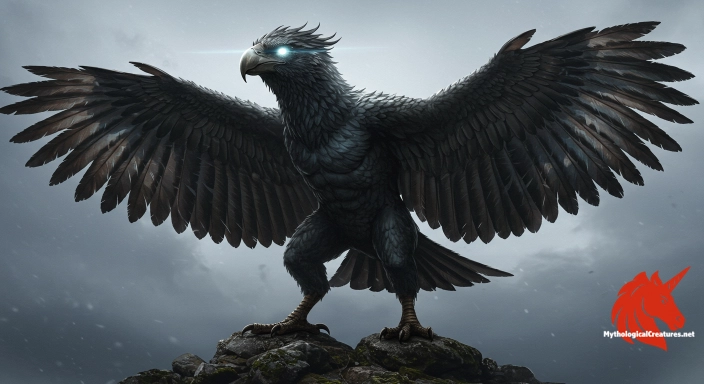
Dare to Meet the Pouākai....
Curated by the Mythological Creatures Team
Series editor: Mythological Creatures Directory
Primary desk: Hellenic & Ancient Mediterranean Desk
(rev. November 2025)