
Türst: TÜRst is a legendary folkloric huntsman from the pre-Christian agricultural communities of Lucerne.
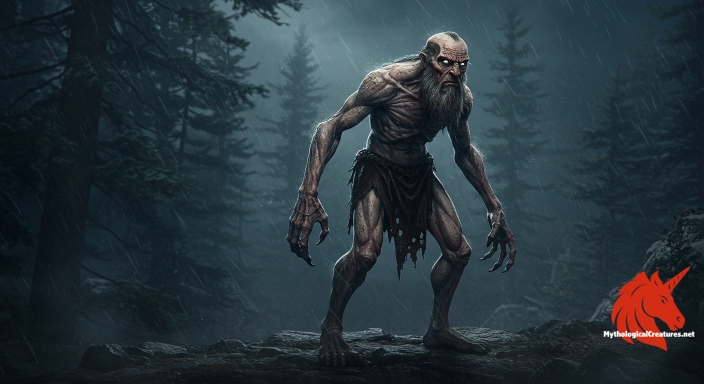
Türst
Türst - TÜRst serves as a warning figure whose horn blasts during stormy weather herald impending misfortune or change.
the legend in five swipes.
the legend in five swipes.
Where does Türst come from?
A striking embodiment of ancient agrarian myth from the heart of Lucerne, Türst emerges as a figure both enigmatic and fearsome. Believed to have roots in the pre-Christian era, his legend intricately interlaces the rhythms of nature with human reverence and trepidation. The agricultural communities of Lucerne have nurtured a multifaceted narrative around him, imbuing his presence with qualities that are both protective and ominous. His character, renowned as the dread huntsman, reflects an age-old interplay between mankind’s dependence on the earth and the unpredictable forces that govern the seasons. In the tempestuous months ahead of Epiphany, his appearance is seen as a portent, as his horn pierces the stormy air, calling forth the wild and the mysterious. Villagers, attuned to the signs of the natural world, recognise his eerie call as a marker of impending atmospheric unrest. His myth stands as a testament to the deep, almost sacred connection between rural life and the volatile moods of nature. In every retelling, Türst embodies the tension between human civilisation and the untamed, ever-changing natural realm.
Which versions of the Türst story survive?
The scattered remnants of ancient lore offer the earliest glimpses into the legend of Türst, preserved primarily through oral tradition. Generations of farming communities have passed down his story, each retelling adding layers of complexity to his character. Manuscripts and local ballads, though few in number, hint at ritualistic depictions where his presence served as both warning and wonder. Folk art, including carvings and village iconography, provides visual echoes of his spectral image, suggesting an enduring pre-Christian heritage. Variants of the myth describe him with an unmistakable tone of dread, especially noting the resonant call of his horn and the peculiar company of three-legged hounds. Some narratives emphasise his role as a solitary figure emerging during violent storms, while others weave his presence into the fabric of seasonal rites. Community-specific versions imbue him with traits reflective of local agricultural cycles and environmental challenges. Even as modern interpretations diversify, the core elements of his myth—ominous sound, eerie presence, and the heralding of natural change—remain remarkably consistent. In this way, the tapestry of sources underscores both the fragmentary and the enduring qualities of his legend.
Türst: Powers, Strengths and Vulnerabilities
Artistic renditions of Türst present him as a towering, shadowy figure whose imposing presence seems to merge with the very darkness of stormy nights. His face is rendered with weather-beaten features, evoking the relentless influence of time and the harsh elements of his mythic environment. Many images portray eyes that shine with an almost otherworldly intensity, suggesting awareness beyond mortal ken. The legendary hunting horn he carries is depicted with intricate carvings and a sense of ancient mystique, serving as a focal point in his ominous portrayal. Beside him, the three-legged hounds are illustrated in a manner that evokes both asymmetry and spectral charm, reinforcing the unsettling nature of his retinue. His garments, often shown as tattered and rugged, evoke a timeless quality that blurs the line between human and spirit. The overall physique of Türst is captured with elongated, fluid contours that suggest mobility and the eerie dissolution into mist and shadow. Each visual detail, from the curve of his horn to the uncanny gait of his canine companions, intensifies the sense that his very form is a physical manifestation of nature’s inexorable wildness.
Where was Türst best known?
Across the varied landscapes of Lucerne, the portrayal of Türst adapts fluidly to regional climates and local customs, reflecting the unique character of each community. In some countryside hamlets, his appearance is interwoven with the timing of harvest and seasonal rituals, where he takes on the dual role of both harbinger and guardian. In regions prone to violent storms, local storytellers accentuate his presence as an unmistakable prelude to nature’s fury. Certain areas elevate his status by integrating him into rites that symbolise the precarious balance between destruction and renewal in the natural world. Variations in his legend are also evident in the details of his horn call and the eerie attributes of his three-legged hounds, which local lore adjusts to reflect community-specific fears and hopes. In mountain villages, the myth is sometimes softened by associating his emergence with the cyclical promise of a fertile season following severe weather. Yet, in lowland agricultural districts, the focus often remains on his role as an ominous force, one that warns of the capriciousness of nature. These diverse regional adaptations ensure that Türst’s legend remains a vibrant and evolving tapestry, echoing the distinct cultural and environmental imprints of each community.
The Global Cousins of Türst
Türst’s myth finds a compelling resonance with the pan-European motif of spectral huntsmen, a theme that has captivated diverse cultures throughout the continent. His role bears a strong resemblance to figures such as Herne the Hunter, where an ominous leader accompanied by ghostly hounds traverses the landscapes of myth and memory. Across various traditions, the sound of a horn heralding a supernatural hunt emerges as a common element, linking Türst to widespread fears and fascinations with the unknown. Similar narratives in Northern and Central European lore often portray a wild cavalcade that symbolizes the unpredictable forces of both nature and fate. The distinctive detail of his three-legged hounds invites comparisons with other uncanny canine figures in Celtic and Germanic myths, enriching the symbolic landscape of these legends. While each regional narrative offers its own nuances, the central theme of a spectral hunt remains a unifying thread among them. Such cross-cultural echoes illustrate how ancient communities endeavoured to personify the wild, untamed aspects of nature in iconic forms. The enduring imagery of a horn-blowing, ghostly huntsman underscores a shared human desire to comprehend and mythologise natural phenomena. In this light, Türst not only represents a local spirit but also stands as a vital link in the broader chain of European mythic traditions.
How has Türst changed over time?
The evolution of Türst’s legend over the centuries illustrates a fascinating journey from ancient agrarian beliefs to a celebrated element of modern folklore. His early depictions, steeped in pre-Christian ritual and the raw forces of nature, gradually gave way to interpretations that imbued his image with symbolic resonance for later generations. Over time, his role as a harbinger of storms and supernatural events has expanded to encompass themes of cyclical change, decay, and renewal. Contemporary portrayals blend traditional imagery with modern artistic sensibilities, ensuring his spectral figure remains relevant even amidst urbanisation. Local festivals and cultural events in Lucerne frequently invoke his myth, using his story to comment upon the enduring interplay between humanity and the natural world. Modern artistic expressions, from literature to visual art, find in his character a rich source of metaphor for both environmental unpredictability and the passage of time. As communities continue to reinterpret his tale, Türst’s image adapts to reflect contemporary concerns while preserving its eerie, timeless quality. His legacy serves as a potent reminder of how myth can encapsulate both ancient wisdom and modern existential reflection. Through these evolving narratives, the legend of Türst persists as a bridge connecting past agricultural traditions with today’s cultural explorations of nature’s mysteries.
Interesting Fact
An intriguing detail of TÜRst's legend is the unique portrayal of his three‐legged hunting dogs, a motif that distinguishes him from other spectral huntsmen in folklore.
Mythological Treasures
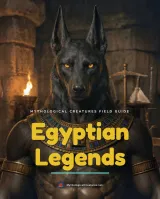
Egyptian Legends: A field guide to the gods and monsters of ancient Egypt
Guardians of the living and devourers of the dead, with the role each played in judgement.
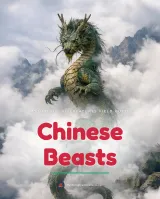
Chinese Beasts: A field guide to the dragons and demon kings of Chinese myth
From river dragons to demon kings, with the legends that shaped five thousand years of storytelling.
Japanese Yōkai: A field guide to the spirits and demons of Japanese folklore
Fifteen spirits, with the signs to watch for and what the old tales say to do if you meet one.
the legend in five swipes.
For authors, artists, and makers
Created something from the realm of myth?
If your book, deck, game, or artwork draws from legendary creatures and lore, you can showcase it here in a tasteful, year-round placement.
Share your projectQuick Creature Info
Features:
Associations:
Our Mythic Legendary Rating:

Habitat:
Supernatural Powers:
Physical Attributes:
Abilities:
Behavior:
Lore:
Related Creatures, Tales or Lore
- HHerne the Hunter
- WWodan
- CCernunnos
References
Discover Another Mythical Legend You May Not Have Heard Of?
Uncover the mysteries of ancient folklore and expand your knowledge of legendary beings from cultures around the world.
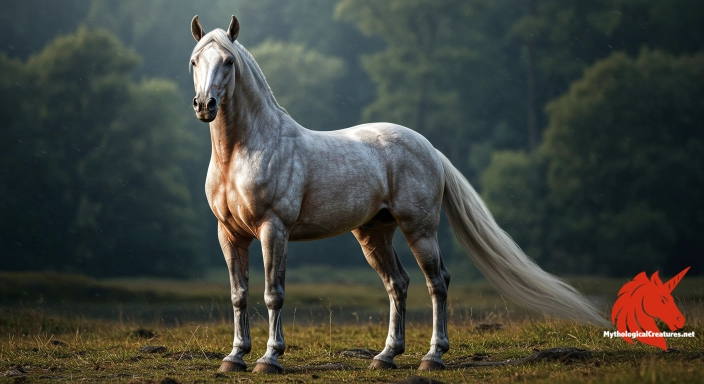
Dare to Meet the Falhófnir....
The Mythological Creatures Book Series
Yōkai, Greek, Norse, Egyptian & Chinese. Five illustrated field guides to the creatures the old stories either warned or told you about.

Curated by the Mythological Creatures Team
Series editor: Mythological Creatures Directory
Primary desk: Northern & European Folklore Desk
(rev. November 2025)