
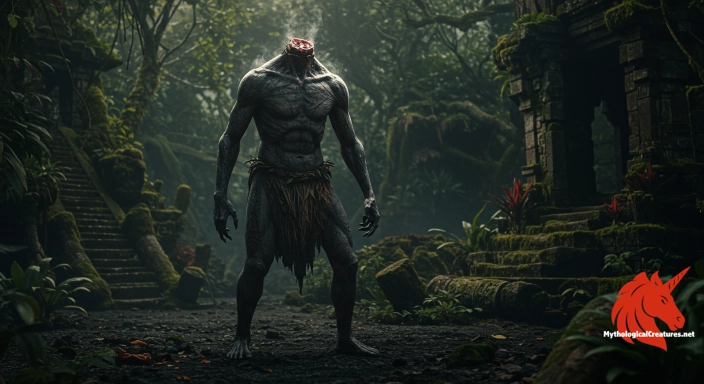
Ulupoka: Ulupoka is a Polynesian god of evil and demons, renowned for his defiant, decapitated form that refuses to succumb to death.
Ulupoka
Ulupoka - Ulupoka embodies the persistence of malevolence and divine retribution; his decapitated, wandering form serves as a powerful symbol of inescapable curse and misfortune in Polynesian lore.
the legend in five swipes.
the legend in five swipes.
Where does the story of Ulupoka begin?
Ulupoka emerges from the rich tapestry of Polynesian mythology as an enigmatic embodiment of divine malevolence and cosmic imbalance. His origins are deeply rooted in ancient oral traditions where the interplay of light and shadow among deities shaped the natural order of the universe. Early attestations of his tale recount a fabled celestial conflict, during which his very essence was challenged by the might of his divine peers. This narrative, preserved through generations, reveals a figure whose fate was marked by dismemberment yet continued to influence the mortal realm.
The legend of his decapitation and subsequent survival underscores a profound symbolism—a reminder that even in the absence of a complete form, the force of evil endures. The myth captures an essential aspect of Polynesian cosmology, where every act, even one of profound destruction, contributes to the equilibrium of the cosmos. Ulupoka’s wandering spirit not only disrupts the natural order but also serves as an archetypal warning against the hubris of the gods. His enduring legacy reflects the cultural belief that the forces of darkness, though subdued, remain ever-present and capable of igniting chaos.
Ulupoka: Manuscripts, Texts and Variants
Ancient oral traditions serve as the principal reservoir of Ulupoka’s narrative, with the legend passed on through generations in the form of songs, ritual recitations, and symbolic carvings. Early accounts, though varied in detail, commonly describe a pivotal battle among the gods which culminated in his beheading—a cataclysmic moment that has since been immortalised in folklore. Indigenous scribes and early explorers documented these stories, contributing to diverse textual and pictorial sources that offer fragmented windows into his mythic past. Some renditions focus on the dramatic concealment of his severed head as an act of divine retribution while others emphasise the cursed wandering of his body.
Alternate story variants highlight the dual nature of his divinity—where the preserved head symbolises latent power while the abandoned body spreads misfortune across the lands. Variations from different island communities introduce nuances, with some traditions attributing natural disasters and plagues to his influence. The convergence of these narratives illustrates a fluid mythological tradition that adapts to local contexts and experiences. Consequently, the multi-faceted sources of his legend not only enrich our understanding of Ulupoka but also attest to the dynamism inherent in Polynesian myth-making.
Ulupoka: What Manner of Being?
Depictions of Ulupoka’s physical form evoke an aura of eerie beauty mingled with a disquieting sense of decay. His visage is often portrayed with a pallor that casts a spectral glow, suggesting a being torn between divine splendour and the marks of a cursed existence. The violent act of his beheading is said to have left his neck and shoulders scarred with ethereal remnants of lost power, serving as a constant reminder of his fall from grace. His eyes, imbued with a haunting luminescence, seem to mirror the ancient sorrow and relentless mischief embodied within his spirit.
Detailed artistic renditions sometimes reveal intricate tattoos and markings across his figure, each symbol recounting elements of his tumultuous past. In some traditions, his physique is described as deceptively lean while in others, he appears unnaturally towering, capturing the paradox of diminished form and undiminished power. The interplay of light and shadow in these descriptions highlights a body that is in perpetual motion—both corporeal and spectral. Such rich and varied details ensure that Ulupoka’s image remains both a mystery and a mirror reflecting the complexities of divine conflict.
What do different regions call Ulupoka?
The myth of Ulupoka is refracted differently across the various islands of Polynesia, each region adapting his tale to its own cultural and environmental context. In some island traditions, he is revered as a warning entity whose wandering body portends misfortune and natural calamities. Certain local legends intertwine his narrative with seasonal cycles and natural phenomena, attributing the ebb and flow of life to his cursed presence. For communities in islands such as Samoa and Fiji, his story is recited as part of rituals aimed at appeasing the forces of darkness and restoring balance.
In contrast, other regions present him as a tragic figure, whose dismemberment symbolises the irreversible consequences of divine discord. Tahitian accounts, for instance, focus on the mystique of his hidden head, often embedding the motif in ceremonial quests and secret lore. This regional divergence underscores a shared cultural understanding that while the essence of the myth remains constant, its manifestations are as varied as the local landscapes. Ultimately, these adaptations serve as cultural reflections—each telling a unique story of the interplay between human vulnerability and otherworldly power.
Ulupoka: Related Figures Across Cultures
The narrative of Ulupoka finds intriguing parallels in other mythological traditions where themes of dismemberment and eternal wandering are common motifs. His decapitation and survival echo severance myths found across Mediterranean and Near Eastern lore, where the separation of power from physical form creates a lingering force of destruction. Similar to various trickster or outcast deities in global mythologies, his fragmented existence challenges the binary of life and death, order and chaos. This recurrence of motifs underscores a universal fascination with the idea that the divine—and its discontents—cannot be easily contained or nullified.
Comparative analysis reveals that figures bearing the weight of permanent scar and wandering existence are often central to narratives exploring the dual aspects of creation and annihilation. Across cultures, these narratives serve to remind humanity of the perpetual struggle between benevolent forces and the seeds of strife. In many traditions, such as certain Norse tales or Mesoamerican legends, the image of a severed head or a fragmented body embodies the unresolved tension between cosmic order and entropy. Such cross-cultural resonances affirm that Ulupoka is not merely a local demon but a manifestation of a widely recognised mythic archetype that challenges the limits of divine integrity.
Ulupoka: Then and Now
Over the centuries, the tale of Ulupoka has evolved beyond its original depiction as a straightforward deity of evil into a layered symbol of cosmic imbalance and the resilience of malevolent forces. The transformation of his myth—from oral recitations around communal fires to elaborate carvings and modern reinterpretations—illustrates its enduring power. In earlier times, his story served as a dire warning against the disruption of harmony, while in the modern era it often represents the unpredictable aftermath of divine transgression. His wandering, dismembered form has come to embody not only calamity but also the persistent nature of unaddressed discord in both the natural and social worlds.
Contemporary creators have embraced his legacy, reimagining him in literature, film, and visual arts as a symbol of both tragic inevitability and resistance to total annihilation. This shift in interpretation speaks to a broader cultural fascination with deities who defy simple classification as either good or evil. Modern reinterpretations frequently draw on his visual and thematic motifs to explore themes of decay, transformation, and renewal in a rapidly changing world. As such, Ulupoka’s myth continues to resonate, serving as a timeless allegory for the enduring struggle between order and chaos.
Interesting Fact
Despite being decapitated by the very gods who sought to vanquish him, Ulupoka’s body endures, symbolizing a unique form of immortality and the unstoppable nature of malevolent power in Polynesian mythology.
Mythological Treasures
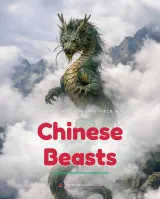
Chinese Beasts: A field guide to the dragons and demon kings of Chinese myth
From river dragons to demon kings, with the legends that shaped five thousand years of storytelling.
Japanese Yokai: A field guide to the spirits and demons of Japanese folklore
Fifteen spirits, with the signs to watch for and what the old tales say to do if you meet one.
Greek Myths: A field guide to the monsters of ancient Greece
Every monster here earned its place in legend, and each gets a full page of artwork and the story behind it.
the legend in five swipes.
Mythology commerce, done carefully
Align your store with our global myth audience
If you sell myth-inspired jewellery, prints, decks, or collectibles, we can feature your brand without overwhelming the reading experience.
Partner with usQuick Creature Info
Origin:
Associations:
Our Mythic Legendary Rating:

Habitat:
Supernatural Powers:
Physical Attributes:
Behavior:
Lore:
References
Discover Another Mythical Legend You May Not Have Heard Of?
Uncover the mysteries of ancient folklore and expand your knowledge of legendary beings from cultures around the world.
Dare to Meet the Pha Trelgen Changchup Sempa....
The Mythological Creatures Book Series
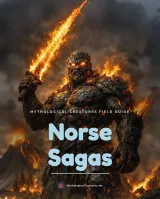
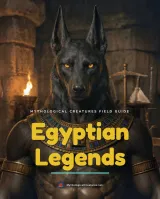
Yokai, Greek, Norse, Egyptian & Chinese. Five illustrated field guides to the creatures the old stories either warned or told you about.
Curated by the Mythological Creatures Team
Series editor: Mythological Creatures Directory
Primary desk: Asian & Pacific Myth Cycles Desk
(rev. November 2025)