
Ursitory: The Ursitory are a group of three fairy spirits from Balkanic and Romani folklore who determine a newborn's fate.
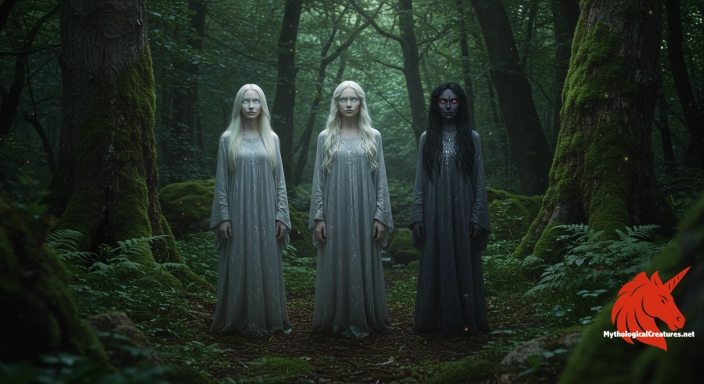
Ursitory
Ursitory - They hold significant cultural importance as arbiters of destiny, influencing the course of life from birth and reflecting the interplay of benevolence and malevolence in fate.
the legend in five swipes.
the legend in five swipes.
How old is the legend of the Ursitory?
The Ursitory are a fascinating group of three ethereal fairies rooted in Balkan and Romani folklore, whose enigmatic presence has intrigued generations. Their origins are woven into the fabric of ancient traditions, reflecting a deep belief in the powers of fate and destiny. They are known by a plethora of names such as Ursitori, Oursitori, Ursitele, and various other appellations, each echoing regional nuances and linguistic adaptations. Emerging notably in Romanian mythology, they are reputed to appear three nights after a child’s birth to shape the course of the infant’s life. Their involvement in critical rituals, including baptism, underscores their role not merely as mythic beings but as custodians of sacred rites. The duality in their character is evident, as two are benevolent while one wields a more harmful influence. This balance of light and shadow encapsulates the inherent human struggle with fortune and misfortune. Deeply embedded in the cultural consciousness, they serve as timeless symbols of the inevitable interplay between destiny and free will. Their myth has been passed down through oral traditions and later codified in various texts, ensuring their legacy endures. Ultimately, the Ursitory remain an enduring emblem of societal beliefs, embodying both reverence and caution in the face of life’s unpredictable turning points.
How did the story of the Ursitory change over time?
The narrative of the Ursitory is derived from a rich tapestry of sources that span oral folklore and 20th-century literature. One of the most influential renditions appears in the novel "The Ursitory" by Matéo Maximoff, which offered a structured account of these enigmatic figures. In this version, they are described as three angels of fate, each representing a unique moral dimension: the good, the bad, and the impartial. Traditional accounts also detail a ritual in which a mother arranges three pieces of bread and three glasses of wine around her newborn, a ceremony that symbolically invokes their presence. Another variation recounts how these fairies once bathed the newborn in a river, intertwining the natural element with the magic of fate. Folklore collected from various Romani communities reinforces their role in determining destiny and preserving a secret, potent name. Additional strands of the myth appear in South Slavic traditions, where similar triads of fate-weavers are celebrated. The inclusion of Queen Matuya, who commands majestic phoenix-like birds known as the Charana, further embellishes their narrative. These varied sources underscore the adaptability of the myth, reflecting how oral and written traditions have reshaped their story over time. Together, they illustrate the evolution of the Ursitory myth as a dynamic and multifaceted component of regional folklore.
How would you recognise the Ursitory?
The physical portrayals of the Ursitory are as diverse as the traditions that recount their tales, rendering them as both graceful and formidable figures. Artists and storytellers alike have depicted them as ethereal female spirits with a luminous quality, often adorned in flowing garments of white or pale, shimmering hues. Their faces are said to radiate an otherworldly beauty, with calm yet penetrating eyes that seem to mirror the mysteries of fate. Subtle hints of stardust and moonlight are frequently interlaced into their visual representations, enhancing the sense of divinity. There is notable contrast among the trio, with one often portrayed with a darker, more ominous demeanor while the other two exude a gentle, nurturing aura. Some renditions capture them as life-sized figures with detailed, delicate features, whereas others present them as graceful, floating silhouettes. Their presence is often accentuated by the appearance of giant, phoenix-like birds, whose vivid plumage adds a further layer of mystical symbolism. The interplay of shadow and light in their depictions serves to underscore the dual nature of their roles in bestowing and withholding fate. Variability in artistic styles means that sometimes they appear almost as abstract embodiments of destiny rather than literal human forms. Ultimately, their physical descriptions reflect a synthesis of beauty, mystery, and the inexorable power of fate, inviting endless interpretation and admiration.
What do different regions call the Ursitory?
Regional interpretations of the Ursitory reveal a rich diversity in their portrayal and significance across various cultural landscapes. In Romanian tradition, they are intimately linked with the rites of passage surrounding birth and baptism, serving as both protectors and arbiters of fate. South Slavic communities, including those among Serbians, Croatians, Bulgarians, Macedonians, and Montenegrinians, offer varied accounts that parallel the Romanian lore yet incorporate unique local characteristics. In these regions, the narrative is often imbued with a blend of pagan and later Christian motifs, reflecting a deep-seated syncretism. Meanwhile, among Muslim Roma in Turkey, Northern Cyprus, and the Balkans, an adapted version of the legend emerges, centred around the figure of Matuya and her three sons—Rom, Dom, and Lom. This variant weaves in themes of migration and exile, linking the myth to a broader diasporic heritage. Local rituals in these regions may differ, from the specific offerings used during ceremonies to the incorporation of unique natural and symbolic elements. Artistic depictions also vary, with regional motifs and colour palettes enhancing the distinct identity of the Ursitory in each cultural context. These local adaptations demonstrate the versatility of the myth, ensuring that while core elements remain consistent, its manifestation resonates with regional sensibilities. Thus, the Ursitory continue to reflect a complex interplay of tradition, geography, and cultural evolution.
Ursitory: Related Figures Across Cultures
The Ursitory share profound thematic and functional similarities with other triads of fate found in diverse mythological traditions. Their role in determining the destiny of a newborn echoes that of the Greek Moirai, who weave the threads of life and death, imparting an air of inevitability to human existence. Comparable figures also appear in Norse mythology with the Norns, who similarly navigate the delicate balance between fortune and misfortune. The inherent duality present in the Ursitory, where benevolent and malevolent traits coexist, is mirrored in other cultural tales that explore the span of fate and divine justice. In many ways, they are emblematic of a broader Indo-European motif where the power to shape destiny is entrusted to female deities. Symbolic parallels can also be drawn with the triple goddess archetype, highlighting cyclical aspects of creation, preservation, and destruction. Elements such as the ritualistic use of bread and wine resonate with sacramental practices found in ancient traditions, reinforcing the universality of their mythic narrative. The presence of phoenix-like birds as mystical companions further solidifies their connection to renewal and rebirth observed across cultures. By juxtaposing these multi-faceted roles with those found in other mythologies, one can appreciate how the Ursitory encapsulate enduring human concerns over fate and morality. This comparative lens not only enriches our understanding of their myth but also underscores the broad, interconnected themes that span many cultural histories.
How has the image of the Ursitory evolved?
Throughout history, the Ursitory have transformed from enigmatic folkloric figures into enduring symbols of fate and mysticism in modern cultural consciousness. Their representation has evolved from a strictly oral tradition imbued with ritualistic detail to an influential element in literature and visual arts. The 20th-century novel by Matéo Maximoff played a pivotal role in reimagining these fairies as three distinct angels, each with a clear moral signature that continues to resonate with contemporary audiences. In modern reinterpretations, they are often depicted not just as arbiters of destiny, but as complex figures who embody the interplay between chance and divine intervention. Their ancient rituals, such as the secret naming of a child or ceremonial offerings, have inspired renewed interest in traditional practices and cultural heritage. Contemporary theatre, art, and film frequently draw on their imagery to explore themes of destiny, change, and the duality of human nature. As a result, festivals and cultural events in Eastern Europe celebrate their myth as both a remembrance of the past and a creative inspiration for the future. Their depiction in modern media often emphasises the beauty and mystery of their character, invoking a sense of wonder and reflective introspection. The evolution of the Ursitory myth highlights how ancient narratives can adapt to modern contexts, continuing to inform societal notions of fate and morality. Ultimately, their enduring legacy serves as a bridge between ancestral wisdom and contemporary cultural expression, firmly establishing them as timeless icons of myth and mystery.
Interesting Fact
An intriguing aspect of the Ursitory myth is that while they are primarily seen as fate-determining beings, one of them uniquely embodies malevolence, setting them apart from similar triads like the Greek Fates.
Mythological Treasures
Chinese Beasts: A field guide to the dragons and demon kings of Chinese myth
From river dragons to demon kings, with the legends that shaped five thousand years of storytelling.
Japanese Yokai: A field guide to the spirits and demons of Japanese folklore
Fifteen spirits, with the signs to watch for and what the old tales say to do if you meet one.
Greek Myths: A field guide to the monsters of ancient Greece
Every monster here earned its place in legend, and each gets a full page of artwork and the story behind it.
the legend in five swipes.
For myth educators and toolmakers
Built a resource for mythology learners?
If you offer courses, teaching tools, or research platforms focused on myth and folklore, consider a discrete placement on our reference pages.
Introduce your resourceQuick Creature Info
Features:
Our Mythic Legendary Rating:

Also Sometimes Known As:
Habitat:
Supernatural Powers:
Physical Attributes:
Abilities:
Behavior:
Lore:
Related Creatures, Tales or Lore
- MMoirai
- NNorns
- PParcae
References
Discover Another Mythical Legend You May Not Have Heard Of?
Uncover the mysteries of ancient folklore and expand your knowledge of legendary beings from cultures around the world.
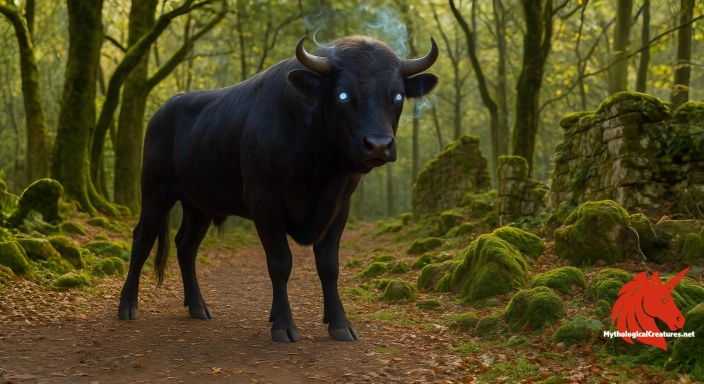
Dare to Meet the Gaueko....
The Mythological Creatures Book Series
Yokai, Greek, Norse, Egyptian & Chinese. Five illustrated field guides to the creatures the old stories either warned or told you about.
Curated by the Mythological Creatures Team
Series editor: Mythological Creatures Directory
Primary desk: Hellenic & Ancient Mediterranean Desk
(rev. November 2025)