
Yenakha Paotapi: Yenakha Paotapi is an ancient demoness from Meitei mythology, notorious as the evil eavesdropper who lurks around the eaves and graveyards.
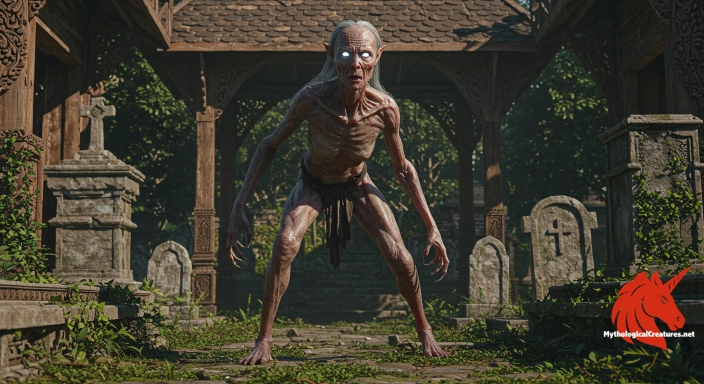
Yenakha Paotapi
Yenakha Paotapi - Embodies the disruptive supernatural forces and represents the dual nature of being both feared as an evil spirit and, in some accounts, revered as a minor goddess within the Meitei tradition.
the legend in five swipes.
the legend in five swipes.
How did the legend of Yenakha Paotapi begin?
Yenakha Paotapi is a striking figure in Meitei mythology, remembered as the enigmatic and malevolent eavesdropper who haunts the ancient abodes of Kangleipak. Her origins are deeply rooted in the folklore of early Manipur, a time when the lines between the human realm and the spirit world were blurred. The legend portrays her as a being whose very presence disrupts the natural order, creating an unsettling tension between the seen and unseen. Over the centuries, her narrative has grown in complexity, intertwining elements of fear, caution, and even a paradoxical reverence among some who view her as a minor goddess. Many accounts detail her reliance on the margins of human dwellings, where she makes her home on roof eaves and near graveyards, emphasising her association with liminality. Her inability to live comfortably among humans is a recurrent theme that underlines the isolation inherent in her being. The evolution of her myth reflects a society grappling with the mysterious and the unknown, blurring the boundaries between evil and divinity. In a culture steeped in spiritual symbolism, her legend continues to evoke both trepidation and fascination, serving as a timeless emblem of the disruptive forces at play in the natural world. Her story not only captures ancient anxieties but also invites contemporary reflection on the margins of human existence and the spectral.
Yenakha Paotapi: The Written Sources
Ancient oral traditions form the backbone of the narratives surrounding Yenakha Paotapi, preserving her story through generations of Meitei folklore. Multiple accounts from early Manipur describe her as an unruly spirit who dwells on the edges of human habitation, particularly on the eaves of roofs. Some versions of the legend paint her as the quintessential evil eavesdropper, a constant interloper in the private spaces of everyday life. Other narratives, however, lend her a divine aspect by identifying her as a minor goddess, reflecting the fluidity of her character in ritual and myth. These primary sources, passed down in whispered tales and communal recitations, highlight her role as a disruptor in both domestic and sacred spaces. The diversity in her depictions speaks to the complex intermingling of fear and reverence that characterises Meitei spiritual traditions. Over time, written records and folklore compilations have supplemented these oral narratives, each contributing unique nuances to her persona. Story variants often emphasise her disdain for human society, framing her as an eternal outsider destined to haunt the thresholds of civilization. This multiplicity of sources provides a layered view of her character, making her one of the most enigmatic figures in the regional mythos. The enduring nature of these traditions ensures that her story continues to inspire both cautionary debate and creative reinterpretation.
Yenakha Paotapi: What the Legends Describe
Visually, Yenakha Paotapi is depicted as an unsettling and ethereal presence, her form wrapped in the mysteries of the night. Descriptions often evoke a shadow-like silhouette with features that blend both an eerie beauty and a sense of imminent dread. Her skin is sometimes imagined as dark and smooth, reminiscent of the deep hue of a moonless sky, marked subtly with patterns that hint at ancient lore. Artists and storytellers alike have portrayed her eyes as piercing and luminous, capturing the spectral light that seems to burn within. Her hair, wild and untamed, is often compared to the dishevelled fur of a creature of the wild, enhancing her otherworldly appeal. Tattered garments, reminiscent of ancient ceremonial robes in faded hues, drape over her form, further accentuating her connection to the decayed majesty of abandoned eaves and graves. The variability in her stature ranges from a slight, almost insubstantial appearance to a more imposing, looming figure against the twilight. Intricate, almost imperceptible markings on her skin are said to reveal secrets known only to the spirit realm. Each depiction captures the mutable nature of her physicality, creating a canvas onto which fear and fascination are projected. Through these visual elements, her image becomes a potent reminder of the fine line between the tangible and the spectral. The physical portrayal of Yenakha Paotapi is thus as enigmatic as the myths that give her life.
How did location shape the story of Yenakha Paotapi?
The myth of Yenakha Paotapi is deeply intertwined with the cultural landscape of ancient Manipur and has been adapted across various regional narratives over time. While her primary roots lie in the Meitei folklore of Kangleipak, neighbouring communities have woven their own interpretations around her spectral persona. In some local recensions, she is depicted as a guardian of liminal spaces, assigned to protect thresholds and sacred boundaries, despite her malevolent overtones. Rural traditions sometimes embellish her character further, highlighting her role as an eerie sentinel that presides over both the living and the dead. The local language and customs colour her legend, with variations in name and descriptive attributes reflecting the unique spiritual outlook of each community. In these adaptations, narratives about her often invoke a blend of fear and respect, integrating elements of both cautionary tales and spiritual allegory. Festivals and nocturnal rites occasionally pay homage to her, underscoring the belief in her dual capacity as a force for both disruption and, paradoxically, protection. Such regional adaptations ensure that her myth remains vibrant and responsive to the cultural contexts in which it is told. The regional diversity in her portrayal illustrates a broader tendency in folklore to transform a single narrative element into a multi-faceted symbol. This dynamic reinterpretation speaks to the universality of her story and its ability to resonate beyond the immediate cultural milieu.
How does the Yenakha Paotapi legend compare worldwide?
The narrative of Yenakha Paotapi shares intriguing resemblances with other mythological entities that occupy the space between the human and the supernatural realms. Her character, straddling a line of duality as both an interloper and a divine figure, finds echoes in the liminal spirits of various cultural traditions. In several Eastern European folklores, for example, figures that haunt the edges of human dwellings serve a similar function, operating as warnings against the erosion of sanctity in domestic life. There are also thematic parallels with certain East Asian spectres whose presence is both feared and revered, reflecting a common human desire to explain the inexplicable. Like many of these comparative figures, Yenakha Paotapi bridges the gap between malevolent force and mystical enigma. Her habit of inhabiting transitional spaces such as eaves, doorways, and graveyards is a motif that recurs in myths around the world. The interplay of beauty, danger, and mystery in her portrayal is reminiscent of legendary female spirits in Celtic and Anatolian traditions, each embodying the complexity of the supernatural feminine. These cross-cultural connections underscore a shared motif in global folklore: the presence of a guardian—or a disruptive spirit—that challenges the conventional boundaries of human society. Her multifaceted nature invites comparisons that enrich our understanding of how diverse cultures conceptualise forces that exist at the periphery of the everyday. In drawing these comparisons, one sees a tapestry of beliefs that celebrate the enigmatic and caution against the encroachment of the unknown.
Where do you see Yenakha Paotapi today?
Over the centuries, the myth of Yenakha Paotapi has evolved from a simple cautionary tale into a richly layered emblem of both fear and defiance. Initially depicted as a malevolent entity whose presence disrupted the tranquillity of daily life, she has gradually been reinterpreted to also embody elements of divinity and complexity. Her transition from a feared demoness to a figure sometimes revered as a minor goddess illustrates a broader evolution in the cultural perception of the supernatural in ancient Manipur. Modern retellings, whether in literature, visual arts, or local theatre, have embraced her as a symbol of the margins, representing the indomitable spirit of those who exist outside conventional society. Contemporary adaptations often explore the tension between her dark origins and emergent narratives that contest traditional moral binaries. As artists reimagine her story, themes of isolation, rebellion, and transformation come to the fore, resonating with modern existential concerns. Community festivals and cultural rituals in Manipur continue to invoke her myth, ensuring that her spectral interference remains a part of collective memory. The enduring legacy of Yenakha Paotapi is a testament to the dynamic interplay between ancient lore and modern reinterpretation. In a world where the boundaries between past and present blur, her myth remains a potent reminder of the power of storytelling. Through the passage of time, she has become not only a relic of ancient fear but also a mirror reflecting the evolving dynamics of cultural identity.
Interesting Fact
Her dual portrayal as both an evil spirit and a minor goddess illustrates the rich and multifaceted perspectives in Meitei mythology, where even malevolent entities hold a revered space in cultural narratives.
Mythological Treasures
Chinese Beasts: A field guide to the dragons and demon kings of Chinese myth
From river dragons to demon kings, with the legends that shaped five thousand years of storytelling.
Japanese Yōkai: A field guide to the spirits and demons of Japanese folklore
Fifteen spirits, with the signs to watch for and what the old tales say to do if you meet one.
Greek Myths: A field guide to the monsters of ancient Greece
Every monster here earned its place in legend, and each gets a full page of artwork and the story behind it.
the legend in five swipes.
Curated sponsor space
One subtle banner. Thousands of myth lovers.
We offer a small number of curated sponsor spots for relevant books, courses, games, and art. No clutter, just well-matched partners.
Partner with usQuick Creature Info
Features:
Associations:
Our Mythic Legendary Rating:

Also Sometimes Known As:
Habitat:
Supernatural Powers:
Physical Attributes:
Abilities:
Behavior:
Weaknesses:
Lore:
References
Discover Another Mythical Legend You May Not Have Heard Of?
Uncover the mysteries of ancient folklore and expand your knowledge of legendary beings from cultures around the world.
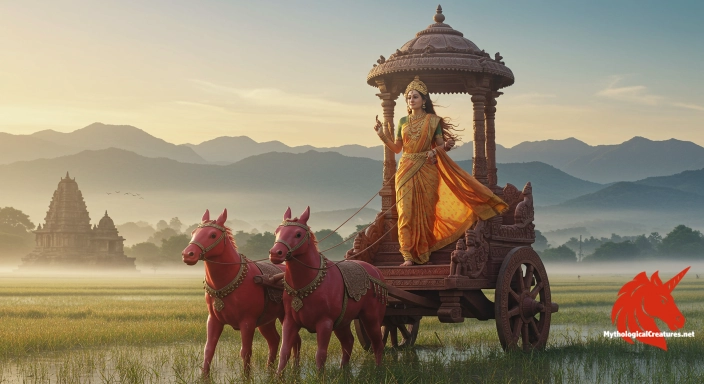
Dare to Meet the Ushas....
The Mythological Creatures Book Series
Yōkai, Greek, Norse, Egyptian & Chinese. Five illustrated field guides to the creatures the old stories either warned or told you about.

Curated by the Mythological Creatures Team
Series editor: Mythological Creatures Directory
Primary desk: Asian & Pacific Myth Cycles Desk
(rev. November 2025)