
Akerbeltz: Akerbeltz is a mythological billy goat spirit from Basque folk traditions, revered as an ancient protector of animals.
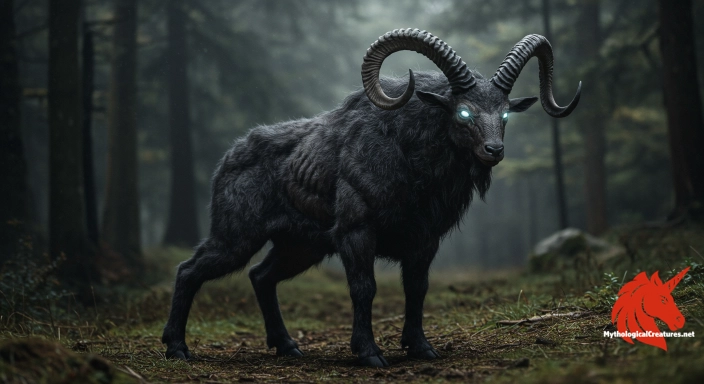
Akerbeltz
Akerbeltz - Akerbeltz embodies the transition from ancient animal worship to Christian demonisation, reflecting the complex cultural history of the Basque region.
The Earliest Known Accounts of Akerbeltz
Akerbeltz emerges as an enigmatic figure rooted in the ancient tapestry of Basque tradition. With a name that blends the words for 'billy goat' and 'black', this spirit embodies both the wild, untamed forces of nature and a profound connection to pastoral life. It is thought to have originated as a protector of animals, revered for its power to guard and nurture the very essence of the land. Early Basque communities regarded Akerbeltz as a potent symbol of natural abundance and fertility, a deity integral to both ritual and everyday life. The figure seamlessly bridges the gap between the natural and supernatural, representing a duality of benevolence and mischief. With the onset of Christian influence, the creature’s image was dramatically transformed into a symbol of moral decay and a manifestation of diabolic forces. Ecclesiastical narratives recast it as a sinister being, a stark departure from its earlier role as a guardian of nature. Even so, local memory retained echoes of its original protective ethos, ensuring that the myth endures as a vivid reminder of the layered history of the Basque cultural landscape. The persistent allure of Akerbeltz speaks to a broader human fascination with the liminal spaces between civilisation and wilderness. Over time, this dualism has rendered the creature an enduring emblem that captivates both the curious and the cautious.
Akerbeltz: Variants Across the Sources
Akerbeltz figures prominently in a variety of folkloric traditions and has been referenced in the oral histories of rural Basque communities. Its existence is attested in modest medieval manuscripts and local ballads that echo the ancient rites of a once-flourishing natural world. Accounts of the creature have been passed down through generations, emerging in forms as diverse as ritual songs, local legends, and even carved symbols on ancient artefacts. Some narratives maintain its role as a guardian of nature and animals, while others emphasise its darker, transgressive attributes as shaped by later cultural pressures. The variation in these portrayals highlights the impact of intersecting pagan and Christian beliefs over the centuries. Occasional early modern documents even hint at Akerbeltz’s association with a cadre of elves, portrayed as loyal servants in its mystical retinue. This tapestry of variant stories—from benevolent deity to malevolent spectre—reflects the shifting cultural currents of the Basque region. Oral tradition, rich in nuance and symbolism, has ensured that the myth remains dynamic and open to reinterpretation. These diverse sources collectively illuminate how ancient societies engaged with the spiritual and natural realms. In this way, Akerbeltz’s myth persists as a multifaceted narrative woven into the fabric of local identity.
How powerful did people believe Akerbeltz to be?
Akerbeltz is most commonly portrayed as a formidable billy goat with a striking, jet‐black coat that seems to absorb light, giving it an ethereal, almost otherworldly appearance. Its curved horns, elegantly arched like dark crescents, are frequently depicted as adorned with mysterious markings hinting at ancient symbolism. The creature’s eyes are often rendered as penetrating, glowing with an inner fire that conveys both wisdom and an undercurrent of menace. Robust yet agile, its muscular build speaks to the raw physical power needed to navigate the wild terrains it is believed to inhabit. Traditional artistic depictions infuse its visage with a blend of animalistic ferocity and supernatural intelligence, blurring the lines between nature and the divine. Dense, unyielding fur and a visage that carries a subtle, almost human expression further enhance its enigmatic character. Occasional portrayals include an aura of swirling mists or spectral light, underscoring its role as a conduit between the earthly and the mystical. Every detail—from the chiselled contours of its face to the textured depth of its coat—has been imbued with layers of cultural meaning. These intricate visual cues serve as a testament to the deep-seated reverence and fear it has inspired. Through its compelling physical imagery, Akerbeltz continues to personify the eternal interplay between natural beauty and the dark unknown.
Where in the world is Akerbeltz known?
Across the Basque Country, local traditions have adapted the figure of Akerbeltz to reflect the specific environments and cultural nuances of each community. In mountainous areas, the creature is often venerated as a subtle guardian whose presence is interwoven with the dense woodlands and hidden valleys. In contrast, rural agricultural communities celebrate Akerbeltz as an auspicious protector of livestock, embodying the vital forces of fertility and seasonal renewal. Some villages describe it as a benign, even nurturing spirit that safeguards the natural balance, while others caution that its unpredictable nature may bring misfortune if disrespected. In regions where pre-Christian rites have left an indelible mark, elaborate festivals and rituals honour the spirit with vestiges of ancient sacrificial and fertility customs. Local folklore sometimes supplements its character with additional supernatural figures, such as legions of elves said to serve at its beck and call. These regional narratives not only accentuate the creature’s multifaceted roles but also mirror the diverse relationship communities maintain with their surrounding landscapes. Each retelling, enriched by local colour and ritual, transforms Akerbeltz into a dynamic symbol of both prosperity and caution. The adaptability of the myth across regions highlights its enduring appeal and its capacity to reflect the unique historical experiences of varied locales. Thus, the regional variations ensure that Akerbeltz remains a living part of the cultural dialogue, continually reshaped by the communities that revere it.
Akerbeltz: Counterparts Around the World
The distinctive attributes of Akerbeltz invite compelling comparisons with other horned deities found throughout European mythology. Its striking, goat-like form naturally evokes the image of the classical Greek god Pan, whose embodiment of nature's untamed spirit and mischievous charm mirrors that of Akerbeltz. Similarities extend to the Roman faun, a creature that too blends animalistic vigour with an otherworldly presence. In later traditions, figures like Baphomet have surfaced, echoing the ambiguity and duality of Akerbeltz by merging benevolent natural power with darker, more sinister connotations. All these entities reveal a fascinating common thread: the use of the horned animal archetype as a symbol of fertility, wilderness, and the liminal spaces between order and chaos. The process of demonisation, experienced by Akerbeltz under the weight of Christian reinterpretation, is not unique and can be observed in the evolving depictions of similar figures. Such parallels underline a wider European narrative where ancient pagan symbols were co-opted or transformed to serve moral and didactic purposes. By comparing these mythic figures, one can appreciate the universality of the themes they represent, be it the celebration of nature or the cautionary tales of transgression. These cross-cultural resonances deepen our understanding of Akerbeltz, positioning it within a broader context of human attempts to interpret the forces of nature. In this way, the comparative analysis reinforces the notion that the myth of Akerbeltz is part of an extensive dialogue between human society and its environment.
What happened to the legend of Akerbeltz?
The evolution of Akerbeltz over the centuries reveals a fascinating narrative of cultural transformation and reinterpretation. Originally venerated as a powerful deity symbolising fertility and the protective aspects of the natural world, its image was profoundly altered as Christian forces sought to marginalise indigenous pagan practises. In this process, Akerbeltz was recast as a demonic figure, its once-cherished qualities obscured by associations with sin and moral transgression. However, the modern revival of interest in pre-Christian traditions has allowed for a reimagining of the creature, restoring a measure of its ancient gravitas. Contemporary artists and writers now celebrate the figure’s ambiguous nature by portraying it as both a remnant of a forgotten mythos and a symbol of nature’s enduring, untamable energy. Festivals, literature, and visual arts have all contributed to a renewed engagement with Akerbeltz, emphasising its role as a cultural emblem and a reminder of Basque heritage. This modern legacy not only reclaims the creature from past derogatory interpretations but also highlights its capacity to inspire dialogue on environmental and cultural identity. The transformation of Akerbeltz underscores the power of myth to adapt and survive despite centuries of reinterpretation. Today, the creature stands as a complex icon that challenges simplistic moral binaries, offering instead a nuanced perspective on the intricate bonds between humanity and the natural world. Its enduring legacy serves as both a historical touchstone and a vibrant symbol in contemporary cultural discourse.
Interesting Fact
A unique aspect of Akerbeltz is its dual identity, simultaneously celebrated as an ancient protector of animals and condemned as an embodiment of the devil, reflecting the deep cultural clash between pagan traditions and Christian doctrine.
For publishers and studios
Your next readers are already here
Many of our visitors are looking for books, campaigns, and resources that deepen their journey into myth. Position your title or setting here.
Discuss a placementQuick Creature Info
Associations:
Our Mythic Legendary Rating:

Also Sometimes Known As:
Habitat:
Supernatural Powers:
Physical Attributes:
Abilities:
Behavior:
Lore:
Related Creatures, Tales or Lore
References
Discover Another Mythical Legend You May Not Have Heard Of?
Uncover the mysteries of ancient folklore and expand your knowledge of legendary beings from cultures around the world.
Dare to Meet the Ōkuninushi....

Curated by the Mythological Creatures Team
Series editor: Mythological Creatures Directory
Primary desk: Hellenic & Ancient Mediterranean Desk
(rev. November 2025)