
Ala: The Ala is a female weather demon from Balkan folklore known for directing destructive hail clouds and consuming children.
-bff90057-c3fc-415d-91ba-24d5855fc03c_small.webp "Ala - Represents the capricious and destructive power of nature, while also offering potential fortune to those who earn her favour")
Ala
Ala - Represents the capricious and destructive power of nature, while also offering potential fortune to those who earn her favour
the legend in five swipes.
the legend in five swipes.
The First Records of the Ala
The creature known as the Ala occupies a prominent position in the rich mythological landscape of the Balkans, where she is both revered and feared for her capricious influence over the natural world. Her legacy is rooted in the intertwined traditions of Bulgarian, Macedonian, and Serbian folklore, evolving from ancient pre-Slavic beliefs into a more complex symbol in later cultural narratives. The Ala is depicted as a potent force capable of directing destructive weather patterns, with her presence often connoting the impending arrival of violent hailstorms and ruinous tempests. Her actions extend beyond mere natural disruption, for she is fabled to target vital resources, from croplands to orchards, and even to threaten the celestial bodies that govern day and night. Many stories describe her as possessing an insatiable appetite that can extend to consuming human children and, in the most extreme tales, attempting to devour the sun or moon. Her dual nature challenges the simple categorisation of being solely malevolent, as she can also bring fortune to those who treat her with proper respect and trust. Communities have long sought to understand and appease her, weaving her image into local rites and agrarian traditions. The enduring allure of the Ala lies in her embodiment of the unpredictable dynamics of nature and fate, representing both a warning and a potential blessing. Her myth continues to serve as a vivid reminder of the powers that lie beyond mortal control, resonating with people who confront the paradox of creation and destruction.
Ala: From Oral Tale to Written Record
The narrative framework of the Ala has been crafted over centuries through an intricate tapestry of oral storytelling and folkloric compilations. Early accounts, gathered by local chroniclers and passed down through generations, reveal a creature intertwined with the capricious moods of the weather. These primary sources often depict her as the orchestrator of violent storms and the orchestrator of natural calamities that directly affect agricultural communities. Diverse story variants offer strikingly different portrayals, with some emphasising her role as a relentless devourer of both earthly and celestial sustenance. Many tales recount dramatic encounters between the Ala and local heroes or divine figures, reinforcing her status as a significant agent of both misfortune and mysterious beneficence. In a number of versions, narrative threads intersect with Christian motifs, where the intervention of saintly figures helps to curb her destructive tendencies. The multiplicity of sources enriches her character, allowing each storyteller to highlight different aspects of her nature. Variants also include her combatting formidable enemies, such as dragons or rival supernatural entities, showcasing the broader mythological conflicts at play. The layered accounts present in diverse regions testify to an evolving tradition that blends the harsh realities of nature with imaginative myth-making. Through these story variants, the Ala has become a multifaceted figure, reflecting the fears and hopes of the communities that created her lore.
What does the Ala look like?
Descriptions of the Ala are as varied as the tales that recount her sublime and terrifying presence, capturing a being of shifting and elusive form. In some depictions, she manifests as a formless, dark wind that sweeps over the land, its very essence imbued with the chill of a coming storm. Other accounts portray her as a gigantic entity that defies clear visual identification, often assuming shapes that blend human and animalistic features. There are vivid portrayals of her as a serpent-like monster or a fearsome female dragon, with gaping maws that evoke the imagery of both hunger and wrath. The physical attributes assigned to her vary dramatically, ranging from an ethereal silhouette that dissipates into the clouds to a more corporeal presence exuding raw, menacing power. Her appearance is frequently interwoven with cosmic elements, suggesting that her form can mirror the tumultuous nature of the skies. This shapeshifting quality not only heightens her mysterious nature but also symbolises the unpredictable forces of the weather she commands. Some accounts imbue her with a semblance of human-like eyes or features, fostering comparisons with other legendary figures who straddle the boundary between humanity and the supernatural. The deliberate ambiguity in her physical descriptions invites multiple interpretations, making her a canvas for both fear and fascination. In every form, the Ala is portrayed as a formidable embodiment of nature’s volatile and inscrutable energy.
Which regions tell stories of the Ala?
The depiction of the Ala varies remarkably across the regions of the Balkans, each imbuing her myth with local colour and distinctive motifs. In Bulgarian traditions, she is often depicted as a stern weather demon whose intervention can alternate between the destruction of valuable crops and the unexpected bestowal of blessings upon the faithful. Macedonian renditions of her myth characterise her as a capricious spirit, whose unpredictable temperament mirrors the fluctuating fortunes of agrarian life. In Serbian folklore, narratives frequently present her as a spectral being capable of both terrifying and protecting, depending on the nature of her encounter with mortals. Each cultural context adapts her image to align with local environmental challenges, where the ravages of unexplained weather phenomena are explained through her intervention. Variations in her portrayal also reflect differing attitudes towards the supernatural, with some communities focusing on her wrath and others on her potential for benevolence. Local landscapes, be they dense forests, remote mountains, or secluded lakes, are often described as her dwelling places, reinforcing her deep connection with the natural world. The regional adaptations of the Ala’s myth highlight the interplay between human fear and respect for nature’s power. These nuanced differences attest to both the flexibility of her myth and the shared concern across cultures regarding the uncontrollable forces that shape their lives. In every region, the evolving legend of the Ala continues to be a mirror of local cultural values, environmental conditions, and historical narratives.
Which other cultures tell a story like that of the Ala?
The myth of the Ala finds fascinating parallels in various cultural traditions that personify the destructive yet sometimes protective forces of nature. Like the enigmatic figures found in Eastern European folklore, such as the Russian figure reminiscent of Baba Yaga, the Ala embodies the duality of danger and potential favour. Similar archetypes appear in classical mythologies where deities or spirits control the weather, reminding communities of the omnipresent power of the natural world. Comparisons can be drawn with mythic beings from Norse and Greek traditions, where storm gods or tempests serve as both agents of wrath and instruments of renewal. The juxtaposition of her malevolent appetite with her capacity to reward those who earn her grace resonates with themes found in other cultural legends. She also shares symbolic overlaps with dragons and other monstrous creatures that battle for supremacy over natural forces. Such parallels underscore a universal human recognition of the volatility of weather and the often unpredictable interplay between human endeavours and nature’s dominion. The rich tapestry of her myth is interwoven with shared motifs that transcend national boundaries, linking the Ala to a broader spectrum of weather-related deities and demons. Her narrative challenges the simplistic view of evil, instead embracing a complex character study of natural power. This cross-cultural dialogue not only enriches her myth but also reveals the common threads that unite various mythological traditions in their exploration of nature’s profound mysteries.
Where does the Ala appear in films and games?
The evolution of the Ala’s myth reflects a dynamic transformation from an ancient embodiment of natural calamity into a symbol rich with modern metaphorical significance. Historically, her image was a direct reflection of agrarian communities’ attempts to understand and cope with the caprices of the weather. Over centuries, her legend absorbed influences from both indigenous pagan practices and the subsequent layers of Christian symbolism, creating a character marked by ambiguity and complexity. Today, the Ala is often portrayed in literature, art, and even cinema as a figure representing the volatile intersection of natural forces and human vulnerability. Modern reinterpretations tend to explore her dual capacity for both destruction and protection, echoing contemporary concerns about environmental change and ecological imbalance. Artists and writers are drawn to her multifaceted persona, using her myth as a vehicle to discuss broader themes such as the unpredictability of nature and the limits of human control. While earlier depictions emphasised her role in unleashing disasters upon the land, contemporary stories often cast her in a more nuanced light, sometimes as a misunderstood guardian of nature. The enduring nature of her myth reveals the powerful impact of folklore in shaping cultural consciousness and bridging ancient wisdom with present-day realities. As societies continue to wrestle with the challenges of environmental instability, the evocative image of the Ala remains a potent reminder of the forces that govern our world. Her legacy, continually reimagined through the lens of modernity, encapsulates the timeless dialogue between humanity and the unpredictable natural environment.
Interesting Fact
An intriguing aspect of the Ala is its synthesis of varying cultural influences, merging Slavic and pre-Slavic Balkan mythological elements to form a creature of both terror and potential beneficence.
Mythological Treasures
Norse Sagas: A field guide to the beasts of the Viking world
Drawn from the saga accounts themselves, with the powers, weaknesses and doom of each being set out.
Egyptian Legends: A field guide to the gods and monsters of ancient Egypt
Guardians of the living and devourers of the dead, with the role each played in judgement.
Chinese Beasts: A field guide to the dragons and demon kings of Chinese myth
From river dragons to demon kings, with the legends that shaped five thousand years of storytelling.
the legend in five swipes.
Advertising opportunity
Showcase your mythology project
We offer limited sponsor placements for books, courses, games, and creators aligned with our audience.
View partnership optionsQuick Creature Info
Features:
Associations:
Our Mythic Legendary Rating:

Also Sometimes Known As:
Habitat:
Supernatural Powers:
Physical Attributes:
Abilities:
Behavior:
Weaknesses:
Lore:
Related Creatures, Tales or Lore
- BBaba Yaga
- LLamia
- MMora
References
Discover Another Mythical Legend You May Not Have Heard Of?
Uncover the mysteries of ancient folklore and expand your knowledge of legendary beings from cultures around the world.
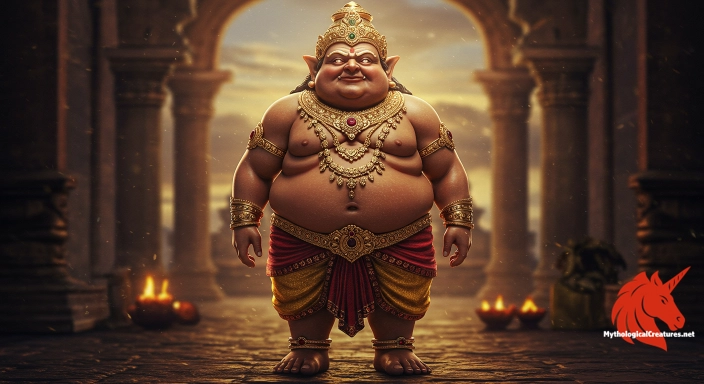
Dare to Meet the Kubera....
The Mythological Creatures Book Series
Yokai, Greek, Norse, Egyptian & Chinese. Five illustrated field guides to the creatures the old stories either warned or told you about.
Curated by the Mythological Creatures Team
Series editor: Mythological Creatures Directory
Primary desk: Northern & European Folklore Desk
(rev. November 2025)