
Arae: The Arae are female spirits of curses in Greek mythology, renowned for their role in delivering retributive curses upon the guilty.

Arae
Arae - The Arae embody the enduring power of curses and the notion that the dead can exact retribution on the living.
Origins & First Encounters
The Arae emerged in the rich tapestry of Greek mythology as ethereal feminine spirits whose primary charge was to curse those responsible for the untimely death of another. They are intrinsically linked with the shadowy realms of the underworld, where retribution meets the inexorable laws of fate. Their presence is first attested in classical narratives, with early mentions in poetic texts that highlight the mysterious power of a curse. In ancient cultural context, the Arae symbolised the inescapable consequences of mortal transgressions, embodying the belief that the dead could exact divine punishment. They became emblematic of moral accountability, reminding society of the natural order connecting life, death, and divine retribution. Often depicted as agents of an otherworldly justice, they underscored the notion that no misdeed would go unpunished by forces beyond the mortal sphere. Their myth served both a cautionary and a symbolic purpose, integrating themes of loss, vengeance, and cosmic balance. As such, the Arae occupy a unique niche in mythology where the border between life and the afterlife blurs into the realm of retribution and mystery.
Source Texts & Tale Variants
Ancient texts provide the primary window into the enigmatic nature of the Arae, with Homer's Odyssey offering one of the clearest references to their curse-inflicting power. These literary fragments both mystify and reinforce their role as supernatural enforcers of retributive justice. Various poetic and dramatic sources mention them briefly, yet each allusion deepens the aura of dread surrounding their presence. Their character appears in a range of literary traditions, where variations in detail suggest that the Arae adapted to the evolving narrative needs of different storytellers. In some accounts, they are intertwined with other chthonic figures to form a broader framework of divine punishment. Other narratives introduce them as silent executors of cosmic balance, where the act of cursing becomes a ritualistic echo of the underworld’s might. Despite the brevity of many of these texts, the consistent portrayal of their malevolent power resonates across multiple sources. Such textual evidence collectively underscores the enduring impression of the Arae as agents whose influence extended from mythic times into the very fabric of societal lore.
Form & Powers
Being spirits of an intangible nature, the Arae defy the conventional constraints of physical form, appearing as mutable silhouettes that dissolve into the shadows. In artistic depictions—though rare—their figures are rendered in dark, flowing garments that seem to merge with the murky backdrop of the underworld. They are often imagined with features that blend human frailty with spectral menace, such as eyes that glisten with an eerie luminescence and faces that express both sorrow and malice. Artists have occasionally invoked the suggestion of ethereal movement, portraying them as if they were caught in a perpetual state of dissolution into mist. Some representations hint at subtle embellishments, including traces of flame in their hair or an otherworldly glow that stresses their supernatural origin. The absence of a fixed form only heightens the sense of mystery and dread that surrounds them, insinuating that they could appear in myriad guise. In many renditions, the visual cues are deliberately ambiguous, inviting onlookers to project their own fears onto these elusive entities. Even in their varying incarnations, the core imagery remains focused on evoking the quiet, pervasive terror of a curse made manifest.
Regional Faces
The concept of the Arae found echoes across various regions influenced by Greek culture, with local traditions imbuing them with distinctive nuances. In certain parts of ancient Greece, they were sometimes interwoven with regional deities of justice or retribution, thereby assuming dual roles within local mythological frameworks. The cultural tapestry in these areas allowed for a more humanised version of the Arae, sometimes portraying them with expressions of regret or an air of mournful inevitability. In juxtaposed local traditions, similar spirits—though known by different names—served much the same function as harbingers of cursed destiny. Communities on remote islands or in the fringes of the classical world occasionally ascribed to the Arae protective as well as punitive qualities, reflecting a blend of fear and reverence. Innovations in regional storytelling led to variations where their appearance, powers, and rituals differed subtly from the classical archetype. As neighbouring cultures interacted, there was a discernible exchange of mythological motifs that allowed for the Arae’s assimilation into broader Mediterranean narratives. This regional adaptation ensured that the essence of divine retribution remained resonant even as the specifics of their depiction transformed considerably over time.
Cultural Parallels
In the wider sphere of comparative mythology, the Arae share thematic territory with other divine agents of punishment such as the Erinyes and even the Norse Norns, who hold sway over fate and retribution. Their specialised role in administering curses distinguishes them from broader vengeful figures, aligning them more closely with the idea of targeted spiritual retribution. Parallel myths in other cultures offer similar entities, suggesting a universal human preoccupation with the consequences of immoral acts and the need for supernatural justice. Although the Furies are often more aggressively punitive, the Arae focus on the subtler, persistent impact of a curse that haunts its recipient. This nuanced role has led scholars to suggest that the Arae represent the lingering psychological weight of guilt and unresolved grief. Various cultures have articulated the idea of unseen forces that exact punishment for transgressions, bridging the gap between earthly misadventures and cosmic justice. The cross-cultural similarities emphasise how ancient societies anthropomorphised misfortune as a way to interpret the inexplicable. Such comparative analysis not only enriches our understanding of the Arae but also underscores the perennial human desire to hold transgressors accountable through metaphysical means.
Legacy & Modern Evolution
Over the centuries, the myth of the Arae has evolved from a narrowly defined role in ancient texts to a broader symbol of enduring moral and existential consequences. Early depictions in epic poetry underscored their function as ghostly enforcers of a curse, a portrayal that later generations reinterpreted in more complex ways. During periods of artistic revival, such as the Renaissance, the Arae were reimagined as multifaceted icons representing both the ruinous power of retribution and the melancholic beauty of tragic fate. In modern literature and art, their legacy is often woven into narratives that explore the psychological dimensions of guilt and the lingering impact of past transgressions. Contemporary interpretations have seen the Arae emerge in films and digital media as embodiments of moral reckoning, merging classical myth with modern existential anxieties. Their silent, pervasive threat continues to evoke a sense of eerie inevitability, resonating with audiences who grapple with the consequences of human actions. The evolution of their image reflects a broader trend in which ancient symbols are recontextualised to address modern concerns about fate and accountability. Today, the Arae remain a potent symbol in the cultural imagination, embodying the timeless interplay between divine mystery and human frailty.
Interesting Fact
An intriguing aspect of the Arae is how they personify the concept that curses, once uttered by the dead, can transcend the boundaries of mortality to exact eternal retribution.
For serious myth projects
Feature your work alongside the legends
From academic works to story-rich games, we highlight projects that respect world mythologies. Talk to us about a measured, long-term placement.
Start a conversationQuick Creature Info
Origin:
Features:
Our Mythic Legendary Rating:

Habitat:
Supernatural Powers:
Physical Attributes:
Abilities:
Behavior:
Lore:
References
Discover Another Mythical Legend You May Not Have Heard Of?
Uncover the mysteries of ancient folklore and expand your knowledge of legendary beings from cultures around the world.
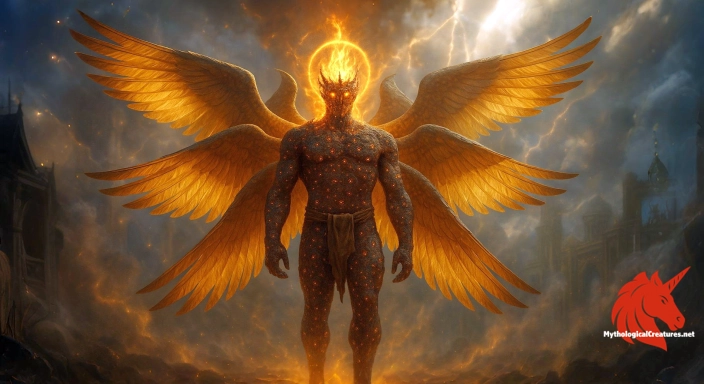
Dare to Meet the Kerubiel....
Curated by the Mythological Creatures Team
Series editor: Mythological Creatures Directory
Primary desk: Hellenic & Ancient Mediterranean Desk
(rev. November 2025)